
SAUT HERMÈS
Late March · The Grand Palais, Paris · Three Days · Since 2010
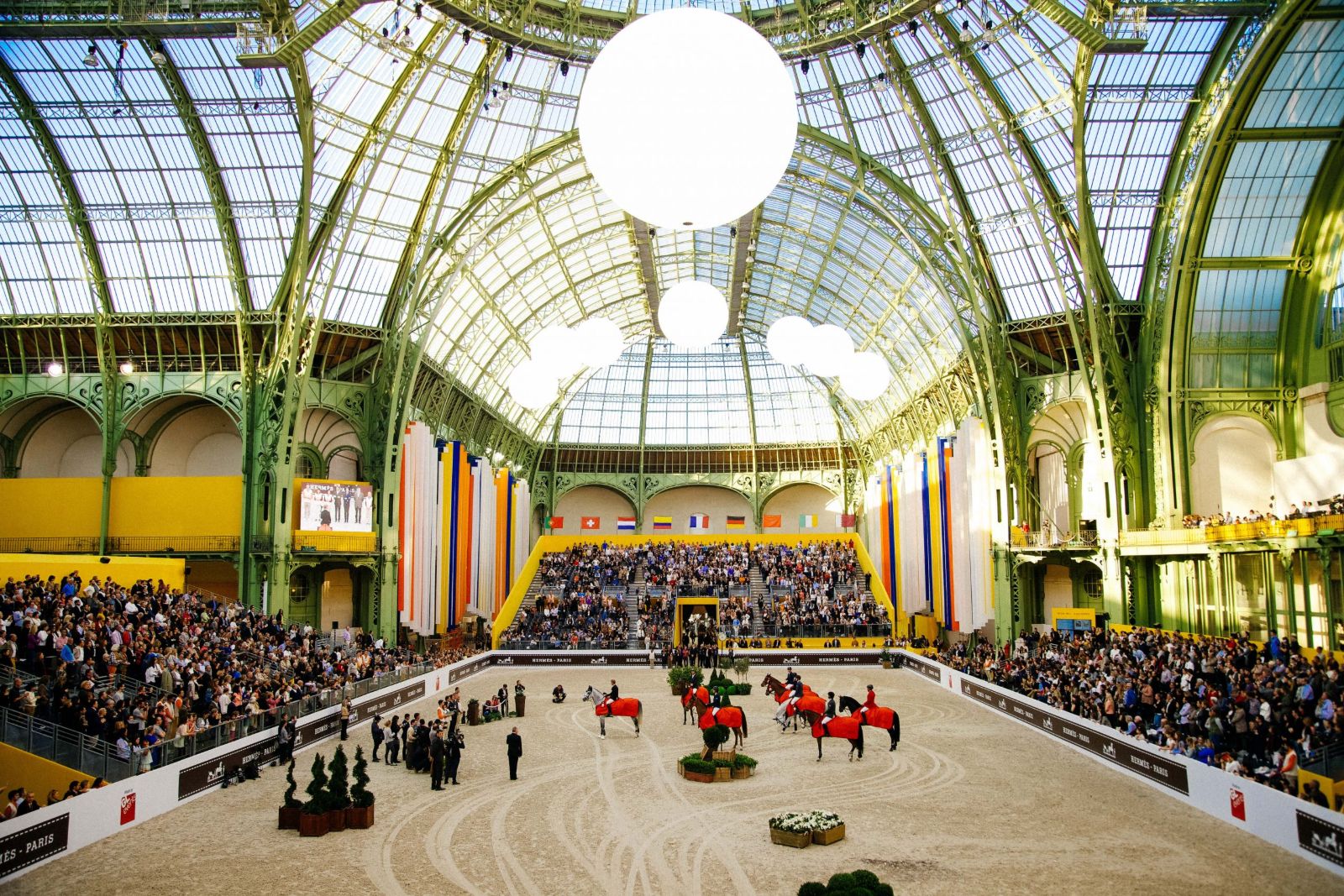
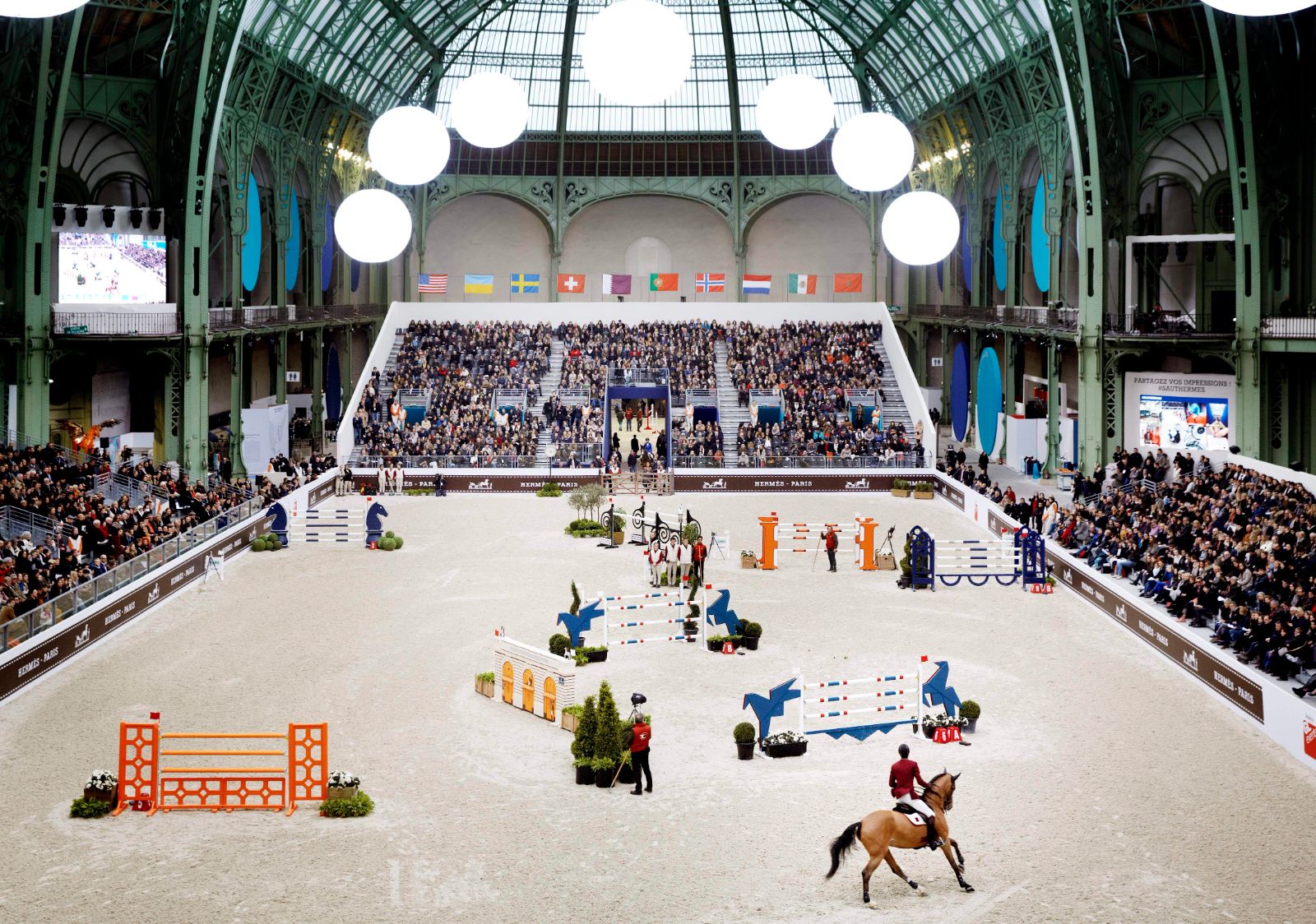
Saut Hermès is three days of show jumping under the glass roof of the Grand Palais, at the top of the Champs-Élysées, at the end of March.
Twelve hundred tonnes of sand are carried into the building for it.
The Nave
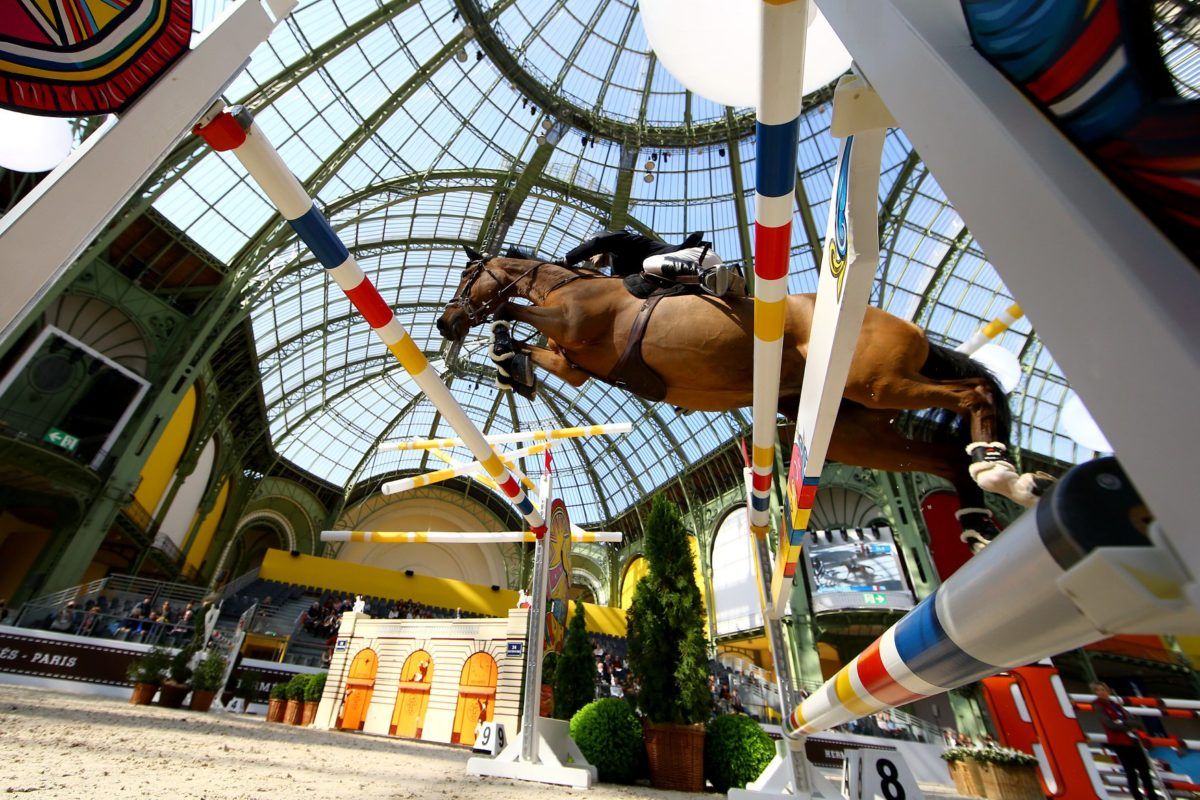
The Grand Palais was built for the Exposition Universelle of 1900, and the great hall at its centre was designed for horses.
That is the part most visitors never learn. The nave is two hundred metres long and fifty wide, and it has no supporting pillars anywhere in it, because a pillar would block a spectator’s view of a horse and a horse’s line to a fence. The building was made to hold equestrian shows, and it held them from 1901 until 1957. The Concours Central Hippique drew sell-out crowds for half a century. There were stables in the basement.
Then the cars came. Horses left the streets of Paris and then left the building, and the nave that had been built for them became the hall of the Paris Motor Show for the next half-century.
Which makes the Grand Palais a fairly exact model of what happened to the horse. Displaced by the motor car in the city, and then displaced by it indoors.
In 2010 a saddler brought them back.
The Saddler
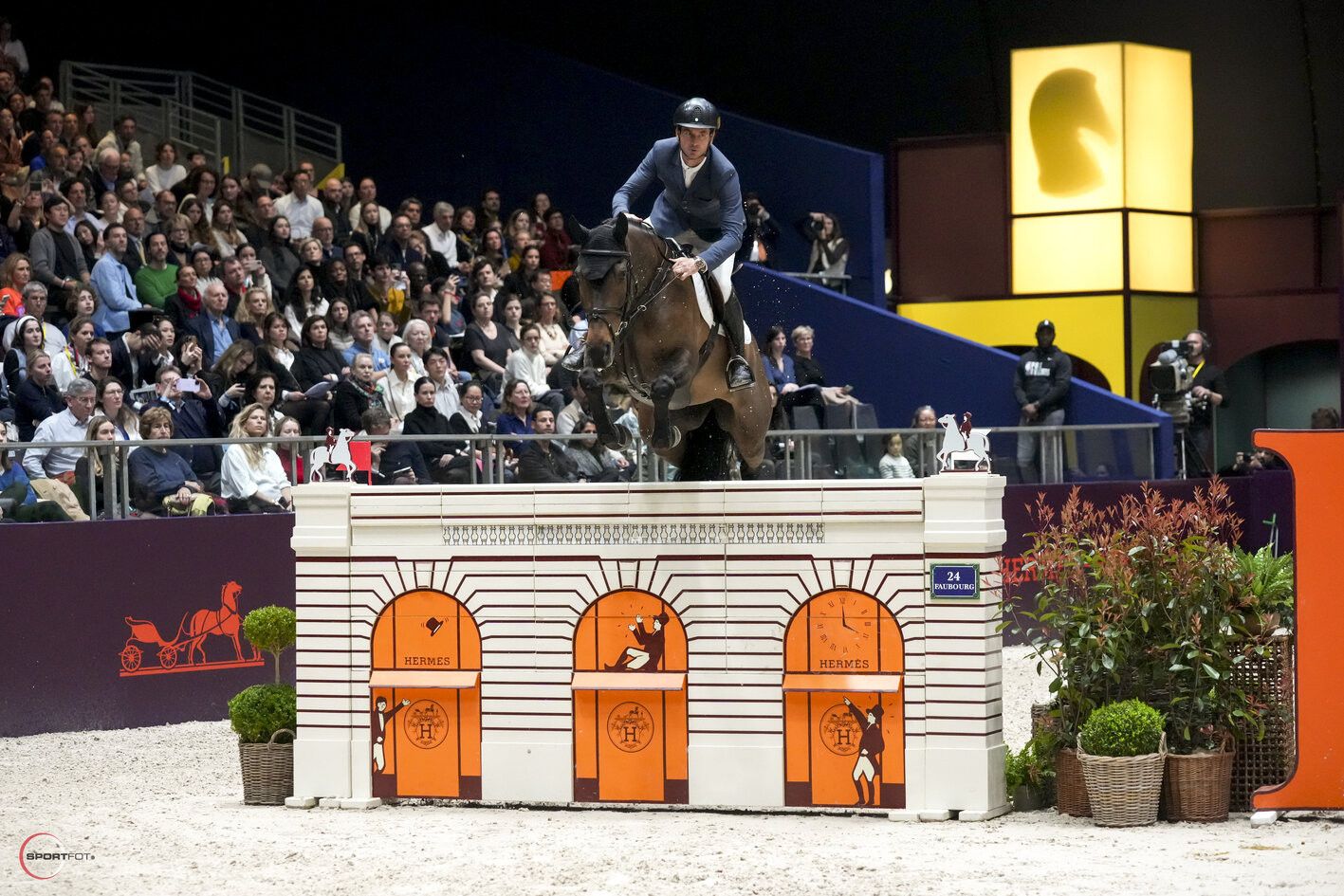
Hermès was founded in 1837 as a maker of harness. Saddles followed. For close to a hundred years the company had precisely one client, and the client was a horse.
Everything the house is known for now came afterward and came out of that: the leather, the stitching, the scarves printed with bits and bridles, the bags named for saddlebags. The horse is not a theme the company adopted. It is what the company was for.
Saut Hermès is the house returning to its first customer, in the building where Parisians used to watch that customer perform. It is five-star jumping, which means the best riders in the world, and the Grand Prix is run on the Sunday afternoon.
A programme called Talents Hermès runs alongside it, in which riders under twenty-five are sponsored onto the circuit by established ones.
What to Know
The arena is built in a week and taken up in a week. Twelve hundred tonnes of sand and fibre laid over a stone floor, and a grandstand for four thousand put up inside a listed building.
The light is the thing. Jumping normally happens either outdoors in a field or indoors under electric light. Here it happens under glass in the middle of a city, and the sun moves across the sand over the course of an afternoon.
The seats are close and the hall is not large by the standards of the sport. A spectator sits near enough to hear a horse breathing between fences.
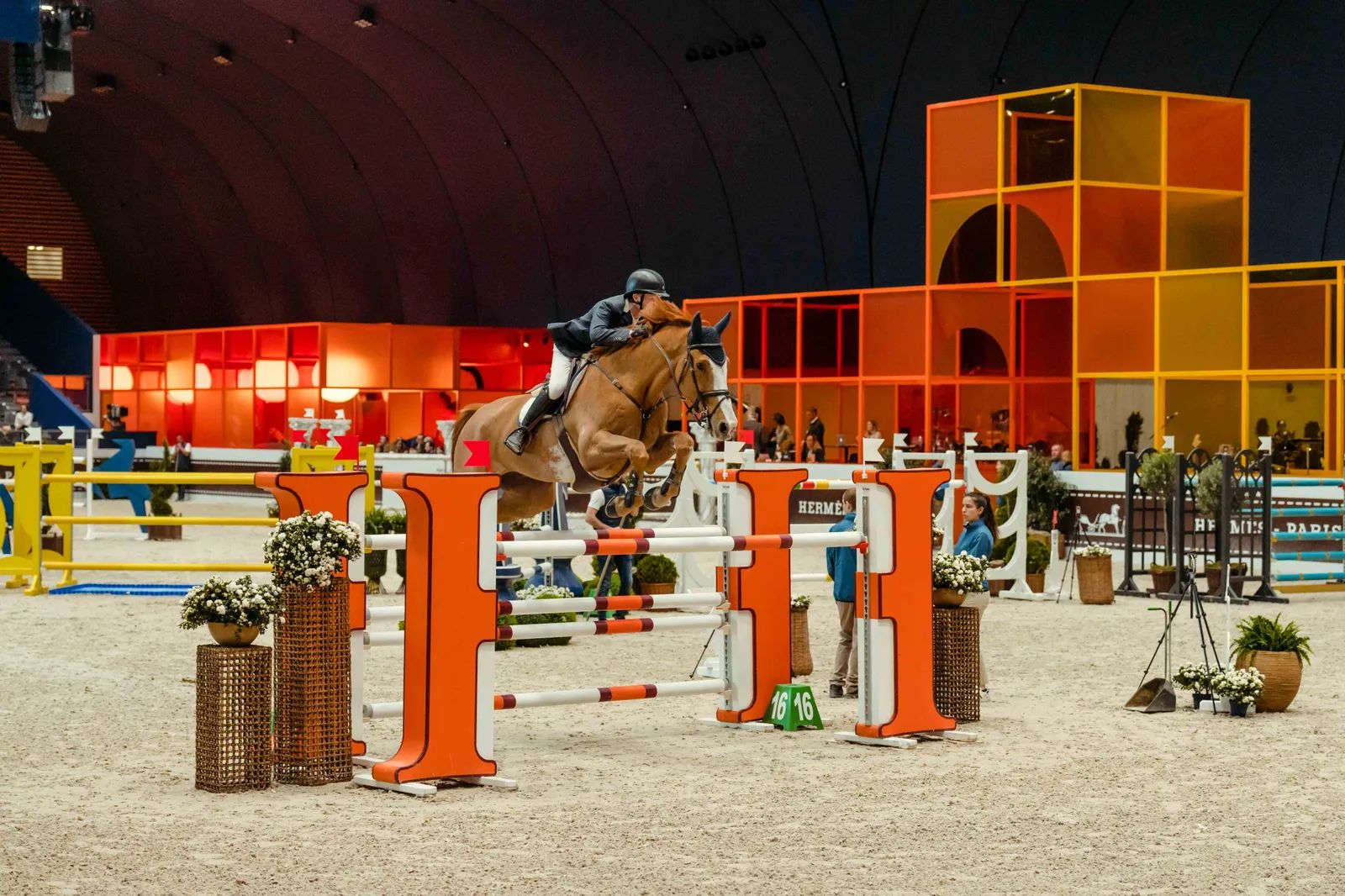
Everything about the presentation, from the fence design to the decoration, is made to look effortless and is not.
Tickets are limited by the size of the building and go early.
The Court
Saut Hermès is not the Court’s own. Seats, hospitality and rooms in Paris in March are sought on a member’s behalf, and the Court arranges the whole of it: getting there, where to stay, and the table afterward.
