

A private members club in the old tradition.
In the court of kings.
New York · Founded MMXXVI
The Court
The Mansa Court is a private members club in New York. It exists for those who hold the occasion above the purchase, and company above audience. Its calendar is deliberate, its rooms are quiet, and its pleasures are the older ones: the shoot, the course, the paddock, the box, the long table.
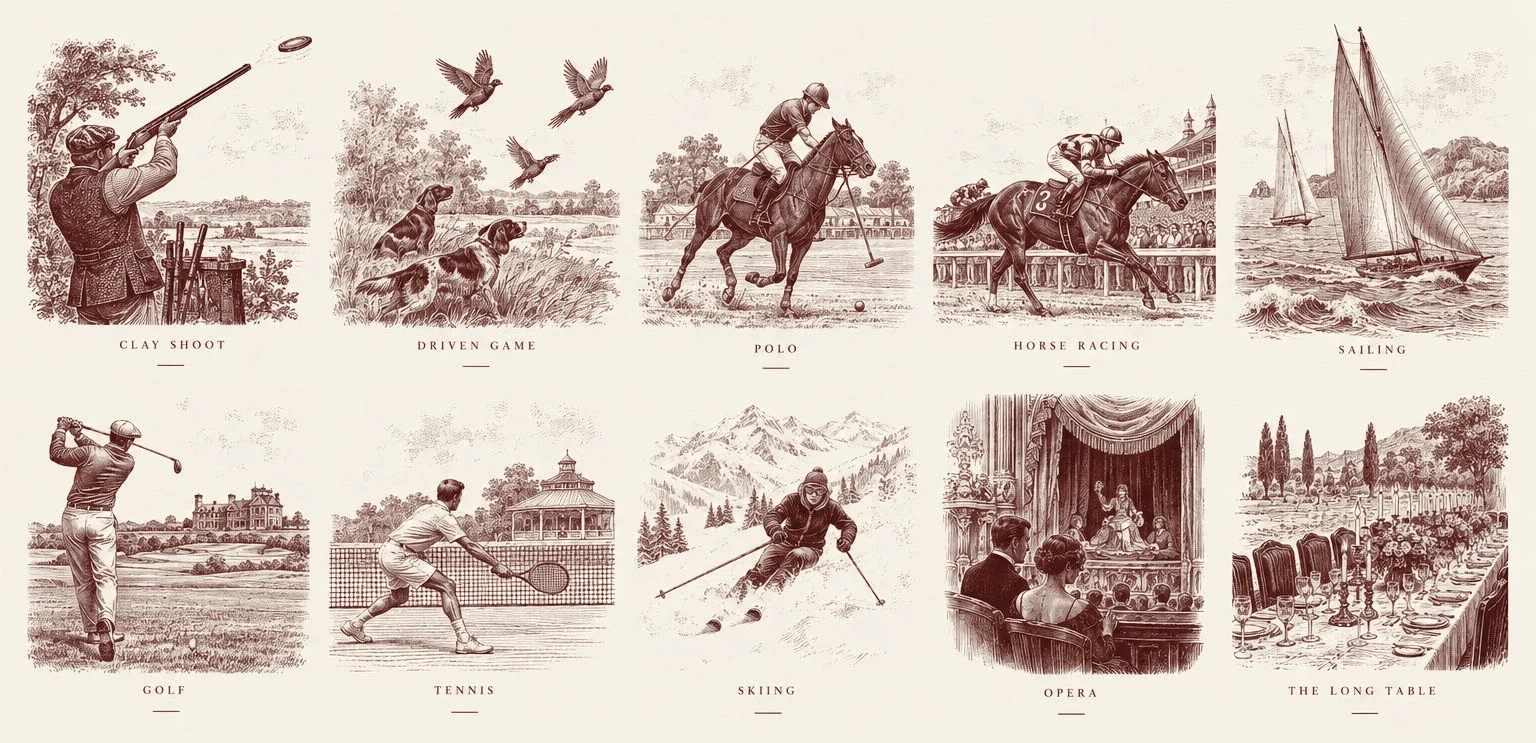
The Court keeps no permanent house. It convenes where the season takes it, at private fields and borrowed rooms, at tables set for the evening and struck by morning. A society is its people, not its address. The Court is private even where the occasion is not.
The Name
Mansa is the Mandinka word for king. It was borne by the rulers of the Mali Empire, and most famously by Mansa Musa, whose pilgrimage across the Sahara in the fourteenth century was said to have moved the price of gold in every city it passed through.
A court is not the king. A court is the company he keeps: the counsellors, the artists, the diplomats, the ones worth having at the table. That is the older meaning, and the one the Court takes for itself.
Aula Regum. The court of kings.
The Season
Two hundred and fifty engagements. The year as the Court keeps it.
Dates are confirmed in the invitation.
At the fifty engagements the Court hosts, members reply to the invitation and the arranging is part of the engagement. At the two hundred it does not, passage, seating and entry are sought on a member’s behalf, and on behalf of the guests they sponsor. What an engagement costs is put to the member before anything is committed. The Court arranges for its members, and for no one else.
The Argument
There was a time when a man’s year had a shape to it. The season opened, the season closed, and the same company gathered in between. What one attended said something, and one attended it in company that had been chosen rather than assembled.
Little of that survives. The rooms are open now, and filling them is a matter of price rather than judgment. Access is sold rather than extended, which is why the price keeps rising and the company keeps thinning.
The Court does not intend to fix this. It intends to sit outside it.
What it keeps is a year with a shape: engagements chosen in advance, a code that is stated plainly and held to, and the same faces across a season and then another. There is nothing novel in any of it. Societies were run this way for three centuries before anyone thought to sell membership by the month.
The Code
What the Court asks of those who sit at its table.
Dress
Every engagement carries a dress code. It is stated in the invitation, and it is not negotiable. Where the Court asks for it, outfits are confirmed in advance.
Punctuality
The Court begins when it says it will begin.
The Camera
The Court brings its own photographer. Members are asked to keep their telephones in their pockets.
Discretion
What is said at the table stays at the table. Members are photographed. Conversations are not.
Introductions
No one is pitched at the table. Business is conducted elsewhere, and afterward, and never in the room.
Guests
A member may bring a guest to an engagement by arrangement, and answers for them. Proposing a name for membership is a separate matter, and the Court reviews it as it reviews any other.
Withdrawal
A place accepted is a place held. Word of a withdrawal is expected early, as an empty seat is one denied to another.
Standing
Membership is held, not owned. It is kept by attendance, by conduct, and by the company one brings.


The Company
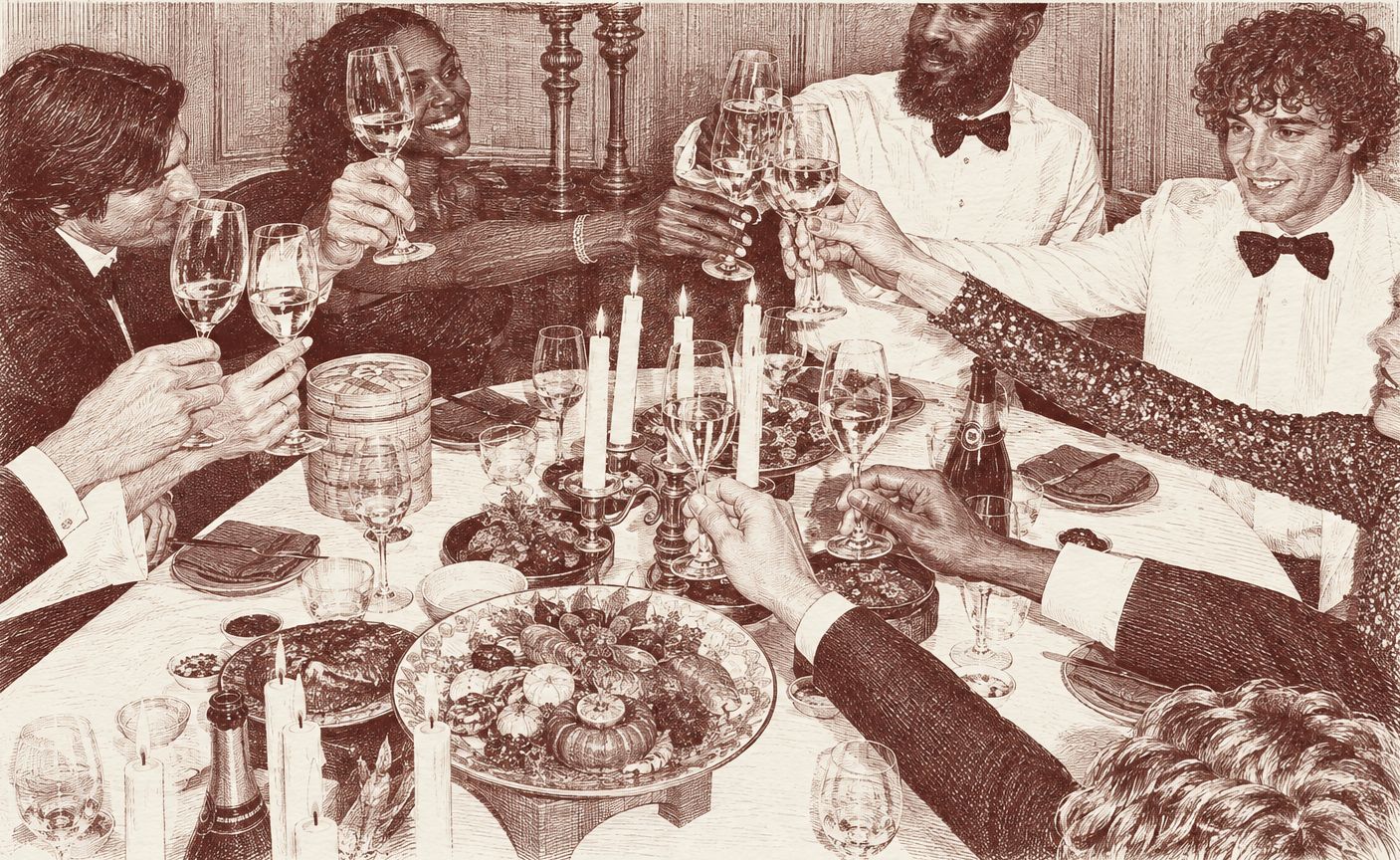
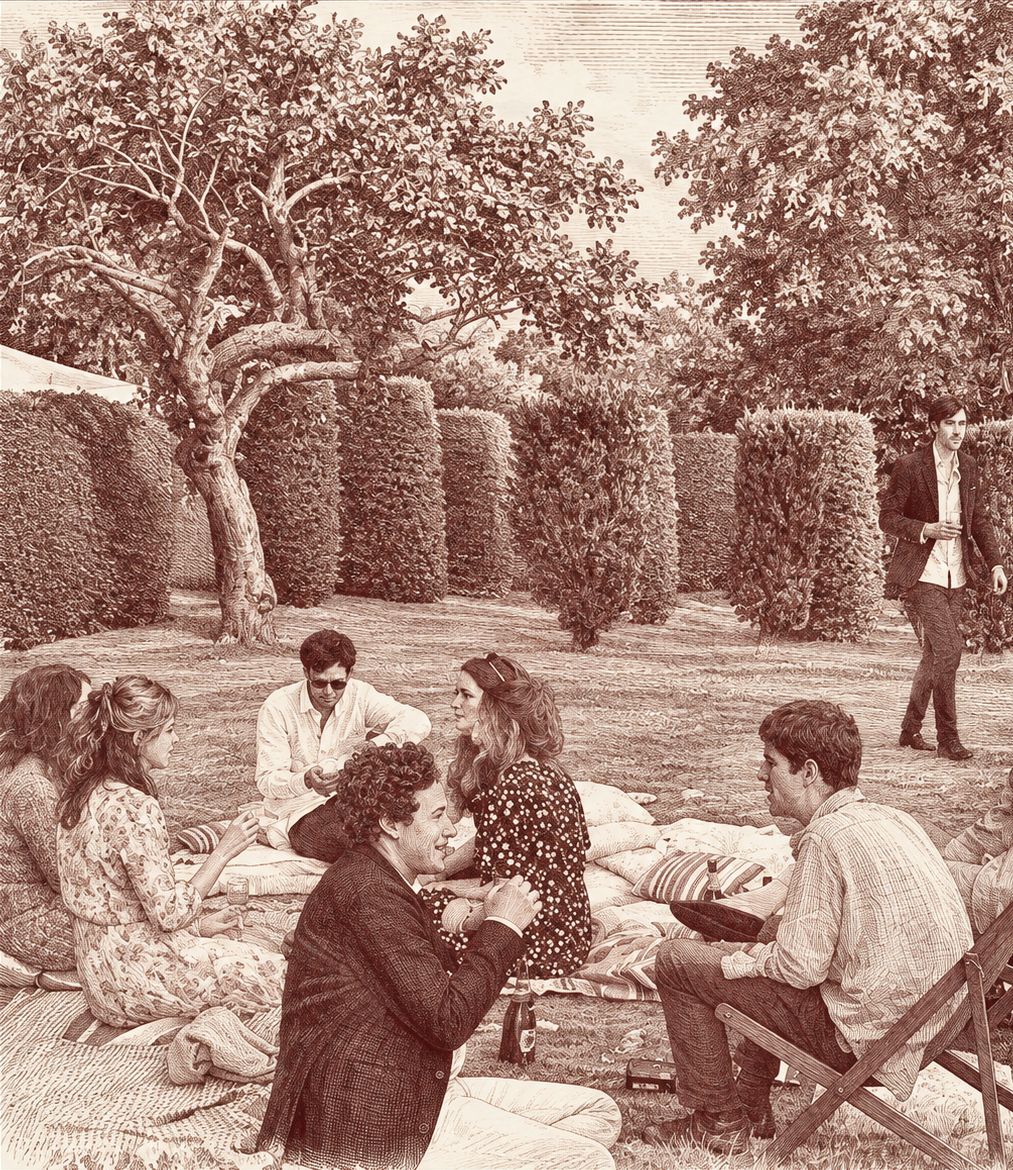
The Court is not a network, and it does not trade in introductions. It puts the same people in a room together, and it does so repeatedly, over a season and then another.
What passes between them is their own affair. A word at a shoot. A name at dinner. A friendship that began because two people were seated together, which is how it has always worked and how it will always work.
The Court makes no promise of this. It makes the room.
Admission
Membership is not for sale. It is granted, and then it is paid for.
The Court is not assembled by profession. Its members are drawn from the arts, from enterprise, from public life and private, and what they hold in common is not a field but a bearing.
A name is proposed by a member, or requested directly through the Court. The Court reviews each in turn, and grants membership at its discretion. What is asked is not means but judgment: how a person dresses, how they conduct themselves, and whether the room is better for their being in it.
Membership opens with a founding cohort of twenty-five. The Court receives applications in season and opens to new names as the room allows. This cohort is the first of several, and what it holds is not the last place at the table.
A founding place is a thousand dollars, once, and no dues are charged against it in any season. A place taken in a later season carries a joining fee of two thousand five hundred and annual dues of twelve hundred a year. Engagements are charged individually in both cases, at the same sum for every member, and the sum is stated in the invitation.
Founders hold first call where places are contested, the right to propose names before general application opens, and their names in the register of the Court’s first season. The Court’s arrangements are theirs besides: passage, seating, and entry to any engagement on the calendar, sought on their behalf and on no one else’s. Every engagement is photographed, and what is worth keeping is sent afterward.
Once a year the Court buys something worth keeping. It stays with the members, and the members choose it.
To Propose a Name
Members may put a name before the Court. A proposal carries the weight of the member who makes it, and is reviewed as any other name is reviewed.
Put a Name ForwardParticulars
Questions put to the Court.
Must I be nominated by a member?
No. A member may propose a name, or a name may be put forward directly. Both are reviewed the same way.
What happens after I apply?
The name is put before the Committee. Those the Court wishes to meet are written to, and a meeting follows, generally over lunch. A place is then offered, or it is not.
How long until I hear?
Applications are reviewed as the season allows. If some weeks pass without word, the Court has not yet reached a decision. It will.
If I am not selected, may I apply again?
Yes, in a future season. A decision reflects the room as it stands, not a judgment held permanently.
What is asked of a member?
Attendance, chiefly. A member who has not been out with the Court across a whole season is written to and asked whether the place is still wanted. It is a question rather than a judgment, and it is asked of everyone.
Is the Court useful for business?
Not in the way the question is usually meant. Nobody is introduced, pitched, or brokered. What comes of knowing people is theirs to arrange, elsewhere and afterward. Those who join for the room tend to find it. Those who join for the pipeline tend not to stay.
What does membership cost?
A founding place carries a one-time fee of one thousand dollars, and no dues are charged against it, then or later. A place taken in a later season carries a joining fee of two thousand five hundred dollars and annual dues of twelve hundred, charged once a year rather than by the month. Engagements are charged individually in every case.
What does an engagement cost?
It depends on the engagement. The sum is put to members before anything is committed, and it covers the whole of the day: the place and the arranging of it.
Why are engagements not included in the dues?
Because a fee that covered two hundred and fifty engagements would be a fee for two hundred and forty a member never attends. The Court would rather each member pay for the year they actually keep. What dues buy is the place, the register, and the arranging.
What concierge does the Court provide?
The concierge is for the two hundred engagements the Court does not host. At those, it seeks passage, seating and entry on a member’s behalf, and arranges the whole of the day: getting there, where to stay, and the table afterward. Six such arrangements a year belong to every membership, founding places included, and beyond those a fee of a hundred and fifty dollars is charged for each. What the engagement itself costs is put to the member before anything is committed.
At the fifty engagements the Court hosts, the arranging is part of the engagement and is not counted against the six.
Must I have shot, ridden, or sailed before?
No. Instruction is provided at every engagement that calls for it. What is asked is willingness, not proficiency.
Where does the Court meet?
Nowhere permanently. Each engagement has its own address, given when the invitation is sent.
May I bring a guest to an engagement?
By arrangement, and subject to room. Guests observe the same code as members, dress included.
What is the dress code?
It differs by engagement and comes with the invitation. Where the Court asks for confirmation, a photograph of the intended dress is sent a week in advance.
How do I attend an engagement the Court does not host?
Ask. The Court approaches the host, and where the engagement allows it, a place is found. What it costs is put to you before anything is committed.
The Court’s vocabulary is set out in the Lexicon.
The Antechamber
The Court receives in season. When the next season opens, those who have left a name are written to first.
Enquiries

A private members club in the old tradition.
In the court of kings.
New York · Founded MMXXVI
The Court
The Mansa Court is a private members club in New York. It exists for those who hold the occasion above the purchase, and company above audience. Its calendar is deliberate, its rooms are quiet, and its pleasures are the older ones: the shoot, the course, the paddock, the box, the long table.
The Court keeps no permanent house. It convenes where the season takes it, at private fields and borrowed rooms, at tables set for the evening and struck by morning. A society is its people, not its address. The Court is private even where the occasion is not.
The Name
Mansa is the Mandinka word for king. It was borne by the rulers of the Mali Empire, and most famously by Mansa Musa, whose pilgrimage across the Sahara in the fourteenth century was said to have moved the price of gold in every city it passed through.
A court is not the king. A court is the company he keeps: the counsellors, the artists, the diplomats, the ones worth having at the table. That is the older meaning, and the one the Court takes for itself.
Aula Regum. The court of kings.
The Season
Two hundred and fifty engagements. The year as the Court keeps it.
Dates are confirmed in the invitation.
{{ emptyLine }}
Since {{ event.founded }}
{{ event.date }} ·
{{ event.duration }}
Dress Code · {{ event.dress }}
{{ event.tag }}
{{ event.places }}
{{ event.note }}
The Court arranges the whole of the day: getting there, where to stay, and the table afterward.
At the fifty engagements the Court hosts, members reply to the invitation and the arranging is part of the engagement. At the two hundred it does not, passage, seating and entry are sought on a member’s behalf, and on behalf of the guests they sponsor. What an engagement costs is put to the member before anything is committed. The Court arranges for its members, and for no one else.
The Argument
There was a time when a man’s year had a shape to it. The season opened, the season closed, and the same company gathered in between. What one attended said something, and one attended it in company that had been chosen rather than assembled.
Little of that survives. The rooms are open now, and filling them is a matter of price rather than judgment. Access is sold rather than extended, which is why the price keeps rising and the company keeps thinning.
The Court does not intend to fix this. It intends to sit outside it.
What it keeps is a year with a shape: engagements chosen in advance, a code that is stated plainly and held to, and the same faces across a season and then another. There is nothing novel in any of it. Societies were run this way for three centuries before anyone thought to sell membership by the month.
The Code
What the Court asks of those who sit at its table.
Dress
Every engagement carries a dress code. It is stated in the invitation, and it is not negotiable. Where the Court asks for it, outfits are confirmed in advance.
Punctuality
The Court begins when it says it will begin.
The Camera
The Court brings its own photographer. Members are asked to keep their telephones in their pockets.
Discretion
What is said at the table stays at the table. Members are photographed. Conversations are not.
Introductions
No one is pitched at the table. Business is conducted elsewhere, and afterward, and never in the room.
Guests
A member may bring a guest to an engagement by arrangement, and answers for them. Proposing a name for membership is a separate matter, and the Court reviews it as it reviews any other.
Withdrawal
A place accepted is a place held. Word of a withdrawal is expected early, as an empty seat is one denied to another.
Standing
Membership is held, not owned. It is kept by attendance, by conduct, and by the company one brings.


The Company
The Court is not a network, and it does not trade in introductions. It puts the same people in a room together, and it does so repeatedly, over a season and then another.
What passes between them is their own affair. A word at a shoot. A name at dinner. A friendship that began because two people were seated together, which is how it has always worked and how it will always work.
The Court makes no promise of this. It makes the room.
Admission
Membership is not for sale. It is granted, and then it is paid for.
The Court is not assembled by profession. Its members are drawn from the arts, from enterprise, from public life and private, and what they hold in common is not a field but a bearing.
A name is proposed by a member, or requested directly through the Court. The Court reviews each in turn, and grants membership at its discretion. What is asked is not means but judgment: how a person dresses, how they conduct themselves, and whether the room is better for their being in it.
Membership opens with a founding cohort of twenty-five. The Court receives applications in season and opens to new names as the room allows. This cohort is the first of several, and what it holds is not the last place at the table.
A founding place is a thousand dollars, once, and no dues are charged against it in any season. A place taken in a later season carries a joining fee of two thousand five hundred and annual dues of twelve hundred a year. Engagements are charged individually in both cases, at the same sum for every member, and the sum is stated in the invitation.
Founders hold first call where places are contested, the right to propose names before general application opens, and their names in the register of the Court’s first season. The Court’s arrangements are theirs besides: passage, seating, and entry to any engagement on the calendar, sought on their behalf and on no one else’s. Every engagement is photographed, and what is worth keeping is sent afterward.
Once a year the Court buys something worth keeping. It stays with the members, and the members choose it.
Your application has been received. The Court will write to you in due course.
To Propose a Name
Members may put a name before the Court. A proposal carries the weight of the member who makes it, and is reviewed as any other name is reviewed.
The name is with the Court. It will be considered in its turn, and the Court writes to the member who put it forward.
Particulars
Questions put to the Court.
Must I be nominated by a member?
No. A member may propose a name, or a name may be put forward directly. Both are reviewed the same way.
What happens after I apply?
The name is put before the Committee. Those the Court wishes to meet are written to, and a meeting follows, generally over lunch. A place is then offered, or it is not.
How long until I hear?
Applications are reviewed as the season allows. If some weeks pass without word, the Court has not yet reached a decision. It will.
If I am not selected, may I apply again?
Yes, in a future season. A decision reflects the room as it stands, not a judgment held permanently.
What is asked of a member?
Attendance, chiefly. A member who has not been out with the Court across a whole season is written to and asked whether the place is still wanted. It is a question rather than a judgment, and it is asked of everyone.
Is the Court useful for business?
Not in the way the question is usually meant. Nobody is introduced, pitched, or brokered. What comes of knowing people is theirs to arrange, elsewhere and afterward. Those who join for the room tend to find it. Those who join for the pipeline tend not to stay.
What does membership cost?
A founding place carries a one-time fee of one thousand dollars, and no dues are charged against it, then or later. A place taken in a later season carries a joining fee of two thousand five hundred dollars and annual dues of twelve hundred, charged once a year rather than by the month. Engagements are charged individually in every case.
What does an engagement cost?
It depends on the engagement. The sum is put to members before anything is committed, and it covers the whole of the day: the place and the arranging of it.
Why are engagements not included in the dues?
Because a fee that covered two hundred and fifty engagements would be a fee for two hundred and forty a member never attends. The Court would rather each member pay for the year they actually keep. What dues buy is the place, the register, and the arranging.
What concierge does the Court provide?
The concierge is for the two hundred engagements the Court does not host. At those, it seeks passage, seating and entry on a member’s behalf, and arranges the whole of the day: getting there, where to stay, and the table afterward. Six such arrangements a year belong to every membership, founding places included, and beyond those a fee of a hundred and fifty dollars is charged for each. What the engagement itself costs is put to the member before anything is committed.
At the fifty engagements the Court hosts, the arranging is part of the engagement and is not counted against the six.
Must I have shot, ridden, or sailed before?
No. Instruction is provided at every engagement that calls for it. What is asked is willingness, not proficiency.
Where does the Court meet?
Nowhere permanently. Each engagement has its own address, given when the invitation is sent.
May I bring a guest to an engagement?
By arrangement, and subject to room. Guests observe the same code as members, dress included.
What is the dress code?
It differs by engagement and comes with the invitation. Where the Court asks for confirmation, a photograph of the intended dress is sent a week in advance.
How do I attend an engagement the Court does not host?
Ask. The Court approaches the host, and where the engagement allows it, a place is found. What it costs is put to you before anything is committed.
The Court’s vocabulary is set out in the Lexicon.
The Antechamber
The Court receives in season. When the next season opens, those who have left a name are written to first.
Your name is with the Court.
Enquiries
The members’ rooms open with the first season. Credentials are issued by invitation.
Request an InvitationThe Mansa Court · New York · Aula Regum
Since {{ panel.founded }}
{{ panel.date }} ·
{{ panel.duration }}
Dress Code · {{ panel.dress }}
{{ panel.tag }}
{{ panel.places }}
{{ panel.note }}
The Court arranges the whole of the day: getting there, where to stay, and the table afterward.
This site keeps two small things between visits: the month you last viewed, and an application you have begun. Nothing else, and nothing that leaves it. The Cookies Policy sets out what is kept, and either answer may be changed at any time.