
THE BOAT RACE
Late March · Putney to Mortlake · An Afternoon · Since 1829
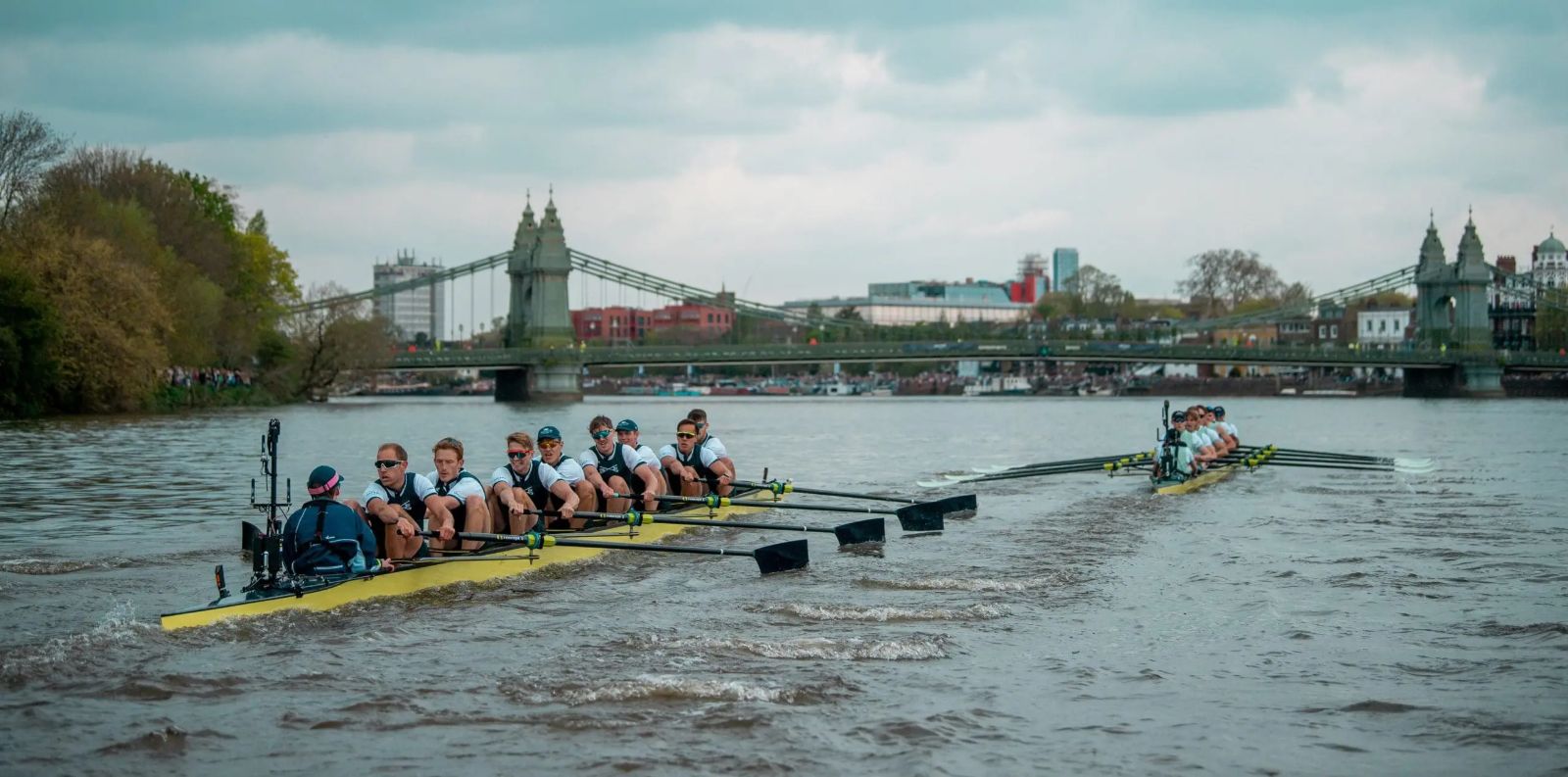
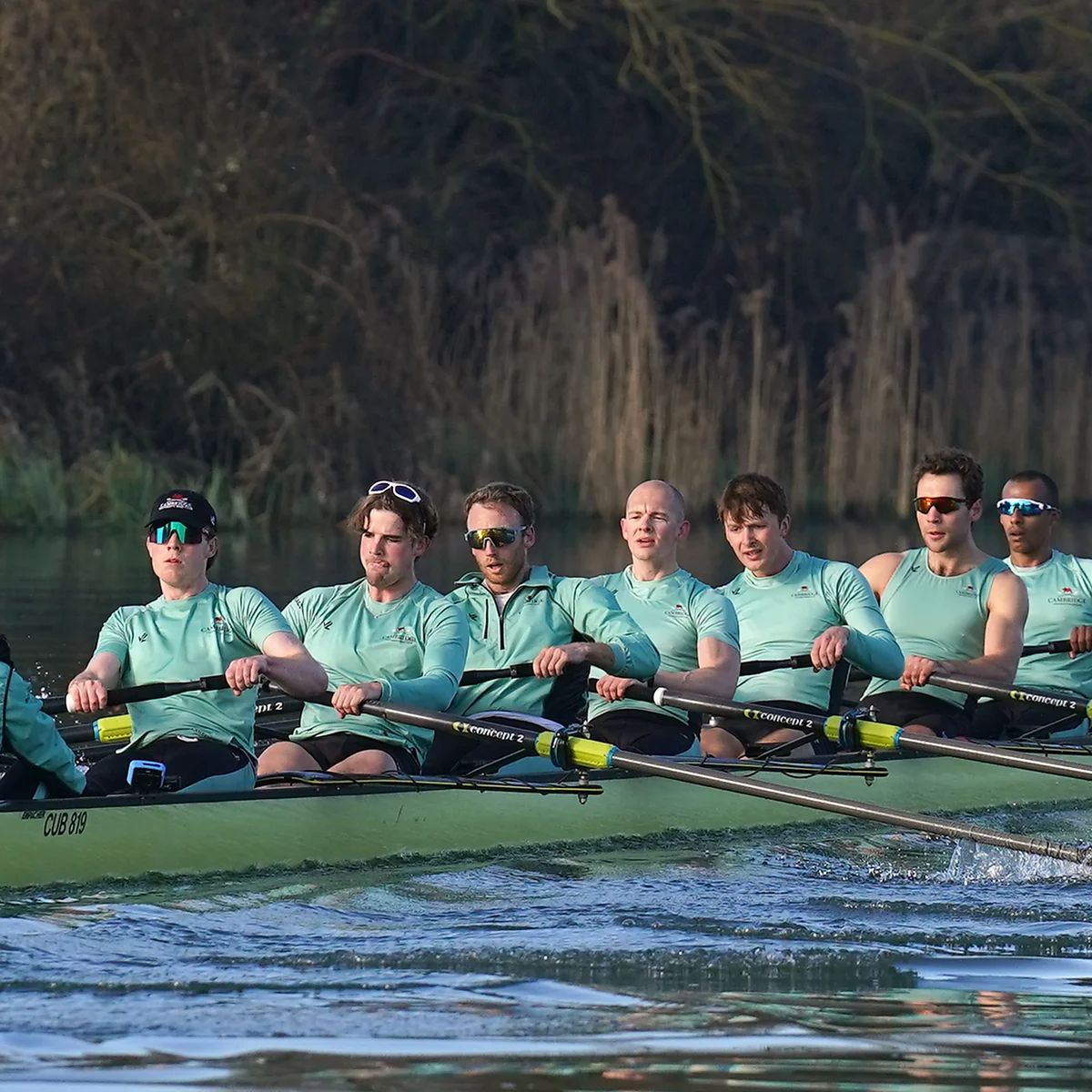
The Boat Race is four miles and three hundred and seventy-four yards of tidal Thames, from Putney to Mortlake, rowed by two universities on an afternoon in late March.
Nobody pays to watch it. Several hundred thousand people line the banks.
The Challenge
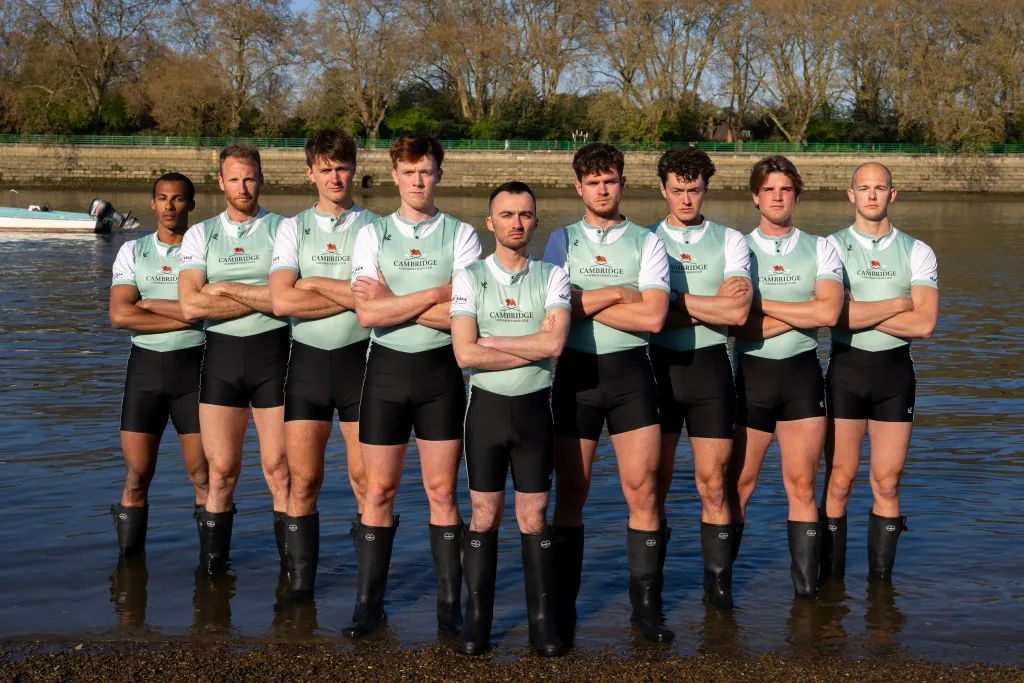
In March 1829 Cambridge wrote to Oxford proposing a match, eight oars a side, on the Thames. It was rowed at Henley that June. Oxford wore dark blue and won. Cambridge wore white with pink waistbands and did not adopt light blue until the second race, seven years later.
Twenty thousand people came out to Henley to watch. The town, having seen what an afternoon’s rowing could bring, decided to organise a regatta of its own. That became Henley Royal Regatta, which is to say that one of the great fixtures of the English summer exists because two universities held a private argument in public.
The tradition established that year still governs the fixture. There is no season and no schedule. Each year the losing university formally challenges the winner to a rematch, and the race happens because the challenge is accepted.
It moved to London, to Westminster, and then in 1845 upriver to what was then the village of Putney, because Westminster had grown too crowded. It has been annual since 1856, interrupted only by two wars and a pandemic.
The Tideway
The course is neither straight nor still.
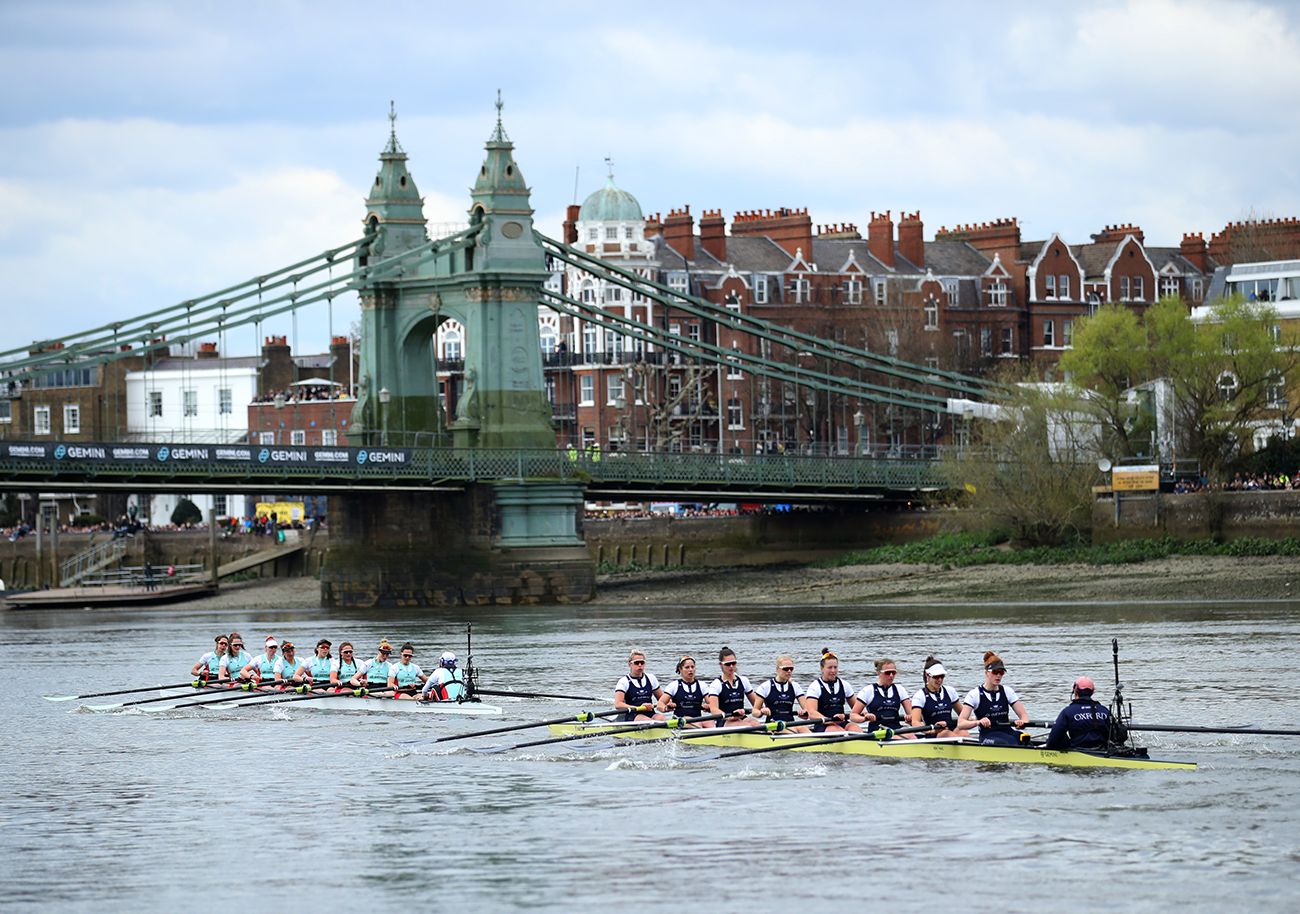
The race is rowed on a flood tide, with the incoming sea pushing the crews upriver, and the fastest water does not run down the middle. It follows the outside of each bend. The course turns twice, which means the advantage passes from one station to the other and back again, and a cox who takes the wrong line loses lengths that no amount of rowing will recover.
Station is decided by a coin toss before the start, and that toss matters more here than at almost any other race in sport.
In nearly two hundred runnings there has been one dead heat, in 1877. The narrowest result was a foot, in 2003.
What to Know
It is free. This is the least exclusive engagement on the calendar and among the best of them, and the banks from Putney to Chiswick fill with people who have no connection to either university.
The nineteenth century made it a London festival rather than a university one. Ribbons in light or dark blue went on costermongers’ donkeys, on dust carts, on cab drivers’ whips and round the necks of match boys. The city took sides.
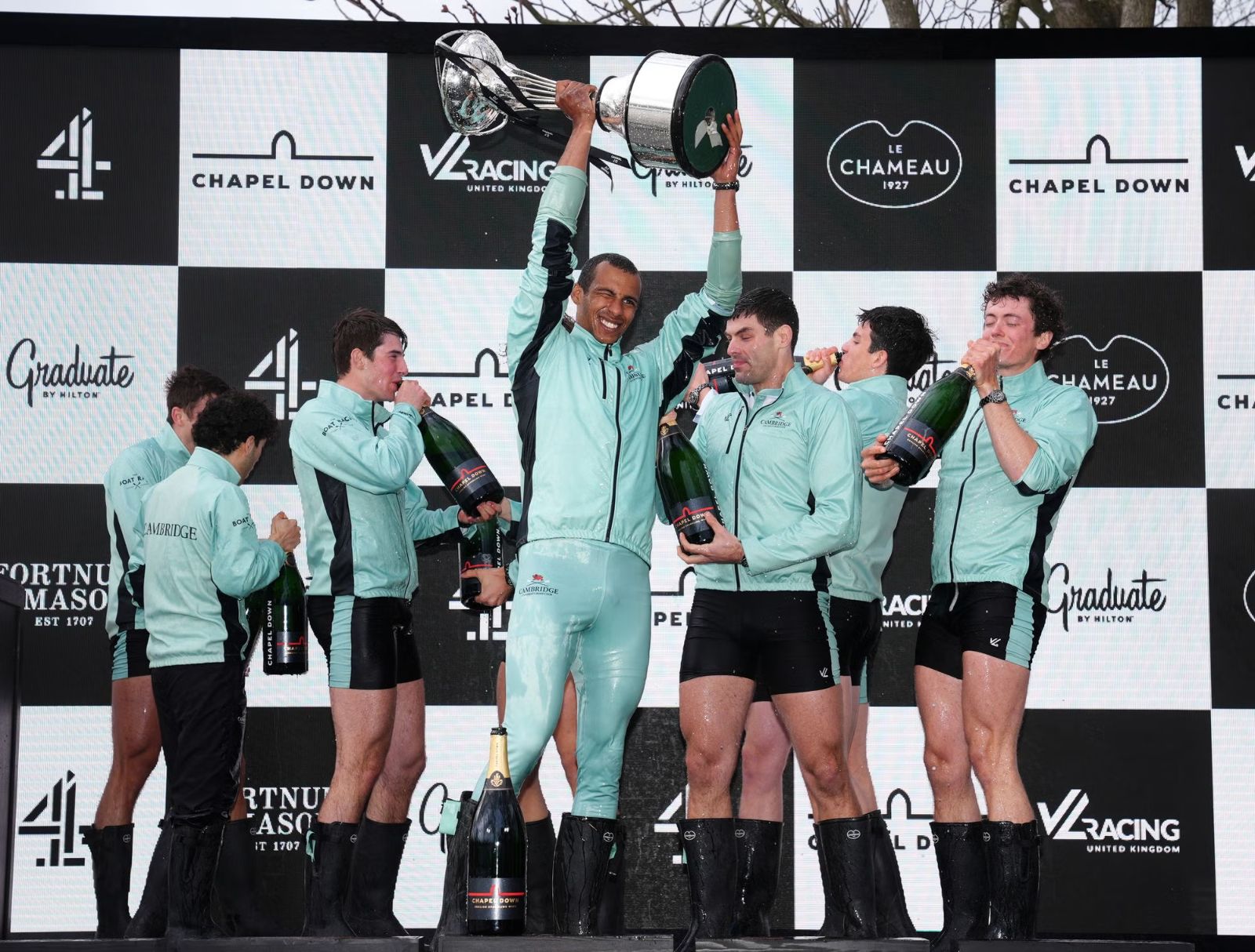
The men’s and women’s races have been rowed on the same course on the same day since 2015, which was a long time coming and is now simply how it is done.
Hammersmith Bridge and the Chiswick bend are the places to stand. Both sit on the outside of a turn, which is where the boats come closest to the bank.
March on the Tideway is cold and frequently wet, and nobody watching is under cover.
The Court
The Boat Race is not the Court’s own. Places aboard following launches, club balconies along the river and tables afterward are sought on a member’s behalf, and the Court arranges the whole of the day: getting there, where to stay, and the table afterward. The launches are the difficult part and there are very few of them.
