

THE SALON DE MUSIQUE
Mid to Late March · New York · An Evening · Hosted by the Court
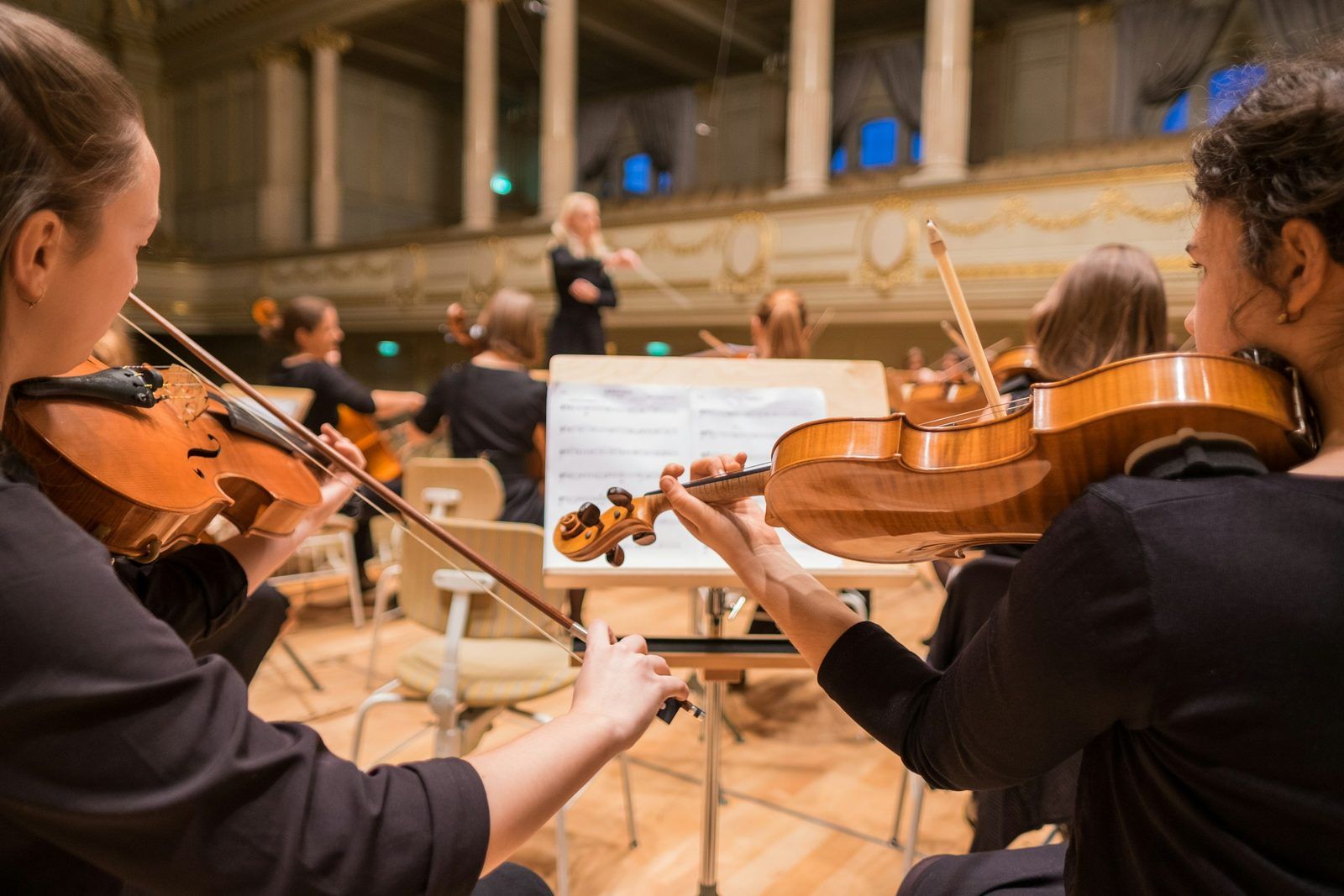
The Salon de Musique is an evening in the second half of March for thirty. Players are received in a borrowed room rather than sent to a stage.
A short programme, then a long supper, and the instruments stay out.
The Form
Chamber music means what it says. Musica da camera was music for a room, as distinct from music for a church or a theatre, and for most of its history that is where it was heard: in houses, at a distance of a few feet, by people who could watch the players’ hands.
The concert hall changed that, and it changed it recently. The arrangement everyone now takes for granted, with a darkened room, a raised platform, silence between movements and an audience of a thousand facing four people, is a nineteenth-century invention. Wagner darkened the auditorium at Bayreuth in 1876 and the rest of Europe followed him.
What was lost is not obvious until you hear the alternative. A string quartet is four people close enough to hear one another breathe, and the music is written to carry that. In a hall of two thousand seats, most of the room cannot hear the thing the composer was writing about.
Chopin understood this and acted on it. He gave perhaps thirty public concerts in his whole life and played almost everything else in private rooms, to thirty or forty people, because that is where the music worked.
The Evening
Thirty places. Guests arrive at seven.
The programme is short, an hour and rarely more, and it is chosen by the players rather than by the Court. Nothing is announced from the front and there is no interval.
Nobody applauds between movements, and nobody is told not to. In a room this size the question does not arise.
Supper follows at a long table and the musicians sit at it. That is the part which separates the evening from a concert. At a concert the players leave through one door and the audience leaves through another. Here they eat with the room, get asked what they were doing in the third movement, and generally play again later, because the instruments are still out.
What Is Asked
Black tie. It is stated in the invitation.
The Court begins at half past seven whether or not everyone is there. An hour of music cannot be held for a late arrival.
Telephones are collected at the door and returned at supper. It is the only engagement at which the Court asks for that, and it is asked because a room of thirty cannot absorb a single telephone.
A photographer attends before the programme and after supper. Not during.
Nobody is pitched at the table.
The Places
Thirty. It is among the larger companies the Court gathers, because a quartet fills a room of that size and no more.
Members are written to in February. The sum is stated in the invitation and covers the whole of the evening, including what is paid to the players, which is the larger part of it.
