

THE VENICE CARNIVAL
February into March · Venice · Ten Days · Since 1162
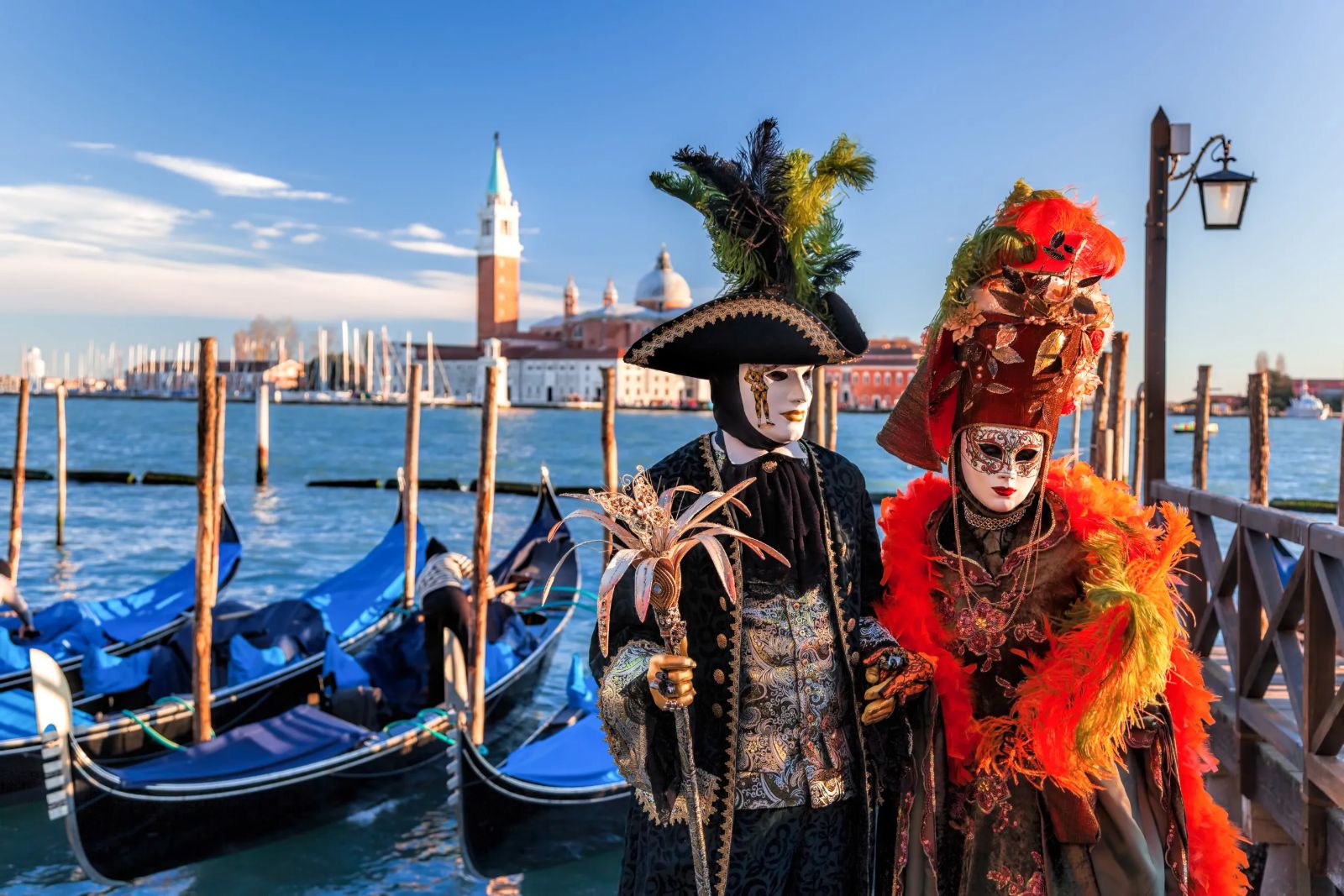
The Venice Carnival runs for about ten days and ends on Shrove Tuesday. The city fills, the masks come out, and for a fortnight Venice is something close to what it was.
The word carnevale comes from the Latin for the removing of meat. The whole season is the last indulgence before forty days without one.
The Mask
The masks were not decoration. They were an instrument.
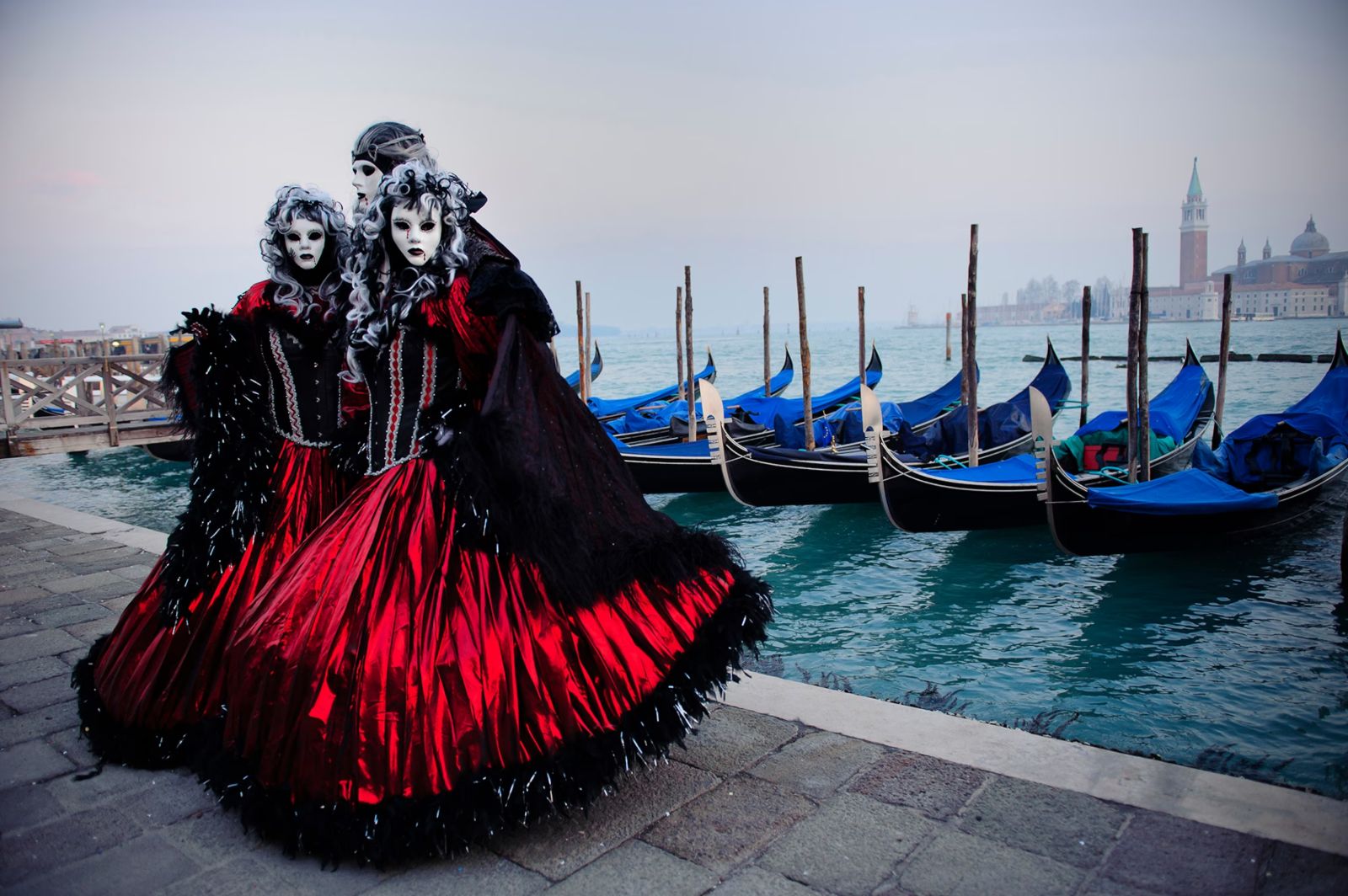
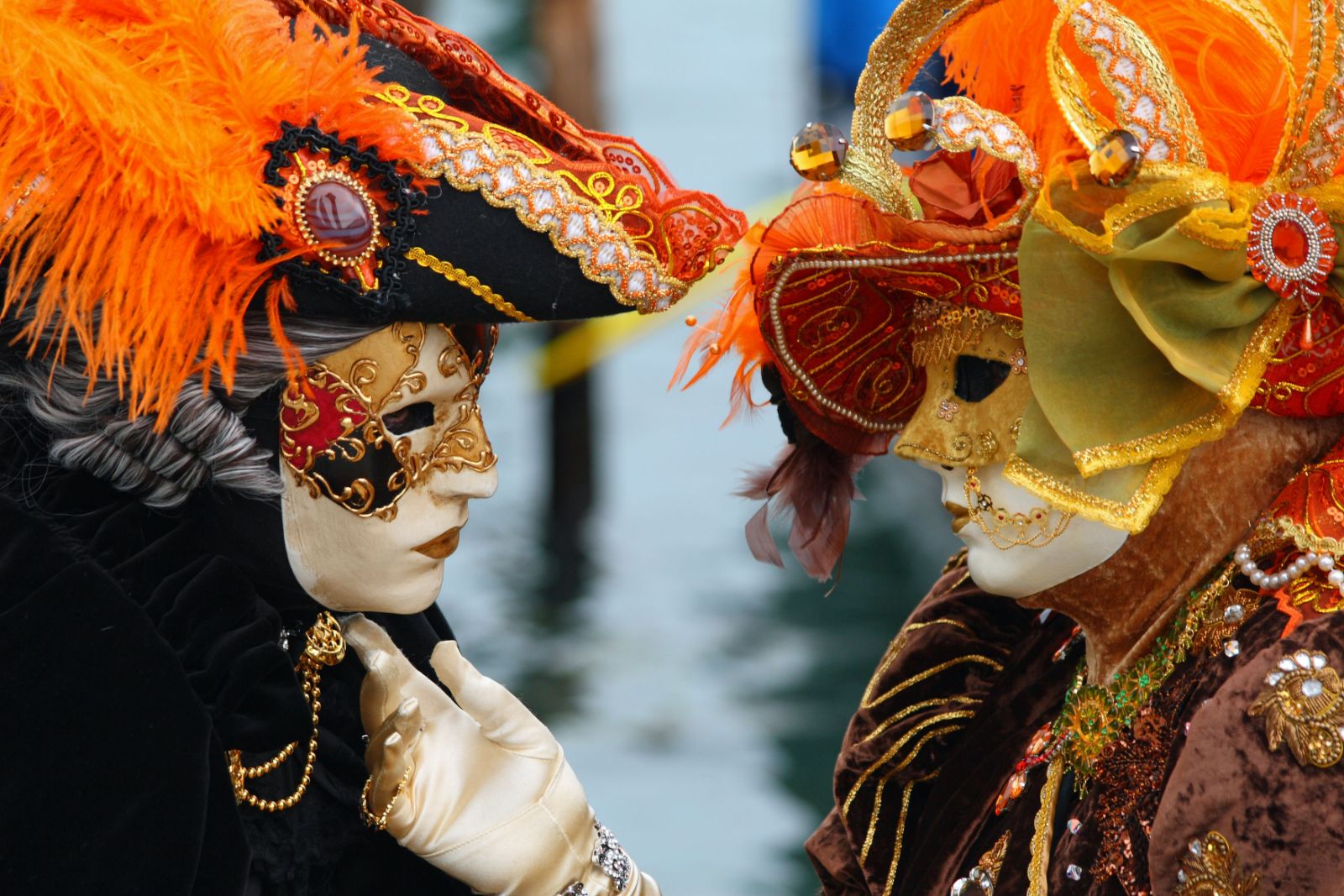
The bauta is the one everyone knows: a stark white face with a jutting chin that lets the wearer eat and speak without taking it off, worn with a black tricorn and a cloak. It concealed sex as well as identity, and it was worn by patrician and porter alike.
Which is the part that gets lost. A Venetian in a bauta could not be placed. He could enter a gaming house, argue in the street, or address a man far above him, and that man could not tell whether he was being spoken to by an equal. The bauta was worn at official business, including voting and political meetings, precisely because it took rank out of the room.
The moretta went further and is stranger. A small oval of black velvet, held in place by a button gripped between the teeth. A woman wearing one could not speak at all. She was anonymous and silent, and removing the mask ended both conditions at once.
The Two Centuries
The carnival is first mentioned in a document of 1092 and is usually dated to a victory celebration in 1162. It ran for six hundred years, and at its height it went on for months at a time.
Napoleon ended it. He took Venice in 1797 and masks and public festivity were banned. What survived was the private party in the palace and a single ball at La Fenice. The city passed to Austria and the carnival did not return. The fascist government banned it again in the 1930s, in case anyone had ideas.
In 1967 some Venetians began holding costumed parties privately. In 1979 it was formally revived, partly as culture and partly as economics, and the mask-makers went back to work.
So the carnival kept today is a hundred and eighty years younger than it looks, and everyone in Venice knows it.
What to Know
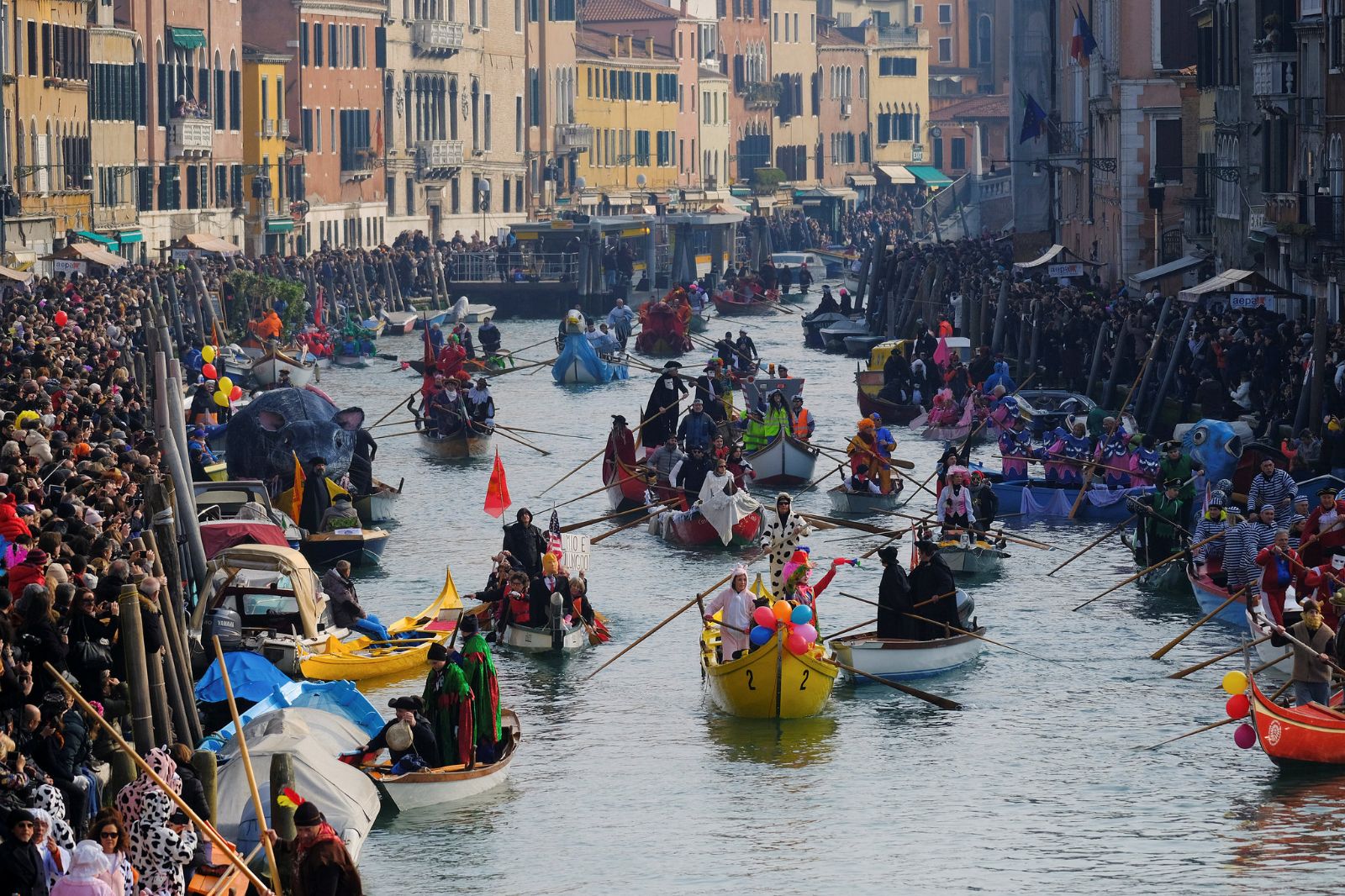
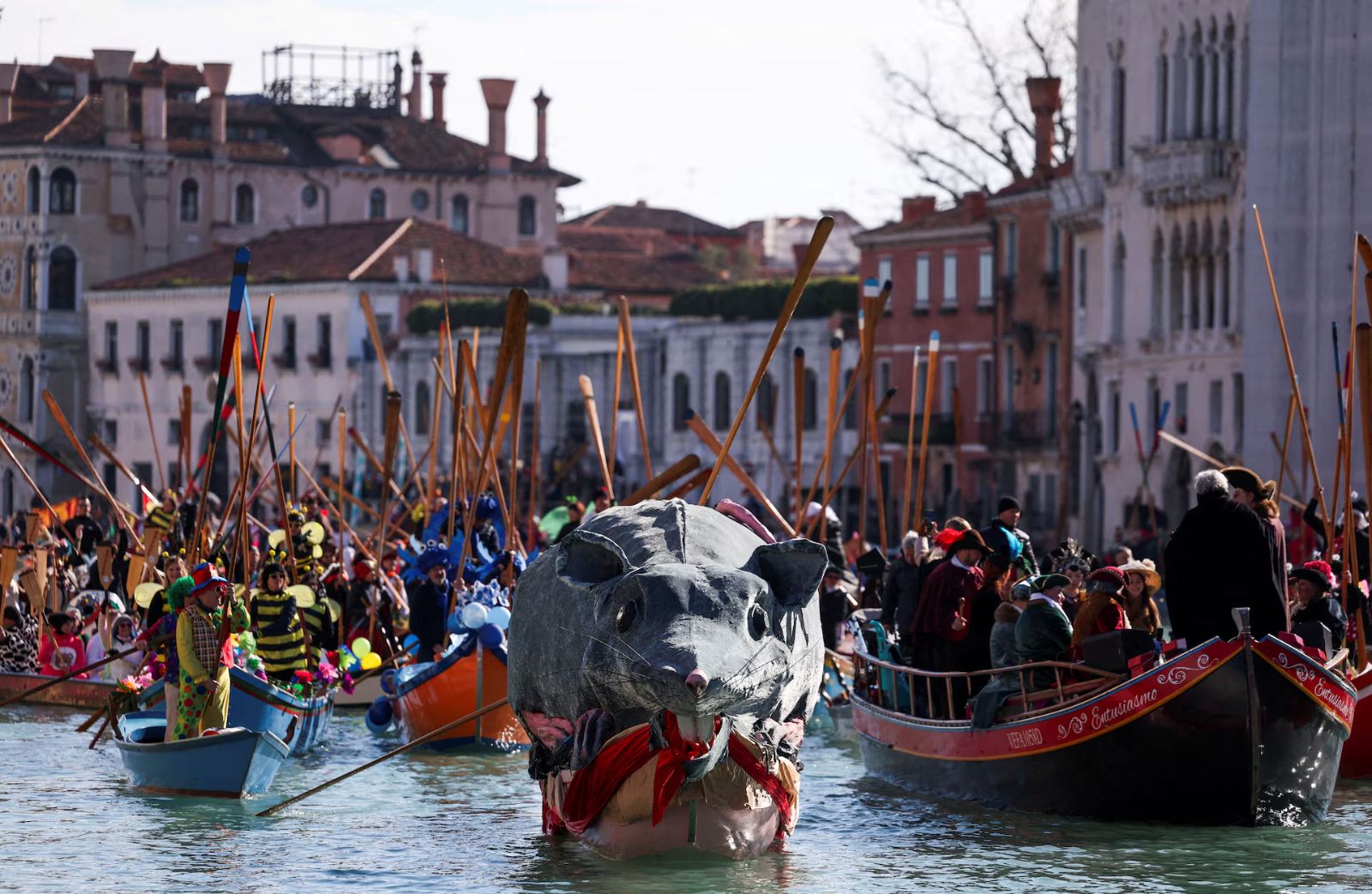
Most of what happens is free and outdoors. The parades, the water processions, the Flight of the Angel down a rope into St Mark’s Square. None of it costs anything.
The balls are the opposite. Il Ballo del Doge, invented in 1994 by a Venetian designer, is the one people mean when they speak of the private carnival, and it is priced accordingly. Others are given at the Ca’ Vendramin Calergi and in palaces along the Grand Canal.
Costume is not optional at a ball, and it is not a rented cape. The good houses hire from the workshops that make them, and a fitting takes time and should be arranged months out.
St Mark’s Square on the final weekend is unbearable. The islands are not. Burano holds its own carnival and it is better.
The mistake is going for the last weekend. Go mid-week, when the city still belongs to the people who live in it.
The Court
The Venice Carnival is not the Court’s own. Places at the private balls, costume from the workshops that make it, and rooms in the city are sought on a member’s behalf, and the Court arranges the whole of it: getting there, where to stay, and the table afterward. Both the balls and the costumiers are taken months ahead.
