
WHITE TURF
Three Sundays in February · Lake St. Moritz, Engadin · Since 1907
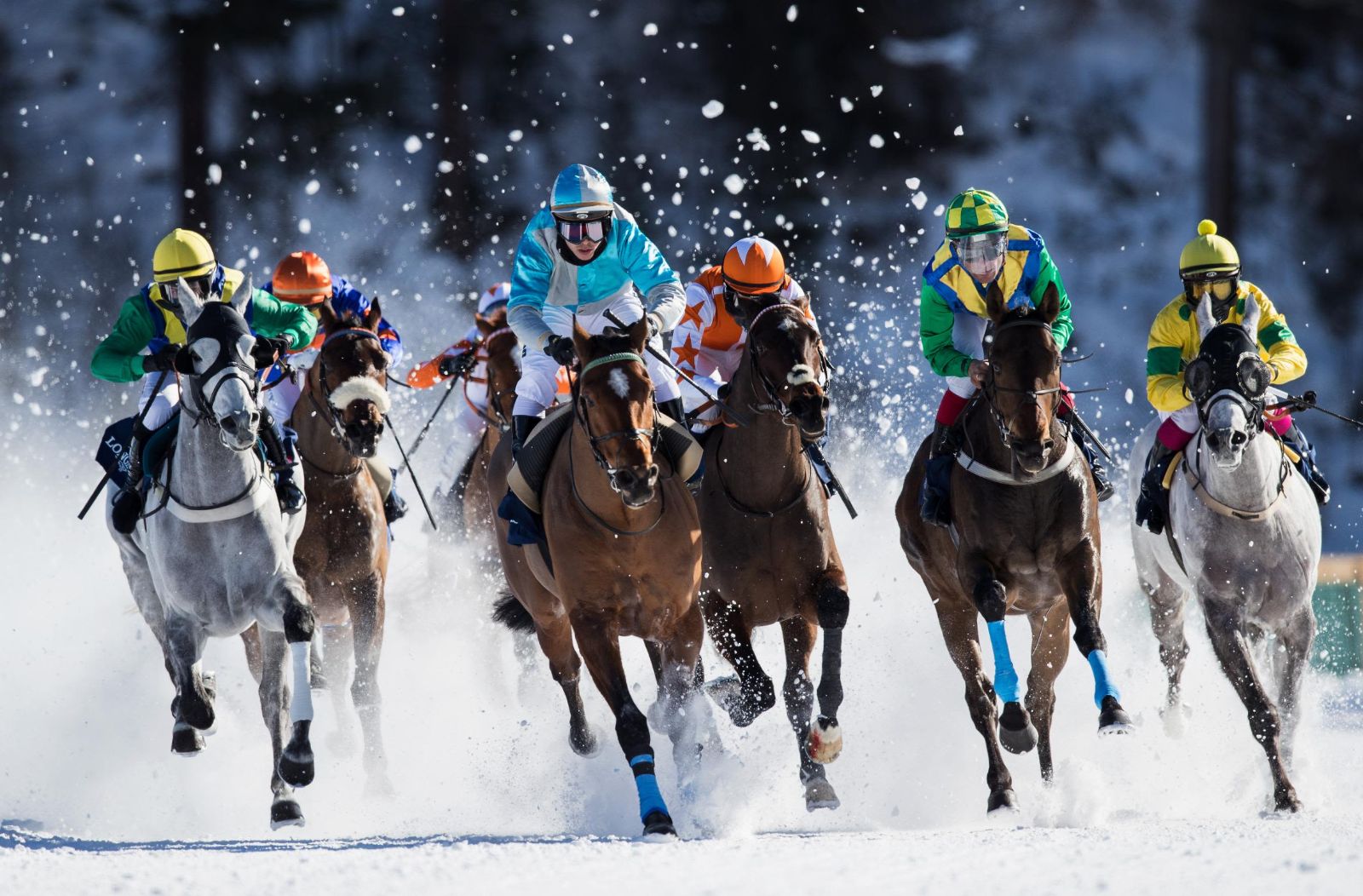
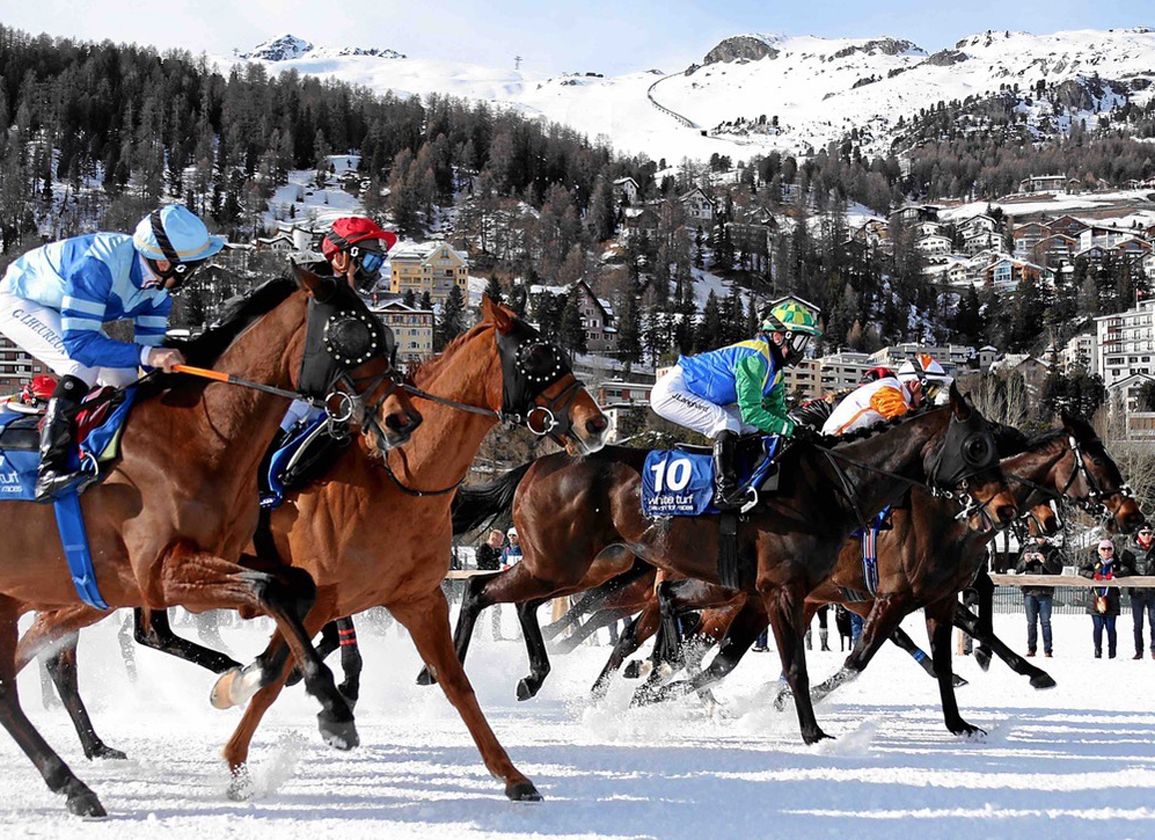
White Turf is horse racing on a frozen lake, run across three Sundays in February. Flat racing, trotting, and one discipline that exists nowhere else on earth.
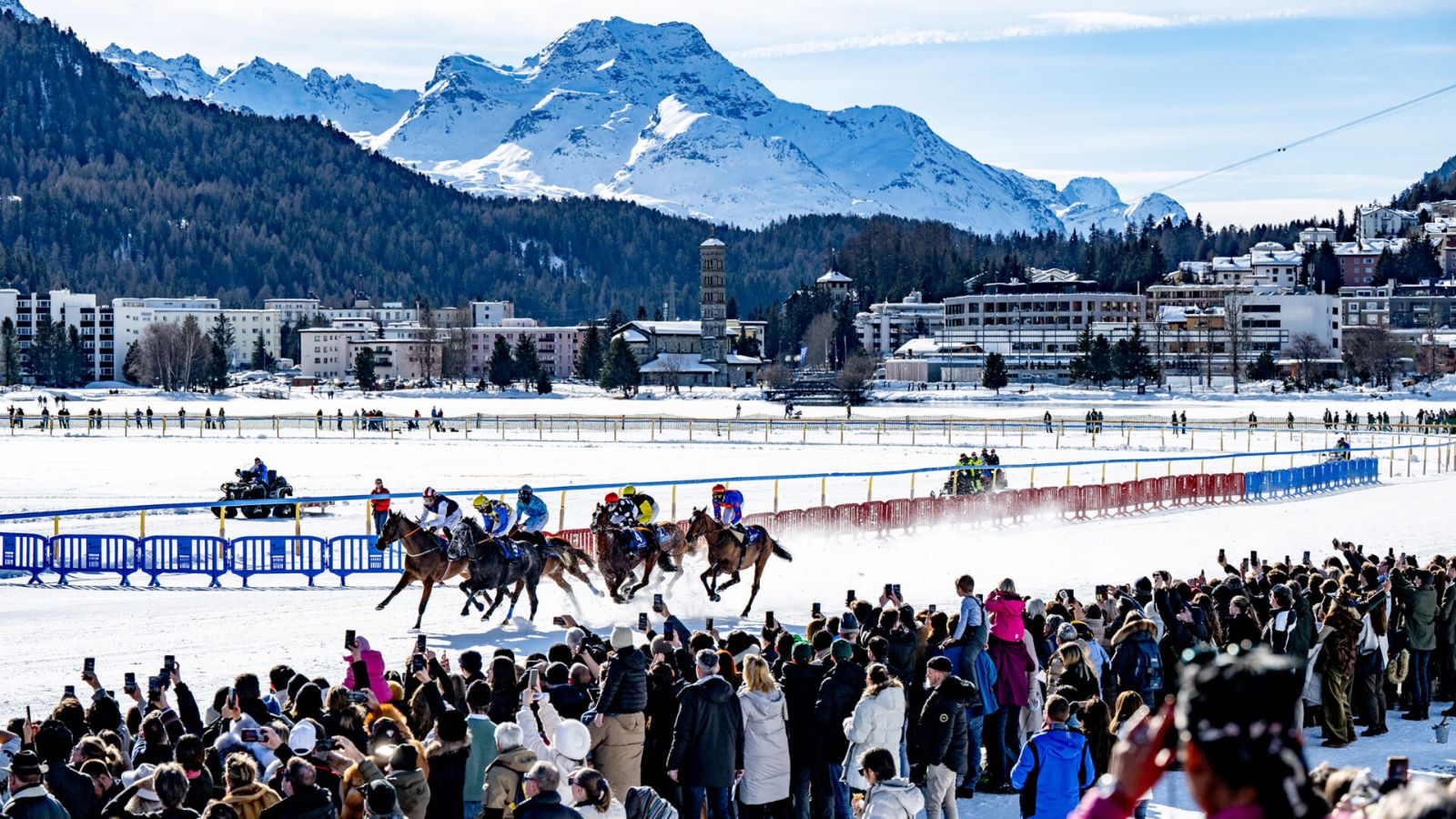
Some thirty-five thousand people stand on the ice across the three days.
The Lake
The first races were run in 1906 on the village roads, horses and drivers covering six miles through St. Moritz against the clock. The following year the organisers moved onto the lake, put the horses in groups on a prepared track, and White Turf began. Flat racing was added in 1911.
The lake covers three quarters of a square kilometre and is forty-four metres deep. The ice is measured before the track is laid, and needs to be forty to eighty centimetres thick to carry what is put on it: a racecourse, a tented village of a hundred and thirty thousand square metres, and thirty-five thousand people.
Which is the thing worth understanding about White Turf. It is the only fixture on this calendar whose ground must be certified before anyone may use it, and there have been Januaries when the ice was still too thin in the middle of the month and nobody knew whether the meeting would be held.
The Skijöring
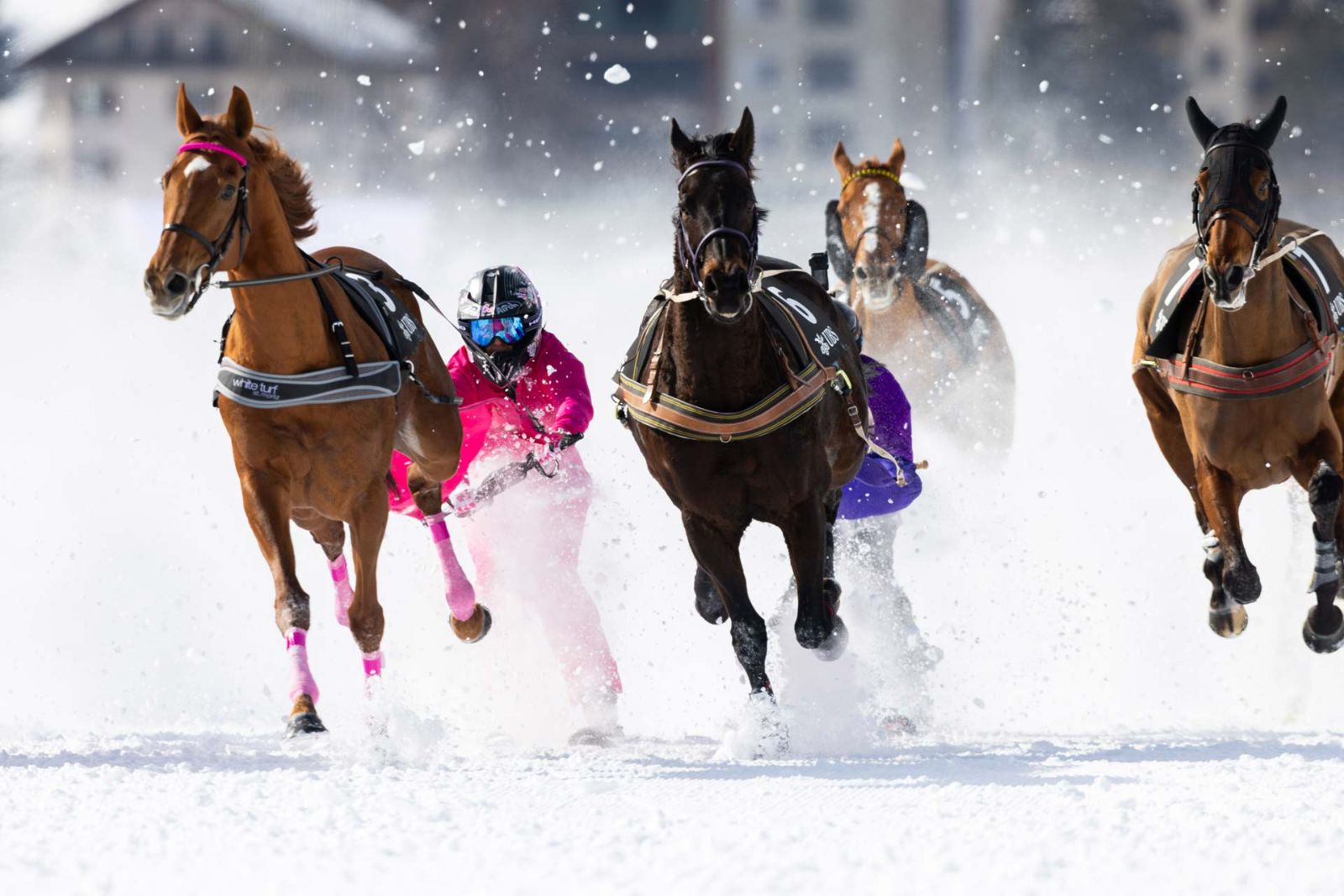
The signature race has no rider.
A thoroughbred runs loose down a course of two thousand seven hundred metres, and a competitor on skis is towed behind it on long reins. He steers by strength and balance at fifty kilometres an hour, with no saddle, no jockey and nothing in front of him but a horse.
Between eight and twelve compete across three heats, and the winner is crowned King of the Engadin. Or Queen: the title has been held by a woman three times in recent years.
It came out of Scandinavia and was made into a sport here in 1906. It appeared at the Winter Olympics in St. Moritz in 1928 as a demonstration, was performed once on the twelfth of February, and was never admitted as a medal event.
In 1965, not one competitor finished the race.
What to Know
Three Sundays. The middle one is generally the busiest.
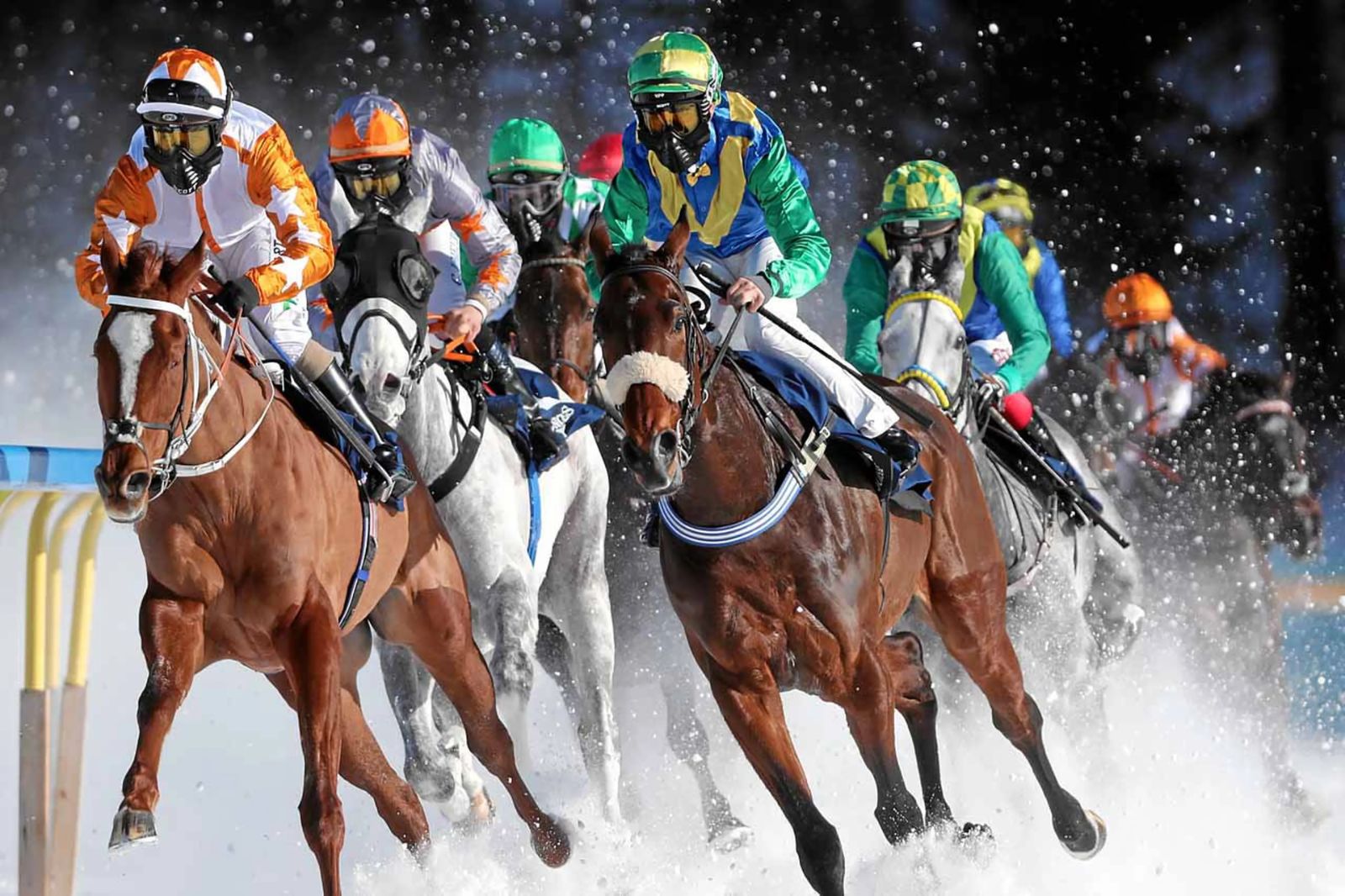
Standing at the rail is the best value and the best view. The horses pass a few feet away in a blizzard of ice.
Dress for four hours on a frozen lake with no shelter and a wind coming down the valley. Country attire and proper boots.
The Snow Polo World Cup is played on the same ice in late January. The track is built, taken up, and built again.
The mistake is watching from inside the tents. The whole point is the ground you are standing on, and it cannot be felt from indoors.
The Court
White Turf is not the Court’s own. Places in the stands, tables in the tented village and rooms in St. Moritz are sought on a member’s behalf, and the Court arranges the whole of the day: getting there, where to stay, and the table afterward. February in St. Moritz is taken well ahead.
