PRIX DE L’ARC DE TRIOMPHE
First Sunday in October · ParisLongchamp, Paris · One Day · Since 1920
2027: not yet announced; France Galop’s British partner gives 2 and 3 October
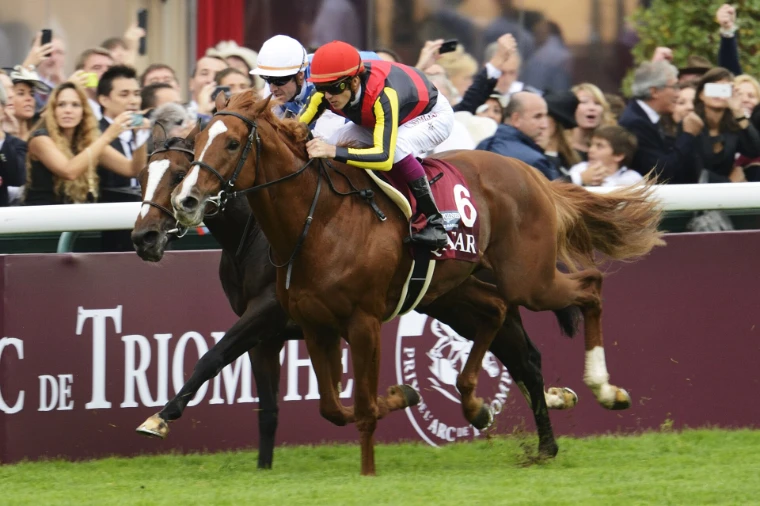
The Prix de l’Arc de Triomphe is a mile and a half on the turf at ParisLongchamp, in the Bois de Boulogne, on the first Sunday of October: a single race of 2,400 metres for horses of three and older, run at five past four in the afternoon on the second day of a weekend that holds seven Group 1 races and four Group 2. Three-year-olds meet their elders at weights for age, and fillies and mares receive an allowance. With five million euros in prize money, it is Europe’s richest flat race.
Its first winner, Comrade, had been bought for a few guineas. He won 150,000 francs.
The Arch
The Société d’Encouragement left the poor ground of the Champ de Mars for Longchamp in 1857, meaning to pit thoroughbreds of different nationalities against each other on the Bois de Boulogne track. It went about it by stages. The Grand Prix de Paris, from 1863, brought the winner of the English Derby against the winner of the French over 3,000 metres. The Prix du Conseil Municipal, from 1893, set three-year-olds against their elders over a mile and a half, at the start of October, to give young horses time to develop.
Racing came back after the Great War, and the Société wanted a showcase for French breeding. At a committee meeting on 24 January 1920 a new race was proposed: weights for age and nothing else, with each horse on equal terms, and run on the first Sunday in October, which was a free date in the European calendar. The Allied armies had marched beneath the Arc de Triomphe on 14 July 1919. A minor claiming race at Longchamp had carried the name since 1882, and the Prix de la Victoire was also suggested; the name went to the new race.
The first Arc was run on Sunday 3 October 1920. Comrade, a British-bred colt trained at Newmarket by Peter Gilpin, who had trained Pretty Polly, and owned by Evremond de Saint-Alary, had won the Grand Prix de Paris in July, and he won the Arc too.
It was not run in 1939 or 1940, and in 1943 and 1944 it was run at Le Tremblay, over 2,300 metres. In 1944 Marcel Boussac’s Corrida, who had won it twice, was taken from his stud during the battle of the Falaise Gap. The state paid for the race through a sweepstake from 1936, and from 1949 through the national lottery, with a jackpot of fifty million francs; the last lottery was drawn in 1982. Sponsors followed: Trusthouse Forte, then Ciga Hotels, whose chief shareholder was the Aga Khan, then the Groupe Lucien Barrière, and from 2008 Qatar, which doubled the purse from two million euros to four.
Eight horses have won it twice, among them Ribot, unbeaten in sixteen races, who won the second of his by six lengths, and, more lately, Treve and Enable. Frankie Dettori has ridden six winners and André Fabre has trained eight. In 2024, with Bluestocking, Khalid Abdullah’s Juddmonte passed Marcel Boussac as the race’s leading owner. The oldest winner was Motrico, at seven, in 1932.
Longchamp
The course opened on Sunday 27 April 1857, and Napoleon III and the Empress Eugénie came to the first race by yacht down the Seine. Until 1930 many Parisians came the same way, by river steamer to the Pont de Suresnes. Manet painted the races there, and so did Degas.
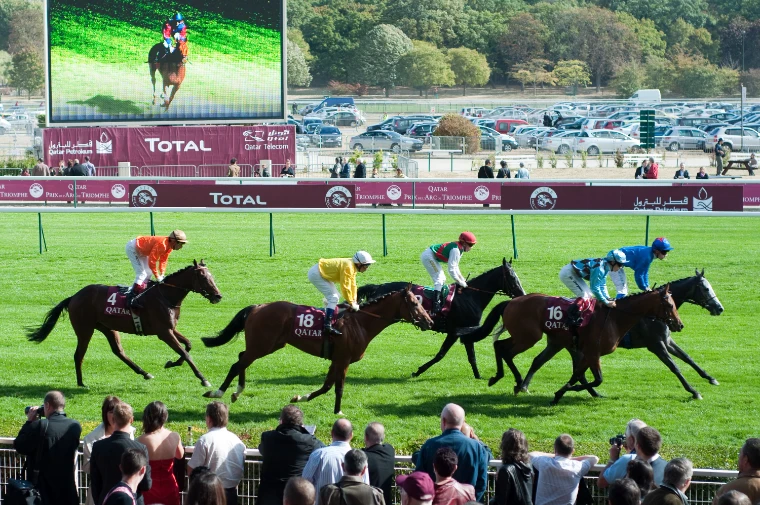
It covers fifty-seven hectares of the Bois de Boulogne, in the sixteenth arrondissement: a set of interlaced tracks with forty-six starting posts, and its hill. On a clear day the tip of the Eiffel Tower stands on the horizon.
In 2016 and 2017 the Arc went to Chantilly while Longchamp was rebuilt. Dominique Perrault, the architect of the Bibliothèque François Mitterrand, replaced two grandstands of the 1960s with one long streamlined one, for 150 million euros, and the course reopened as ParisLongchamp in April 2018. Danedream holds the record for the Arc at Longchamp, 2 minutes 24.49 seconds, set in 2011.
The Weekend
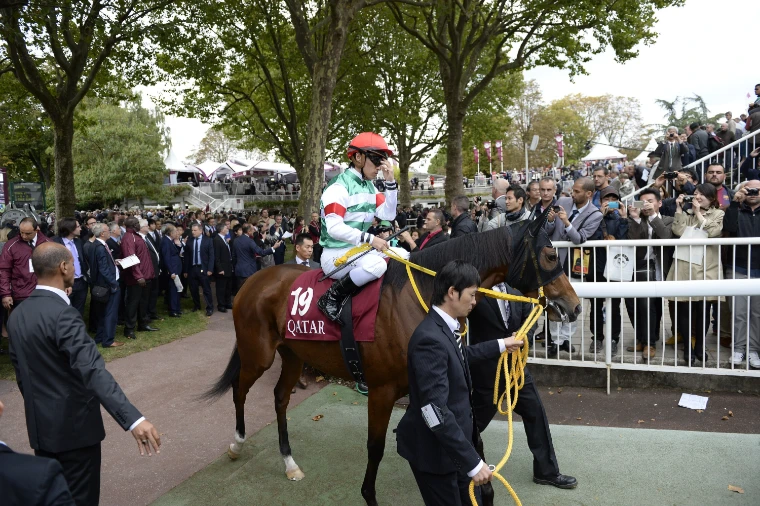
The racing runs over the Saturday and the Sunday. The gates open at noon on the Saturday, and at eleven on the Sunday, when the Arc is run at 16:05 and the Qatar Arabian World Cup, for Arab horses, straight after it. Nearly thirty-five thousand people come each year, and the race is shown in more than sixty countries.
Three-year-olds carry 56.5 kilograms and older horses 59.5, and fillies and mares are let off 1.5. Geldings have been kept out, and in the two years before 2026 Goliath and Calandagan were barred for it; in June 2026 France Galop announced that geldings may run from 2027. The purse is five million euros, nearly three million of it to the winner. France had won it sixty-eight times by 2022.
The betting is French. British and Irish bookmakers are blocked in France, and bets go on at the windows of the PMU: gagné to win, placé for a place.
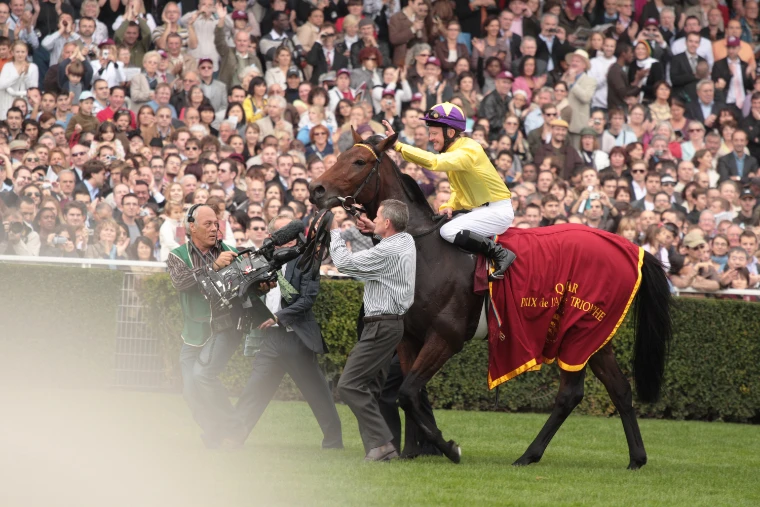
In 2026 the weekend was called the Festival of Nations, with giant flags in the stands, fan zones, music and food, and a stand called the Arc Summit above the track. The 105th Arc was run on Sunday 4 October, with sixteen declared, among them Daryz, who won it in 2025, and three from Aidan O’Brien. It was the last Arc closed to geldings. Daryz won it again, ridden by Mickaël Barzalona for Francis-Henri Graffard and Princess Zahra Aga Khan, the first colt to win two Arcs in succession since Alleged in 1977 and 1978; Bay City Roller was second.
What to Know
It is run on the first Sunday of October, with racing on the Saturday before. France Galop has not yet announced the dates for 2027; its official partner in Britain gives 2 and 3 October. It will be the first Arc open to geldings.
General entry costs from €20 a day, the Arc Village on the Sunday from €15, and the Summit of the Arc for both days from €80. The restaurants above the course run from €110 at the Bistro Triomphe to €827 at the Prestige Cascade, which serves Michelin-starred cooking, and several sell out.
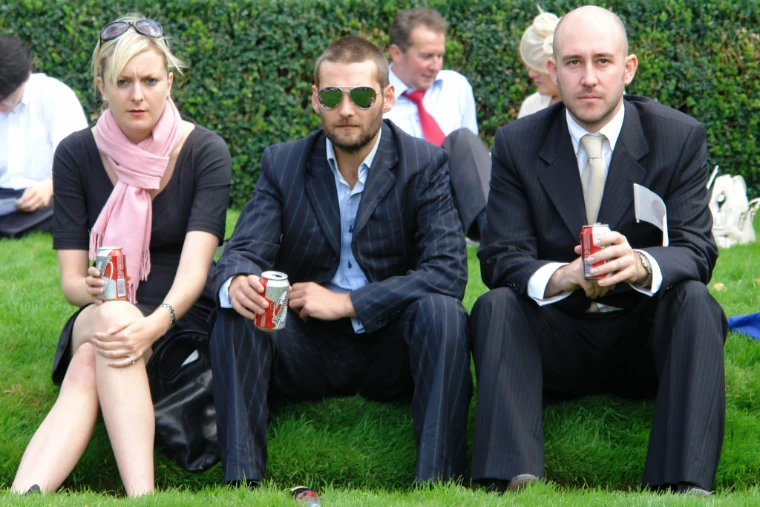
A lounge suit, well cut, with a tie or a bow tie and good shoes; for ladies a dress or a smart ensemble. This is what France Galop asks for on Arc day, and the restaurants keep a dress code of their own. Hats are welcome and not required.
The course is at 2 route des Tribunes, in the sixteenth. Free buses run every fifteen minutes or so from Porte Maillot, on line 1 of the Metro, and Porte d’Auteuil, on line 10, from half past ten on the Sunday. The Eurostar runs from St Pancras to the Gare du Nord. Stay near the Étoile, at the George V, the Hotel Napoléon or the Hyatt Regency Étoile, a short way from the buses at Porte Maillot. Arrive as the gates open, and leave the dog at home: pets are not admitted, even on a lead.
The mistake is to count on a taxi home. After the Arc a taxi is a long and frustrating business; take the bus back to the Metro. Bring an umbrella as well: the new grandstand holds fewer than the old ones did, and one can be caught in the open.
The Court
The Prix de l’Arc de Triomphe is not the Court’s own. A table in one of the restaurants above the course on the Sunday is sought on a member’s behalf, and the Court arranges the whole of it: getting there, where to stay in Paris, and the table afterward.
How one becomes a member is set out under Admission.
Set down October MMXXVI