THE EBOR FESTIVAL
Late August · The Knavesmire, York · Four Days · Since 1843
2027: 18 to 21 August
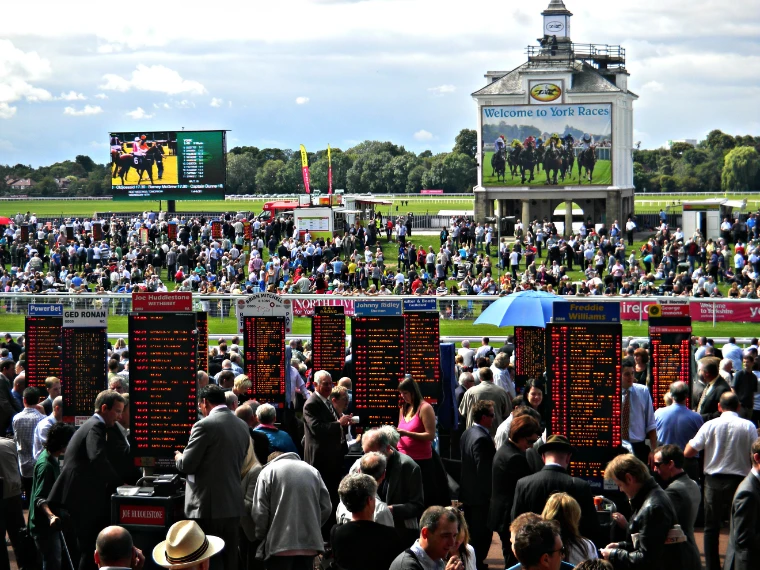
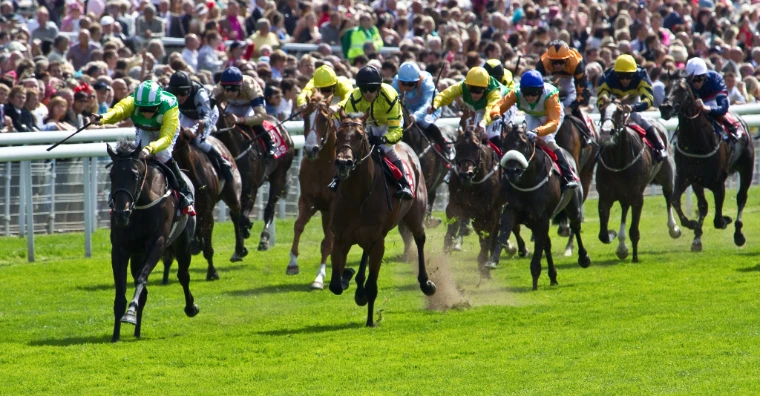
The Ebor Festival, the Sky Bet Ebor Festival, is four days of flat racing in August at York Racecourse, on the Knavesmire, a common on the south-west side of the city: from a Wednesday to a Saturday, opening with the Juddmonte International and ending with the Ebor, a handicap first run in 1843 and named for Eboracum, the Roman name of York.
The Knavesmire was where York hanged its felons, and in 1753 Matchem won the Great Subscription Purse for five-year-olds there hours after William Smith was hanged for murder.
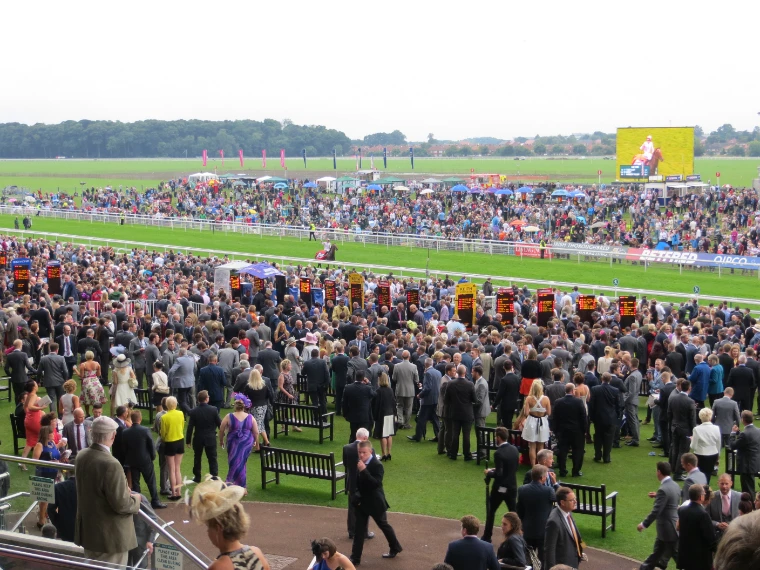
The Knavesmire
The name is Anglo-Saxon: a knave was a man of low standing, and a mire a swampy pasture for cattle. The Knavesmire is one of the city’s Strays, and racing in York goes back to Roman times; Arabian horses were sent to Eboracum before the Emperor Septimius Severus arrived in 208 AD. After floods at the old course at Clifton Ings, racing came to the Knavesmire on 11 August 1731, with the King’s Guineas, won by a horse named Monkey.
The common was also the York Tyburn, with a gallows from 1379. Dick Turpin was hanged there in 1739, and the last man in 1801. Meetings were often timed to follow the August Assizes, and carriages took people on to the races from the executions at the Three-Legged Mare. In 1751 York became the first centre after Newmarket to set out a structured programme of racing, with its Great Subscription Purses, and in 1754 a grandstand by John Carr opened under the patronage of the Marquess of Rockingham. In August 1770 Eclipse walked over for His Majesty’s 100 Guineas, having frightened away all opposition; in 1776 the horses raced some fifty yards up to their knees in water.
In 1842 a new Race Committee appointed John Orton Clerk of the Course to revive York’s fortunes, and in 1843 he introduced the Great Ebor Handicap, over two miles, later cut by two furlongs. In 1851 the Derby winners The Flying Dutchman and Voltigeur met on the Knavesmire in the Great Match, “the race of the century”. The County Stand dates from 1867.
In the Second World War the racecourse was a prisoner-of-war camp, and on 31 May 1982 Pope John Paul II drew a reported 190,000 to the Knavesmire. Major Leslie Petch, a former Clerk of the Course, devised the race now called the Juddmonte International, first run in 1972 as the Benson and Hedges Gold Cup; Roberto, that year’s Derby winner, beat Brigadier Gerard, “his only defeat in a career of eighteen races.” Royal Ascot was staged at York in 2005, and the course was made a complete circuit for it. In 2008 the Ebor Festival was lost to waterlogging, the first time the whole card had been scrapped for weather, in what would have been its first four days in modern times. In 2019 the Ebor became the first handicap in Britain worth a million pounds.
The Four Days
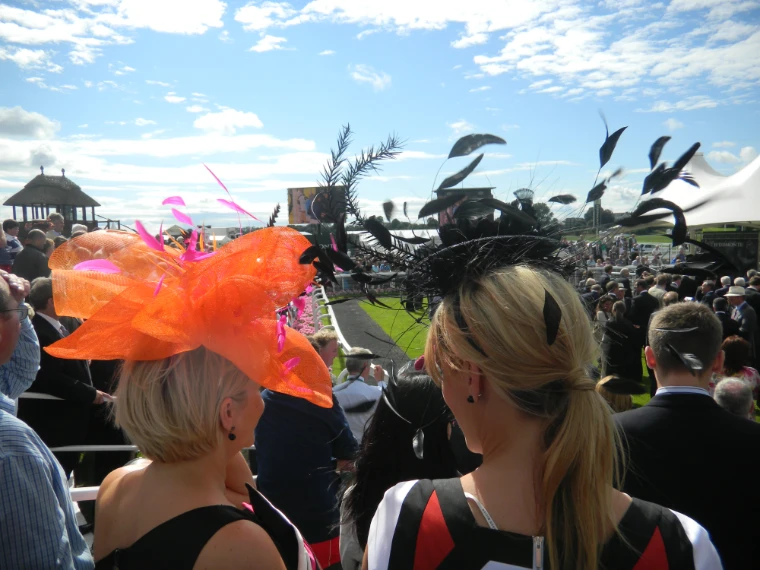
The gates open at eleven, and in 2026 the first race was at ten to two. The Wednesday is Juddmonte International Day, with the Great Voltigeur and the Acomb on the card; the International is the richest race at the course, worth a million and a half pounds in 2026. Thursday is traditionally Ladies’ Day, with the Yorkshire Oaks, worth six hundred thousand pounds in 2026, and the Lowther, and prizes given on the Ebor Fashion Lawn. Friday is Nunthorpe Day, with the Gimcrack.
Saturday is the Ebor: one mile, five furlongs and 188 yards, for horses of four and older, three-year-olds having been excluded since 2019. Its winner gains automatic entry to the Melbourne Cup.
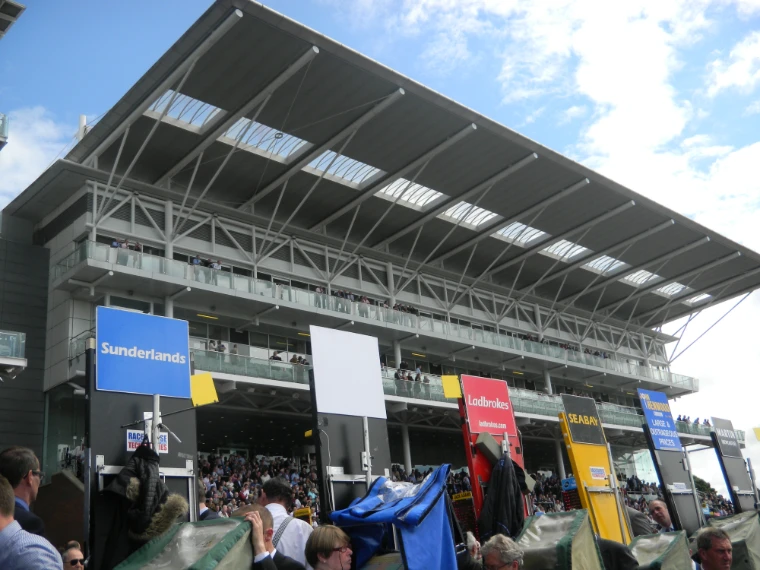
The County Stand is the premier enclosure, with the Moët Pavilion, the Roof Terrace and the Champagne Lawns, the parade ring and the main betting ring. The Grandstand and Paddock, which takes in the Knavesmire Stand, is the largest. The Clocktower Enclosure is a grassy bank near the finish, named for the clock tower built in 1922 by Walter Brierley; picnics are welcome there, and glass is not.
In 2026 the festival ran from 19 to 22 August. Item, a three-year-old at 10/1, won the International for Juddmonte under Colin Keane, trained by Andrew Balding, beating Almaqam, Constitution River and Ombudsman, the winner the year before. “It’s lovely to win it with a horse like this,” said Balding. The next day Keane, Balding and Juddmonte won the Yorkshire Oaks with Kalpana. The Nunthorpe went to Bacio, trained in America by Wesley Ward, and the Ebor to Daiquiri Bay, at 10/1, ridden by Rossa Ryan for Alan King.
What to Know
It runs from a Wednesday to a Saturday in the second half of August. In 2027 it runs from 18 to 21 August, with the Juddmonte International on the Wednesday, the Yorkshire Oaks on the Thursday, the Nunthorpe on the Friday and the Ebor on the Saturday.
Tickets are sold by the day. In 2026 the County Stand cost £80 to £82, the Grandstand and Paddock £45 to £47, and the Clocktower Enclosure £12 to £15, sold on the gate only, first come, first served. Under eighteens go free with an adult, two to each adult.
A lounge suit and tie. The County Stand asks men for a jacket, collared shirt and tie, and a cravat may be worn instead of the tie; elsewhere the code is relaxed. The Court wears the suit on every day.
LNER trains from London King’s Cross reach York in about two hours, and some thirty run direct each weekday. The station is two miles from the course, with shuttle buses and taxis on race days. Stay at The Grand, beside the station, built in 1906 as the headquarters of the North Eastern Railway and a hotel since 2010.
The mistake is to arrive at the County Stand without a tie. It is required.
The Court
The Ebor Festival is not the Court’s own. Places in the County Stand for the International and for the Ebor are sought on a member’s behalf, and the Court arranges the whole of it: getting there, where to stay in York, and the table afterward. The Court is in Deauville earlier in the month for the Prix Jacques Le Marois.
How one becomes a member is set out under Admission.
Set down October MMXXVI