THE KENTUCKY DERBY
First Saturday in May · Churchill Downs, Louisville · A Day · Since 1875
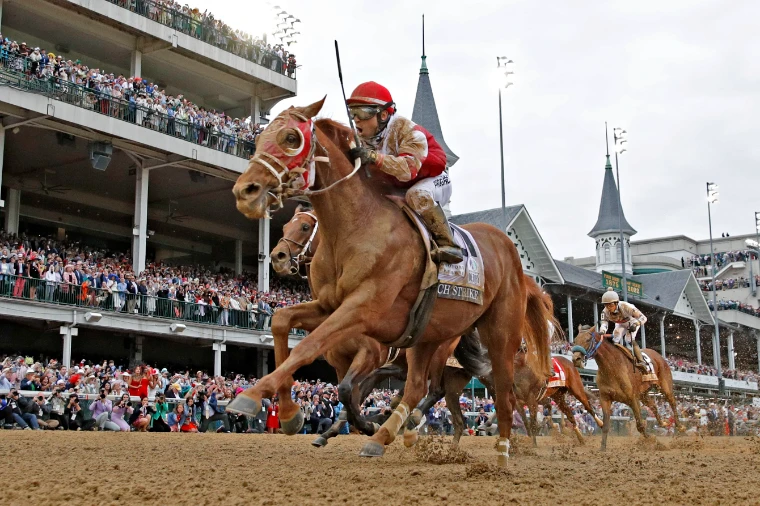
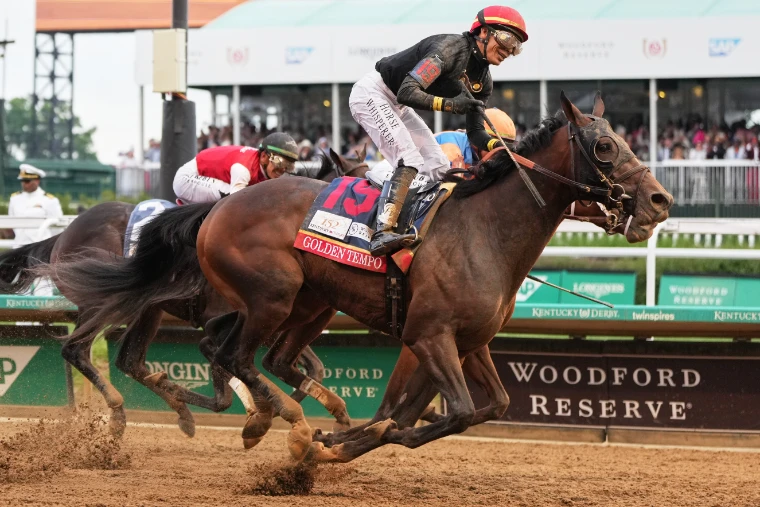
The Kentucky Derby is a race of a mile and a quarter for three-year-olds, run at Churchill Downs in Louisville on the first Saturday in May. It is the first leg of the Triple Crown, and it has been run every year since 1875, which makes it the longest continually held sporting event in America.
The race takes two minutes. Louisville takes a fortnight over it.
The Grandson
Meriwether Lewis Clark Jr. was the grandson of William Clark, who had crossed the continent with Meriwether Lewis. In 1872 he went to England to see the Derby at Epsom, then to Paris for the Grand Prix, and came home meaning to build the same thing in Kentucky.
His uncles, John and Henry Churchill, leased him the land. He founded a jockey club, raised thirty-two thousand dollars for a one-mile oval, and set three races on the English model: a Derby, an Oaks, and a longer stakes that carried his own name.
The first Derby was run on 17 May 1875, over a mile and a half, before some ten thousand people, and won by a horse called Aristides. The Twin Spires went up in 1895, the distance came down to a mile and a quarter the year after, and since 1931 it has belonged to the first Saturday in May, with two exceptions, in 1945 and 2020.
Clark ran the track for twenty years without a salary, often paying its debts himself. It was not officially called Churchill Downs, after the uncles, until 1937.
The Riders
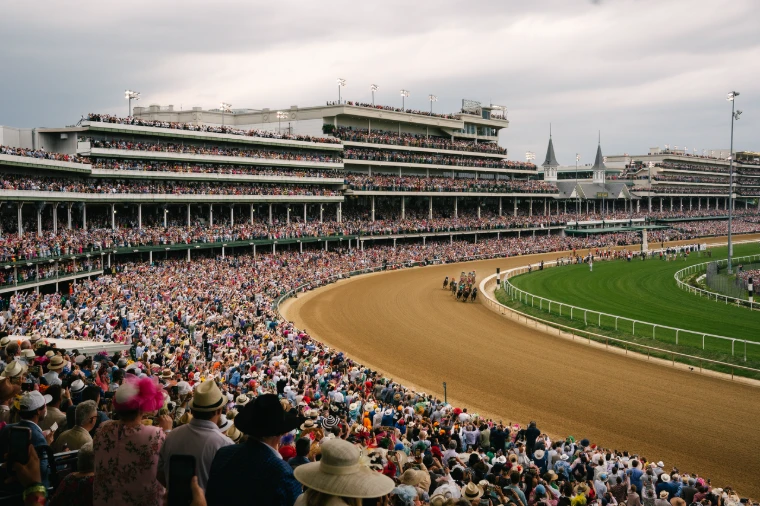
Thirteen of the fifteen jockeys in the first Derby were Black. Aristides was ridden by Oliver Lewis, who was nineteen, and trained by Ansel Williamson, who had been enslaved. Black jockeys won fifteen of the first twenty-eight runnings.
Isaac Murphy won three of them, in 1884, 1890 and 1891, and won some forty-four per cent of all the races he rode.
Jimmy Winkfield won in 1901 and 1902, and within two years had gone to Russia. He won the Moscow Derby more than once, led a string of racehorses out of Odessa away from the Bolsheviks on a three-month march to Poland, and settled in France, where he rode and then trained.
In 1961 Sports Illustrated invited him to a dinner at the Brown Hotel in Louisville, and the doorman would not let him in by the front door. He stood there until he was admitted.
No Black jockey has won the Derby since 1902. None rode in it for seventy-nine years, until Marlon St. Julien in 2000.
The Roses
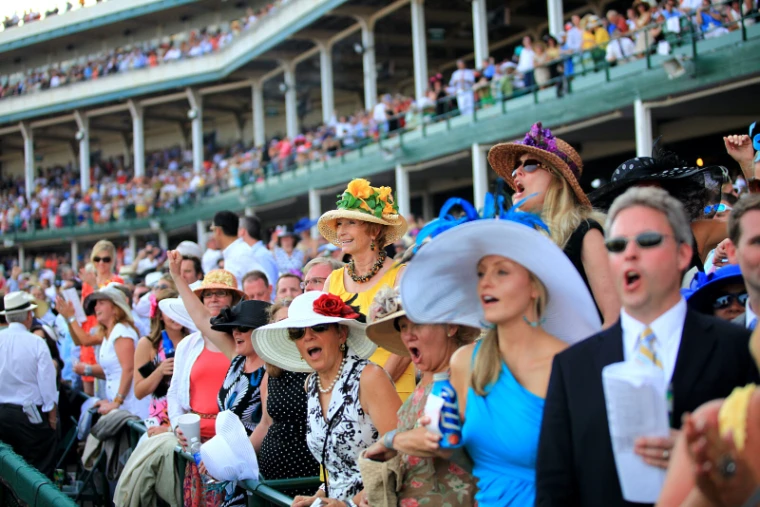
As the horses come from the paddock to the gate, the University of Louisville band plays Stephen Foster’s My Old Kentucky Home, and the grandstand sings it. The band has played it, with few exceptions, since 1936. The song is thought to have been part of the day since 1921.
The drink is the mint julep, bourbon and mint over crushed ice, the Derby’s own since the 1930s. More than a hundred and twenty-five thousand are poured over the two days of Oaks and Derby.
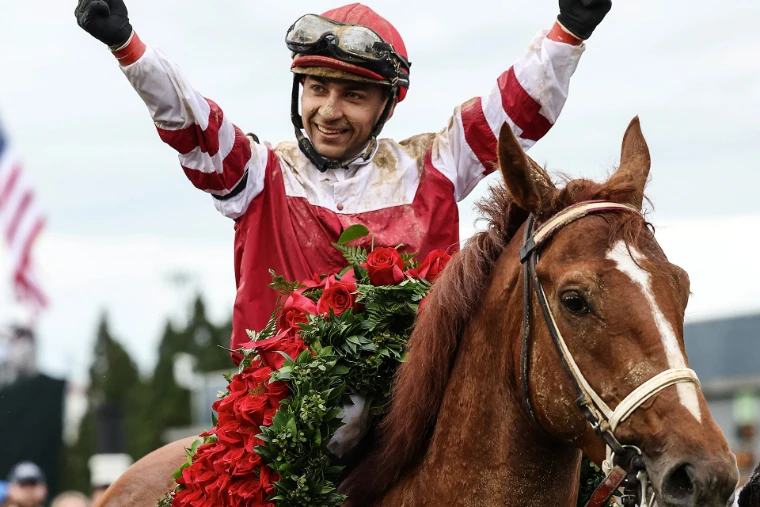
The winner is covered in a garland of more than four hundred red roses. Kroger has made it since 1987, and it is sewn by hand the day before, in the company’s supermarket at Middletown, on the edge of Louisville. A New York sportswriter, Bill Corum, called the race the Run for the Roses in 1925.
The record belongs to Secretariat: a minute fifty-nine and two-fifths, in 1973. Nobody has beaten it.
What to Know
The card runs all day. The Derby is the twelfth race of fourteen and goes off a little before seven in the evening.
The Kentucky Oaks, for fillies, is run on the Friday and is as old as the Derby. Its colour is pink and its garland is of lilies.
A lounge suit, lighter and brighter than New York would wear it, and a hat. Men wear them too.
Where one sits decides what one sees. The stands above the finish see the race. The infield holds much of the crowd and sees it mostly on a screen.
Louisville fills for the week and its hotels set minimum stays. Lexington, an hour and a half away, has the horse farms, fewer people, and the Kentucky Three-Day Event the week before.
The mistake is to come for the two minutes. The day is the engagement, and the race comes near its end.
The Court
The Kentucky Derby is not the Court’s own. Boxes and seats above the finish are sought on a member’s behalf, and the Court arranges the whole of it: getting there, where to stay, in Louisville or among the farms around Lexington, and the table afterward. A member who wants the Oaks as well can have the Friday arranged with it.
How one becomes a member is set out under Admission.
Set down September MMXXVI