

THE LITERARY SALON
Late March · New York · An Evening · Hosted by The Court
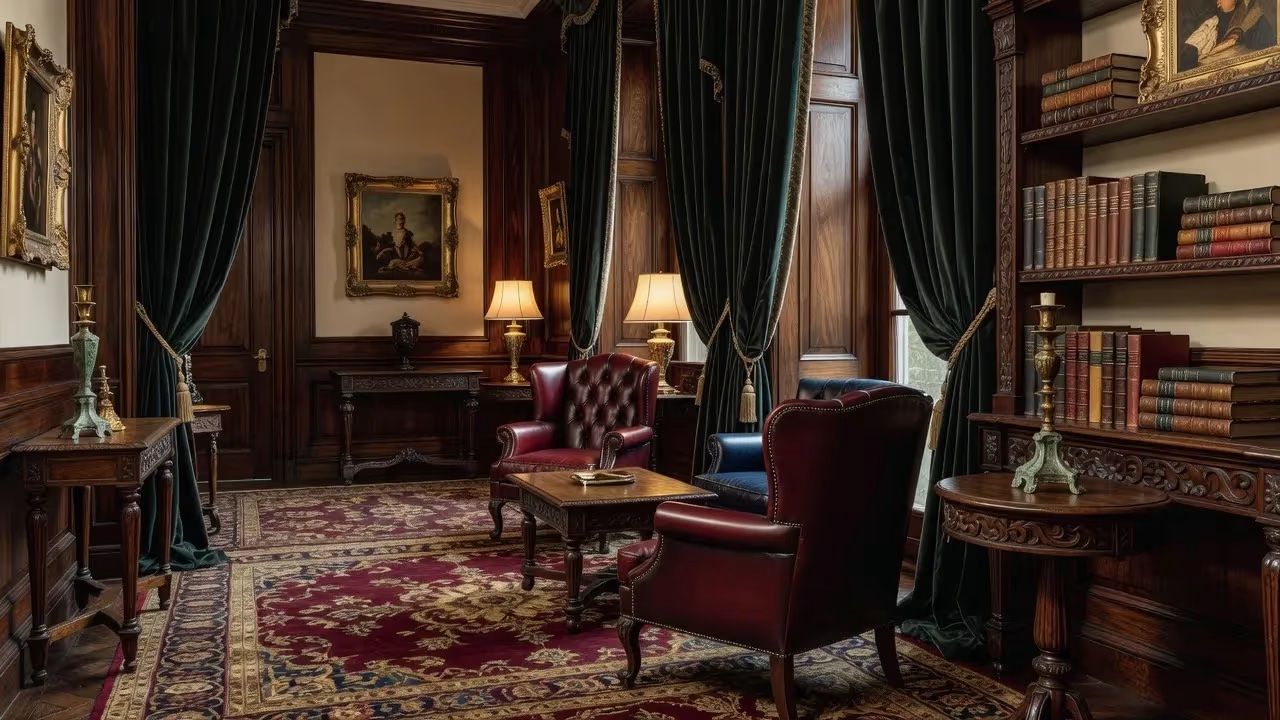
The Literary Salon is an evening at the end of March for twenty. One member speaks for half an hour on something they know properly, to a room that has read enough to argue.
Supper follows, and the argument continues at the table.
The Form
The salon was invented in a bedroom.
The Marquise de Rambouillet, unwell and disliking the coarseness of the French court, began receiving in a blue room in her Paris house in the 1620s. Writers came, and so did aristocrats, and she decided who sat where and who spoke to whom. The arrangement was copied across Europe for two hundred years.
What made it work was the suspension of rank. A poet with no money sat beside a duke, and for the length of an evening the poet’s subject mattered more than the duke’s title. That was not a small thing in seventeenth-century France, and it is the whole of what a salon is.
The English version got its name by accident. In the 1750s a scholar named Benjamin Stillingfleet was invited to one of Elizabeth Montagu’s evenings and had no black silk stockings, which evening dress required. He came in blue worsted instead and was told it did not matter. The group took the name Bluestockings from it.
What killed the salon was professionalisation. The nineteenth century built universities, journals and learned societies, and serious conversation moved into them. The amateur who had spent thirty years on a subject lost the room in which to say so.
Most people now have a subject and nowhere to take it.
The Evening
Twenty places. One speaker, and the speaker is a member.
The subject is theirs and the Court does not choose it. It should be something they know properly rather than something they find interesting, and the difference matters: fifteen years of attention rather than a fortnight of reading.
Half an hour, which is short. Anyone who cannot say it in thirty minutes has not finished thinking about it.
Then the room. The Court sends something to read a fortnight beforehand, a chapter or an essay the speaker has nominated, so that the questions come from somewhere. A room that has not prepared asks polite questions, and polite questions are the death of the form.
Supper follows at one table, with the speaker in the middle of it.
What Is Asked
The code is stated in the invitation.
Read what is sent. It arrives a fortnight ahead and it is short. A member who has not read it should say so rather than pretend.
The Court begins at half past seven whether or not everyone is there.
Telephones stay in pockets. A photographer attends for part of the evening, and what is worth keeping is sent afterward.
Disagree properly. The evening fails if the room is agreeable. The speaker has come to be argued with rather than admired.
Nobody is pitched at the table.
The Places
Twenty. It is the largest number that can argue as one room rather than as several.
Members are written to in February. The Court asks each year for members willing to speak, and a member with something to say should say so.
The sum is stated in the invitation and covers the whole of the evening.
