FORMULA 1 MONACO GRAND PRIX
Early June · Circuit de Monaco, Monte Carlo · Three Days · Since 1929
2027: 3 to 6 June
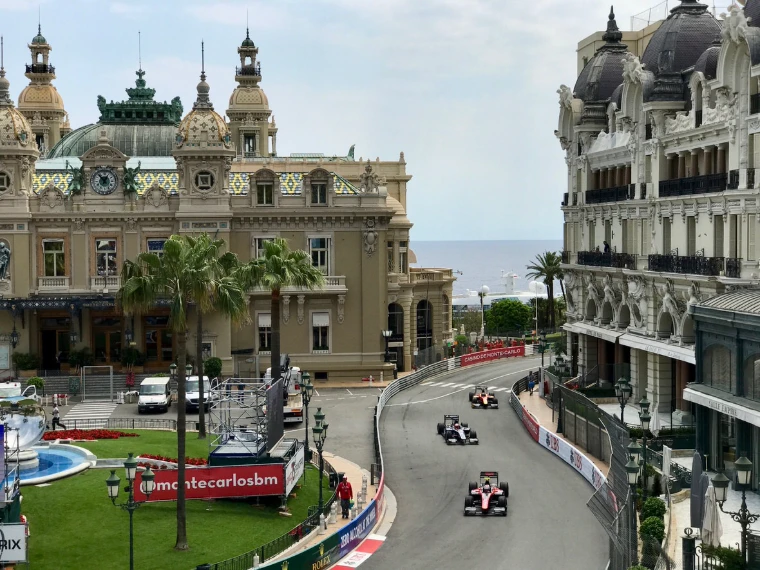
The Monaco Grand Prix is three days of Formula One in early June on the streets of Monte Carlo, closed to traffic for the weekend and lined with barriers, balconies and boats. It is the slowest and narrowest circuit of the season, and the only race allowed to run short of the usual distance.
Nelson Piquet said that driving it was like riding a bicycle round one’s living room. A win there, he said, was worth two anywhere else.
The Club
In 1928 the Automobile Club de Monaco asked the governing body of motor sport to recognise it as a national club, and was refused. Its one great event, the Monte Carlo Rally, was run mostly on other countries’ roads.
Its president, Antony Noghès, proposed a race through the streets of the principality instead. Prince Louis II gave his consent, and Louis Chiron, Monaco’s own racing driver, thought the hills would suit it.
The first was run on 14 April 1929, by invitation, and won by a British driver who raced as Williams, in a Bugatti. Chiron missed it: he was driving at Indianapolis.
He won it in 1931, and no one from Monaco won it again until Charles Leclerc in 2024. The last corner of the circuit is named for Noghès.
The Streets
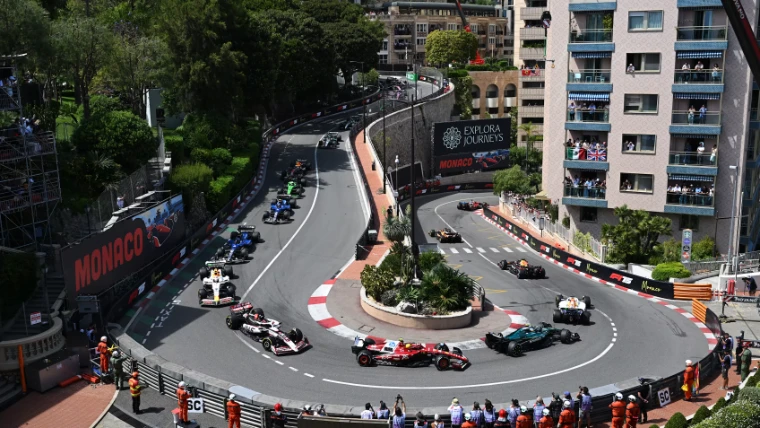
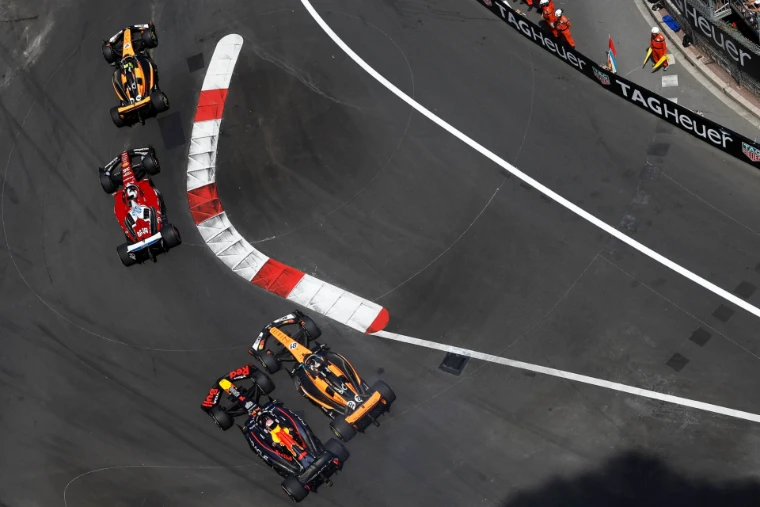
The circuit is a little over two miles of Monte Carlo and La Condamine: up the hill from Sainte-Dévote to Casino Square, down past Mirabeau to the hairpin, the slowest corner in Formula One, then through the tunnel under the hotel, round the harbour and the swimming pool, and back.
It has kept much the same shape since 1929. In 1973 it was taken round the swimming pool on the harbour front, and the Nouvelle Chicane came in 1986.
Building it takes six weeks, and taking it down takes three.
The first steel barriers went up in 1969. Two drivers have gone into the harbour: Alberto Ascari in 1955, and Paul Hawkins in 1965.
Passing is all but impossible. In 2024 the first ten finished in the order they had started.
The Harbour
Graham Hill won it five times in the 1960s, and was called Mr Monaco.
Ayrton Senna won it six times, five of them in a row from 1989. In 1988, well in the lead, he touched the barrier at Portier, went back to his flat in the town, and was not heard from until the evening.
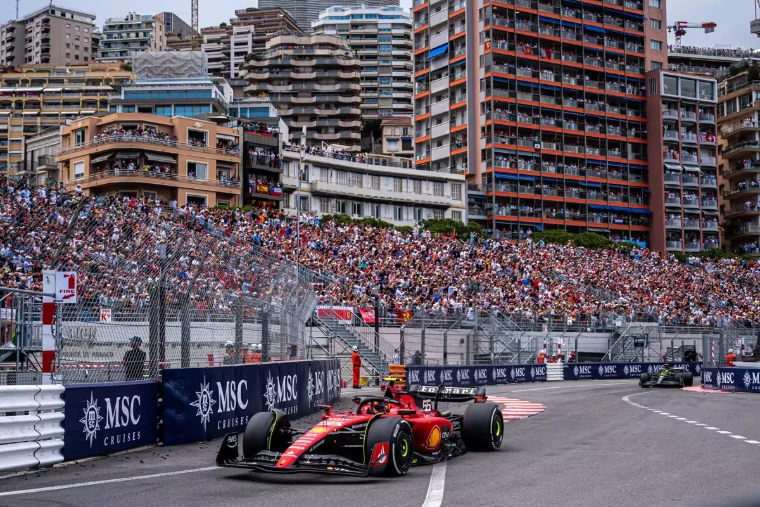
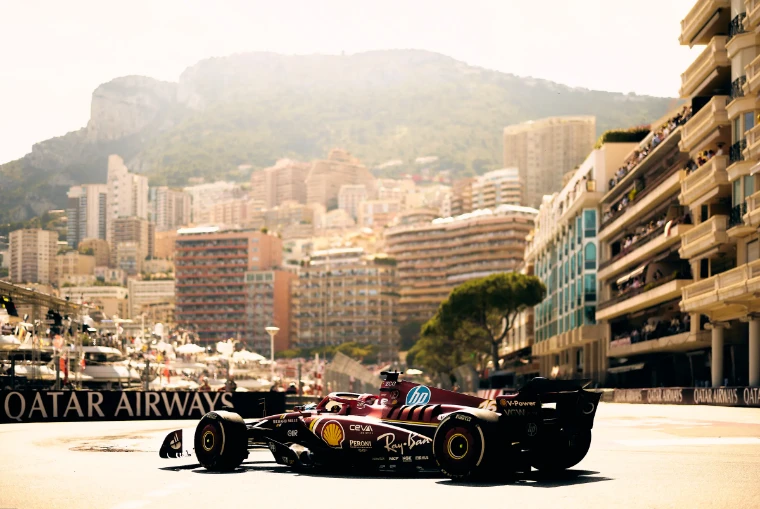
The harbour fills with yachts for the weekend, and the balconies over the track are let to those who can pay for them.
With Indianapolis and Le Mans, it is one of the three races of motor sport’s Triple Crown.
In 2026, when the race moved to the first weekend of June, Kimi Antonelli won it from pole for Mercedes, the youngest driver to win at Monaco.
What to Know
Practice is on the Friday, qualifying on the Saturday afternoon, and the race on Sunday at three.
A lounge suit on a balcony or in the grandstands. Yachting attire on the water.
Grandstand seats are sold. The balconies over the track and the moorings in the harbour are let privately.
Nice’s airport is the nearest. Monaco’s hotels fill for the weekend, and the rest of the coast takes the overflow.
The mistake is to treat Saturday as practice. The cars can hardly pass one another, so the qualifying tends to decide the race.
The Court
The Monaco Grand Prix is not the Court’s own. A balcony over the track, or a place on a yacht in the harbour, is sought on a member’s behalf, and the Court arranges the whole of it: getting there, where to stay on the coast, and the table afterward. The Monaco Yacht Show fills the same harbour in September.
How one becomes a member is set out under Admission.
Set down September MMXXVI · Revised October MMXXVI