POLO LESSONS AND EQUESTRIAN RIDING
Mid May · Bridgehampton · A Morning · Hosted by the Court
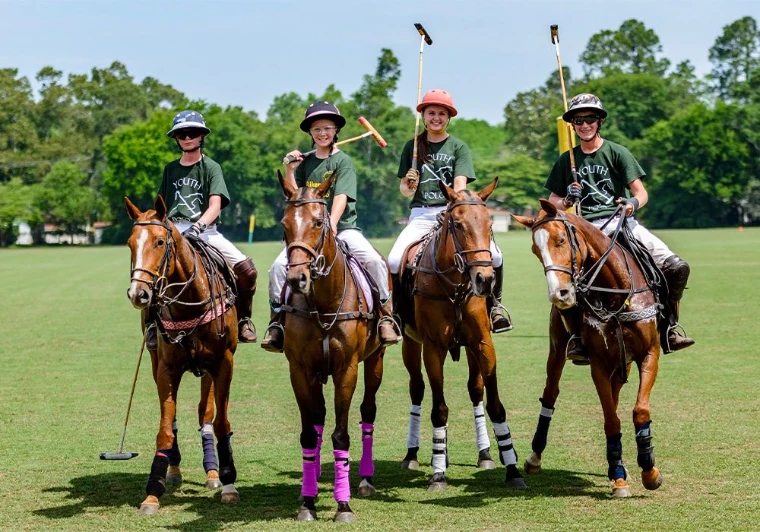
Polo Lessons and Equestrian Riding is a morning at Bridgehampton in the middle of May for six members, on ponies that know the game better than their riders. It is repeated through the late spring for those who want more.
It exists so that when the Court goes to the polo in June, some of the members watching have held a mallet.
The Form
The game is older than anything written about it. It was played in Persia before the birth of Christ, and it reached the British in India: in 1859 a lieutenant named Joe Sherer watched Manipuri horsemen play it, said “We must learn the game,” and started the Silchar Polo Club.
The name is Balti, a language of the Indus valley, and means ball.
James Gordon Bennett, who published the New York Herald, brought mallets, balls and a copy of the Hurlingham rules home to New York in 1876, and America has played ever since.
The ponies are ponies by habit. There was once a limit on their height, and it was abolished in 1919.
The mallet is held in the right hand, whichever hand the player writes with, so that two players riding at the ball from opposite directions do not meet head-on. Left-handers were banned in the 1930s, let back after the war when players were scarce, and banned again in America in 1974.
The Morning
Six places, ponies and tack provided.
Members ride in small sets by ability. Those who have ridden go out on the field at a walk and a canter. Those who have not start on the ground, with a mallet, a ball and a wooden horse, and are put up only when the swing is right.
The first lesson is where the ball should be when it is struck: beside the pony, never under it.
The morning ends with a slow chukka for those who are ready, and lunch after it.
What Is Asked
Riding clothes: breeches or trousers that will not rub, and boots with a heel. Helmets are provided and worn by everyone.
The school provides the ponies and the tack. No member brings their own.
Every member signs the school’s waiver before mounting.
Nobody canters until the instructor says so, and nobody swings near another pony.
A pony that has played a hundred chukkas knows more than its rider does. Let it.
The Places
Six. It is as many as one instructor can watch from the saddle.
Members are written to in March.
The sum is stated in the invitation and covers the ponies, the tack, the instruction and lunch.
Those who finish the morning are offered a place at Polo in Greenwich in June.
How one becomes a member is set out under Admission.
Set down September MMXXVI