SARATOGA OPENING WEEKEND
Mid July · Saratoga Race Course, Saratoga Springs · A Weekend · Since 1863
2027: dates to follow
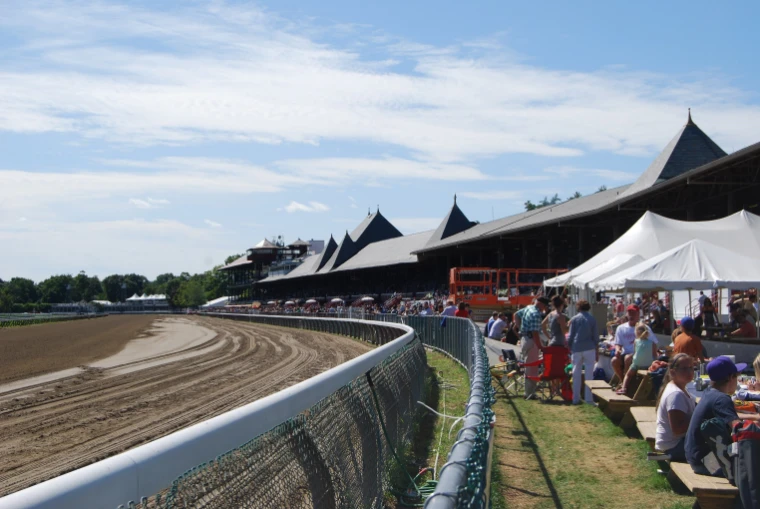
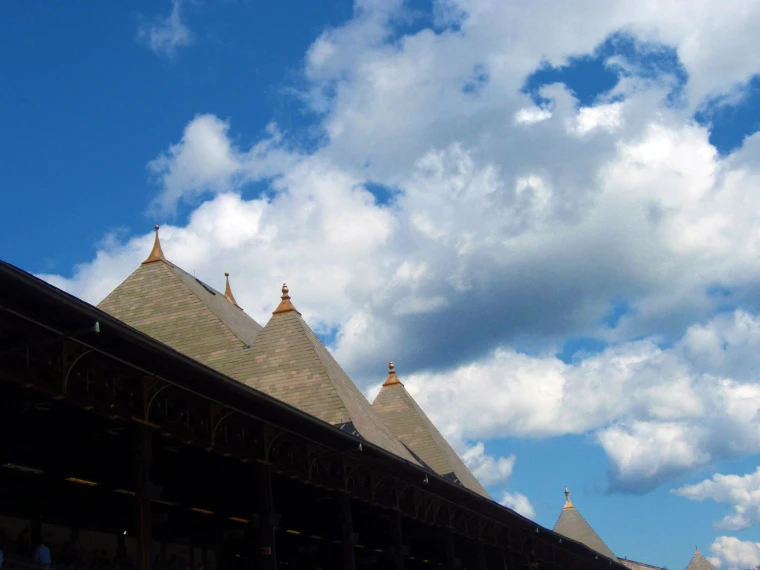
Saratoga Opening Weekend is the first Friday to Sunday of the summer meet at Saratoga Race Course, in the spa town of Saratoga Springs, three and a half hours up the Hudson from New York. The meet runs from July to Labor Day under a Victorian grandstand of slate roofs and copper-tipped spires, with breakfast on the clubhouse porch while the horses work and picnics in the shade behind the stands. By tradition the Schuylerville, for two-year-old fillies, is the first stakes race of every meet.
Saratoga is called the Graveyard of Champions. Man o’ War lost one race in his life, here, in 1919, to a horse named Upset.
Old Smoke
John Morrissey, an Irish prizefighter from Tipperary called Old Smoke, once champion of America, gambler and later congressman, held the first meeting on 3 August 1863, a month after Gettysburg, while racing in the South was stopped by the war: four days, eight races, more than five thousand people. The next year, with John Hunter, William Travers and Leonard Jerome, he bought land across the street and opened the present course. Its first race, on 2 August 1864, was the Travers, named for the association’s president and won by his horse Kentucky. The New York Times found the grandstand “a superb array of beauty and fashion, the like of which has never previously been seen in America”.
The town was already the country’s great spa. Morrissey opened a casino by Congress Park, and presidents, Cornelius Vanderbilt and Mark Twain played there.
The track was closed in 1896 and again in 1911 and 1912, when New York outlawed betting, and William Collins Whitney’s syndicate restored it after 1901. The grandstand was designed in the 1890s by H. Langford Warren of Boston and has been extended many times since, five times its first size, under the same slate roofs.
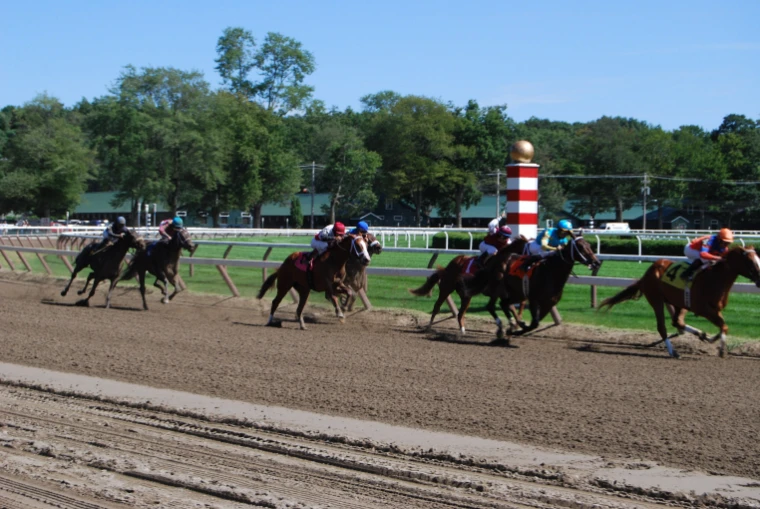
Gallant Fox, who had won the Triple Crown, lost the 1930 Travers to a horse at a hundred to one, and the nickname stuck. Secretariat was beaten here in 1973 by a horse called Onion. The Travers is the oldest stakes race in the country for three-year-olds, eleven years older than the Kentucky Derby, and the colours of each year’s winner are painted on a canoe on the infield pond.
The Weekend
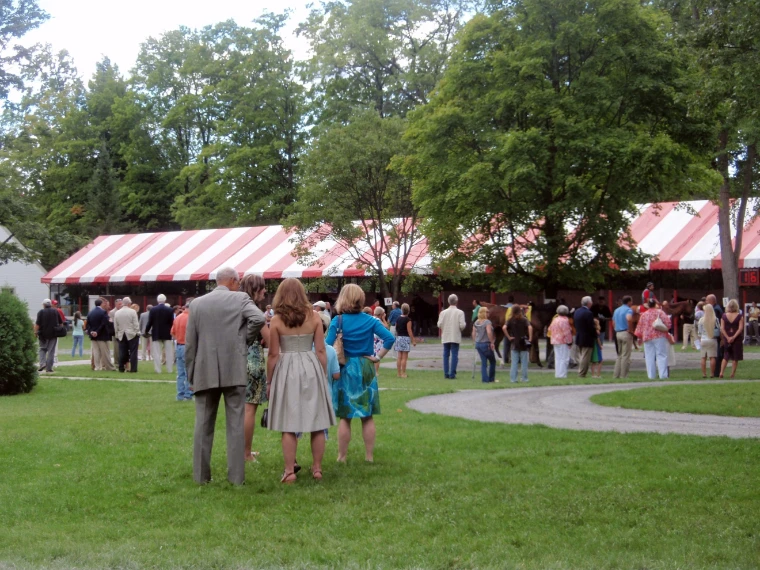
The gates open at seven. Breakfast is served on the porch of the clubhouse while the horses train on the main track, and free tram tours go round the backstretch. In the backyard behind the stands, hundreds of picnic tables are free to whoever claims one first with a tablecloth, under red-and-white striped canopies; there is a mineral spring in the picnic grounds, the Big Red Spring, to drink from.
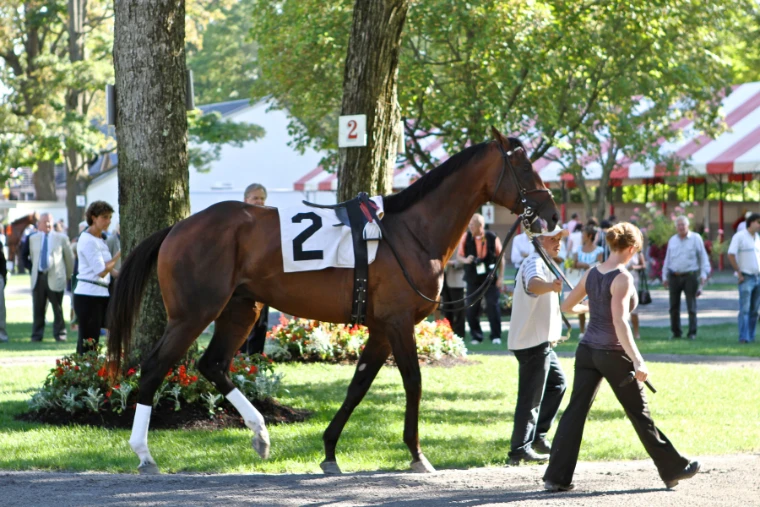
A bell is rung by hand seventeen minutes before each race to call the jockeys to the paddock, and the horses walk to it from the stables through the picnic grounds.
In 2026 the meet opened early, on 3 July, while Belmont Park was rebuilt, and the opening weekend ran with the Fourth of July: Harper’s Corner won the Schuylerville on the Friday by five and a quarter lengths, and Title Role the Belmont Derby on the Saturday by a nose, with a reading of the Declaration and fireworks over the town that night.
What to Know
The meet usually opens in mid-July. The 2027 dates have not been announced; New York racing returns that year to a meet of forty days.
General admission costs a few dollars and covers the backyard, the grandstand and the clubhouse; seats, boxes and the 1863 Club, a climate-controlled hospitality building at the clubhouse turn, are sold apart.
There is no overall dress code, but in the boxes gentlemen must wear a suit or sports jacket, and in the 1863 Club’s Founders Room a jacket at weekends. A lounge suit; and hats are worn on the opening days.
Amtrak runs from Penn Station to Saratoga Springs in about three and a half hours. The Adelphi on Broadway is the town’s old hotel; the Gideon Putnam stands in the State Park, among the springs.
The mistake is to arrive late for a table. On the big days the backyard’s tables are taken within minutes of the gates opening at seven, and the traffic round the track is heavy.
The Court
Saratoga Opening Weekend is not the Court’s own. A box or a table in the 1863 Club is sought on a member’s behalf, and the Court arranges the whole of it: getting there, where to stay in the town, and the table afterward. The Court returns in August for the Travers.
How one becomes a member is set out under Admission.
Set down October MMXXVI