THE DEAUVILLE AUGUST MEETING
August · Deauville-La Touques, Deauville · A Month · Since the 1860s
2027: dates to follow
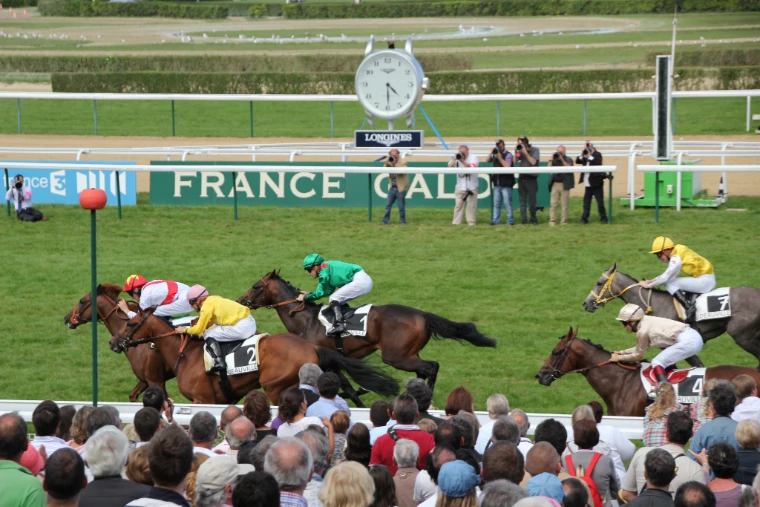
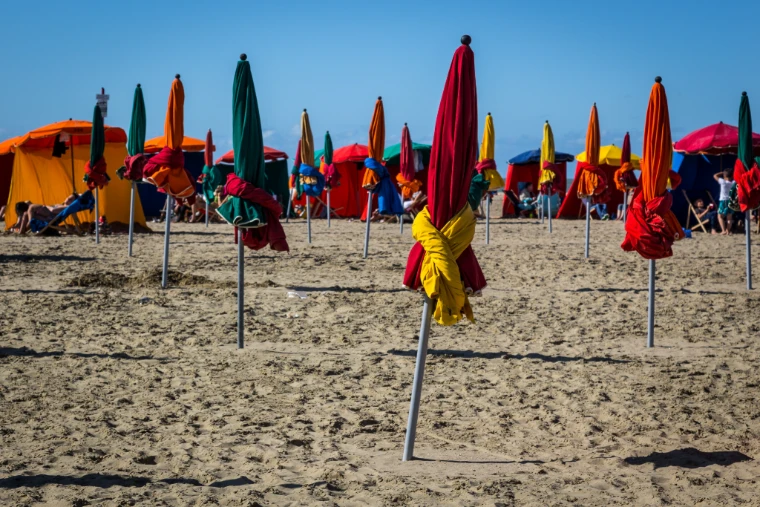
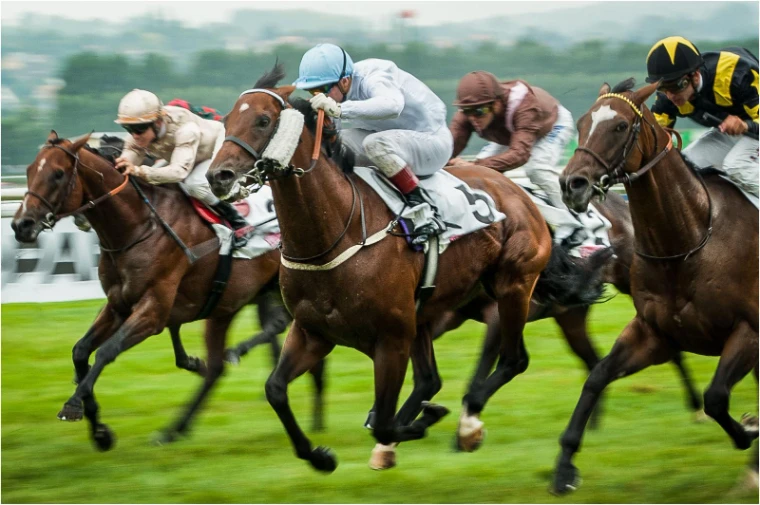
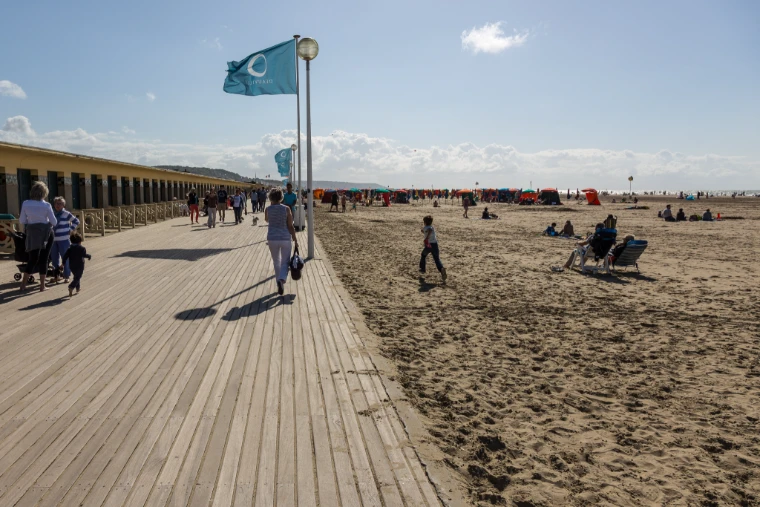
The Deauville August Meeting, the Meeting de Deauville Barrière, is a month of flat racing at Deauville-La Touques, the racecourse in the middle of Deauville on the Normandy coast: in 2026 sixteen days, from the first Sunday of August to the last, on Tuesdays, Saturdays and Sundays and on Thursday evenings, with a Group 1 on each of the first four Sundays, the yearling sales in the third week, and polo played on the racecourse itself. Deauville is the closest seaside resort to Paris, and is called the Parisian riviera.
An old joke of the coast held that the wealthy kept their wife in Deauville and their mistress in Trouville, across the river.
The Duc de Morny
Charles, Duc de Morny, was the half brother of Napoleon III, whose visits in the 1860s made this coast fashionable. In 1860 Morny bought West Australian, the English Triple Crown winner, and brought him to France to breed, and in the same year he obtained the extension of the railway from Saint-Lazare through Lisieux and Pont-l’Évêque. The station opened on 1 July 1863, and Deauville was six hours from Paris. He described the village: “A quiet town, with deserted streets, it forms a complete contrast with the busy and noisy Trouville.”
The racecourse was his. It was laid out on marshland by the Touques, the river that divides Deauville from Trouville, and took its name; the first races were run there on 14 and 15 August. France Galop, which runs the course, gives the year as 1864; other accounts give 1863. Morny died in March 1865 with the railway, the racecourse and a small casino built, and within three years there were more than forty villas. The Prix de Morny, for two-year-olds over a thousand metres, was founded in his name in 1865, the Coupe de Deauville in 1866 and the Grand Prix de Deauville in 1871. The winners of the Grand Prix are posted on the walls of the grand hall.
A neo-Norman weighing room was built in 1890, and still stands. The straight course, on which the important races are run, and the brick stands followed in 1913. Those were the years of the Normandy and the Royal hotels and the casino, of Coco Chanel’s shop, and of historic highs at the yearling sales. In 1921 the Prix Jacques Le Marois was founded in memory of a late president of the Société des Courses de Deauville; it was run near Paris during the war, came home in 1946, and in 1947 the Prix Morny was opened to foreign horses and won by the British colt Delirium.
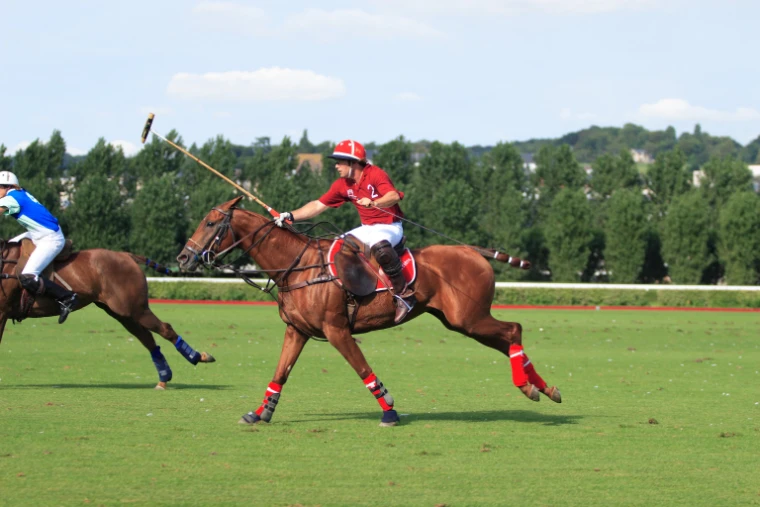
Polo has been played at Deauville since 1880. The Deauville International Polo Club was founded in 1907 by Robert de Rothschild, Captain Joubert and the Duke of Guiche, and in 1950 François André, founder of Groupe Barrière, instituted the Coupe d’Or.
The Month
On racing days the gates open at noon and the horses parade in the paddock at one. The Thursdays are evening meetings: the course opens at three, dinner is at half past seven and there is music at nine. The course covers seventy hectares, with a round course, the straight mile and an all-weather track, and holds ten thousand.
Each Sunday has its race. The Prix Rothschild, for fillies and mares over a mile, comes first; then the Prix Maurice de Gheest, a sprint; then the Prix Jacques Le Marois over the straight mile, the richest race of the year at the course, a million euros, whose winner is invited to the Breeders’ Cup Mile. The Prix Morny, for two-year-olds, and the Prix Jean Romanet share the fourth Sunday, and the Grand Prix de Deauville traditionally closes the summer on the last.
In the third week Arqana holds the August yearling sale at the Élie-de-Brignac establishment, among the largest auctions of thoroughbred yearlings in the world. The polo runs from the second week of the month to its end, the teams parade through the town, and after the prize-givings players and public meet in the polo village.
In 2026 the meeting ran from 2 to 30 August: sixteen days, a hundred and forty races and more than sixteen hundred runners, with seven Group 1s, two of them for Arabians. Rayif won the Jacques Le Marois by a neck from Zeus Olympios for the Aga Khan Studs, France’s first win in the race since 2017; “He is simply a good horse,” said his trainer, Francis-Henri Graffard. Senorita Bonita won the Morny. At the sale a Wootton Bassett colt went to Coolmore for a record €4.6 million.
What to Know
In 2026 it ran from the first Sunday of August to the last. The 2027 dates have not been announced.
France Galop sells a day ticket from €5, and children under twelve go free; a pass for the week is from €18 and for the whole meeting from €30. The polo is free on weekdays, €10 at weekends and on 15 August, and €20 on the days of the finals. Dogs are not admitted, even on a leash.
A lounge suit. Nothing is published by France Galop or the racecourse, and the Court dresses for the Sundays of the Group 1s on every day.
Trains run from Saint-Lazare to Trouville-Deauville, the fastest in a little over two hours, about nine a day; by road it is the A13. The racecourse is on the avenue Hocquart-de-Turtot, in the town. Stay at the Normandy, half-timbered, opened in 1912, in whose grounds Chanel set up her hat shop, or at the Royal, on the seafront, opened the year after.
The mistake is to go to the wrong racecourse. Deauville has two, La Touques in the town and Clairefontaine in Tourgéville, both racing in summer, and the Group 1s of August are run at La Touques.
The Court
The Deauville August Meeting is not the Court’s own. Places for the Prix Jacques Le Marois, and for an afternoon at the polo, are sought on a member’s behalf, and the Court arranges the whole of it: getting there, where to stay in Deauville, and the table afterward. The Court is at Saratoga at the end of the month for the Travers.
How one becomes a member is set out under Admission.
Set down October MMXXVI