THE EPSOM DERBY
Early June · Epsom Downs, Surrey · A Day · Since 1780
2027: 4 and 5 June
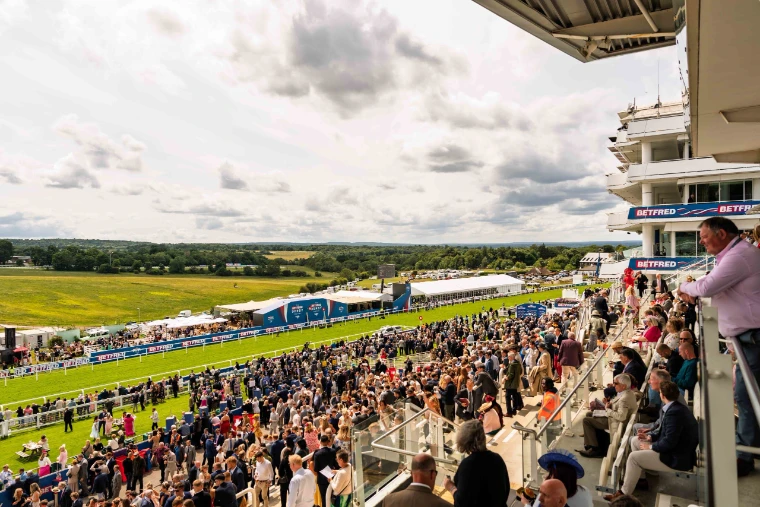
The Derby is a race of a mile and a half for three-year-olds, run on the Downs at Epsom, in Surrey, on a Saturday in early June. It was first run in 1780, and every race since called a derby has taken the name from it.
Its name was settled, the story goes, by the toss of a coin. The man who lost the toss won the first running.
The Oaks
At the Epsom meeting in May 1778, the twelfth Earl of Derby had friends to his house nearby, which was called The Oaks. Among them were Sheridan, the playwright, Charles James Fox, and General John Burgoyne, who suggested a race for three-year-old fillies over a mile and a half.
It was run the next May, named after the house, and won by Lord Derby’s own filly, Bridget. A second race, for colts and fillies over a mile, was added for 1780.
Lord Derby and Sir Charles Bunbury, the perpetual president of the Jockey Club, are said to have tossed a coin for its name at the celebration after the Oaks. There is nothing in the archives to say so.
In the story, Derby won the toss. Bunbury won the race: his colt Diomed took the first Derby, on 4 May 1780, from eight others.
The Derby went up to a mile and a half in 1784.
Lord Derby won his own race in 1787, and his family won it twice more, with Sansovino in 1924 and Hyperion in 1933.
Tattenham Corner
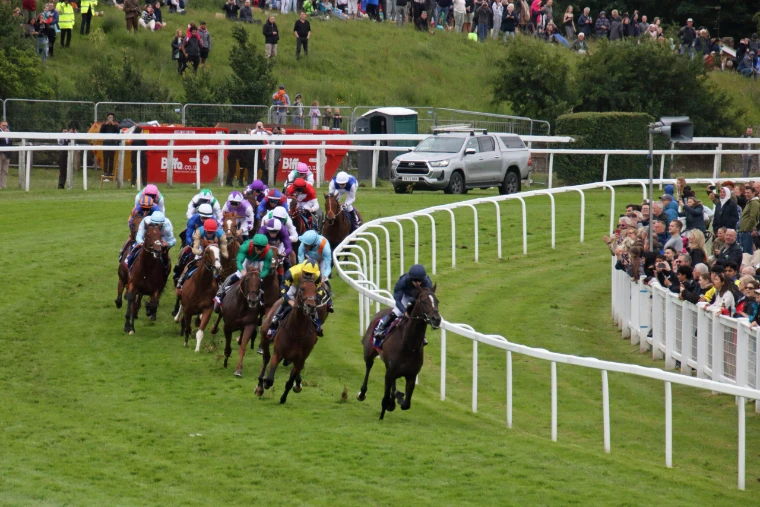
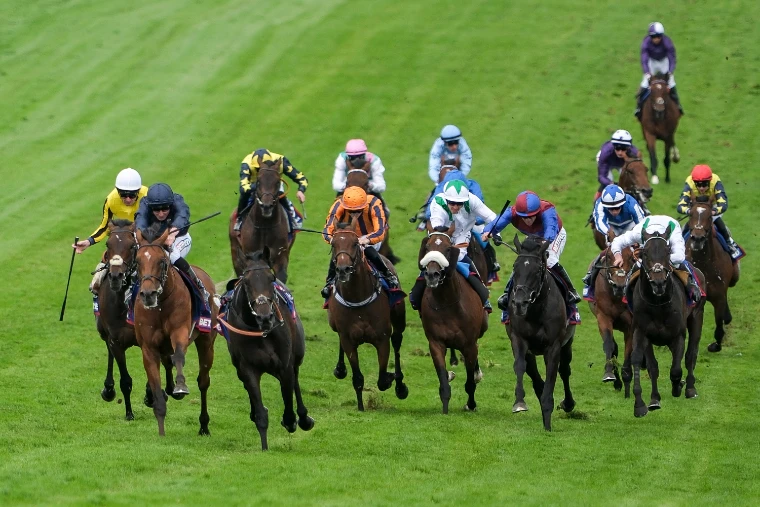
The course bends round the Downs in the shape of a horseshoe. In the first half-mile the field climbs, by the racecourse’s own reckoning, the height of Nelson’s Column. Then it bears left and runs downhill into Tattenham Corner and the straight, which slopes away towards the far rail.
A Derby winner needs speed and stamina, and at Epsom it needs balance as well. Many good horses have lost the race at the corner.
In 1913 Emily Davison, a suffragette, ducked under the rail at Tattenham Corner and was knocked down by Anmer, the King’s horse. She died four days later.
In the same race the favourite, Craganour, passed the post first and was disqualified by the stewards, and the race was given to Aboyeur, at a hundred to one. No other horse has passed the post first in the Derby and lost it the same day.
Lester Piggott won it nine times, the first in 1954, at eighteen, and the last in 1983. Shergar won it in 1981 by ten lengths, the widest margin there has been.
Derby Day
In 1847 Lord George Bentinck, then the leading man in racing, moved that the House of Commons adjourn for Derby Day. It did so most years until 1892, when the motion was defeated for the first time.
Bentinck had sold his horses in 1846 to give his time to politics. In 1848 Surplice, a colt he had bred, won the Derby, and the next day Disraeli found him in the library of the House of Commons. “You do not know what the Derby is,” Bentinck said. Disraeli said that he did: it was the blue ribbon of the turf.
William Powell Frith painted the crowd on the Downs, and when The Derby Day was shown at the Royal Academy in 1858, a rail had to be put up to hold the public back from it. It belongs to the Tate.
The Derby moved from Wednesday to Saturday, for good, in 1995.
Edward VII won it three times, twice as Prince of Wales and once as King, with Minoru in 1909. Queen Elizabeth II came to it for nearly seventy years and never won it. Her Aureole was second in 1953, four days after the coronation.
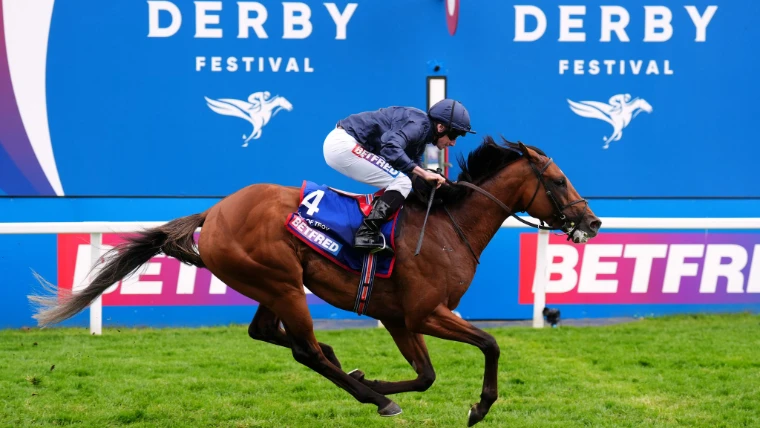
In 2026 it was run on soft ground and won by Christmas Day, the twelfth Derby winner trained by Aidan O’Brien.
What to Know
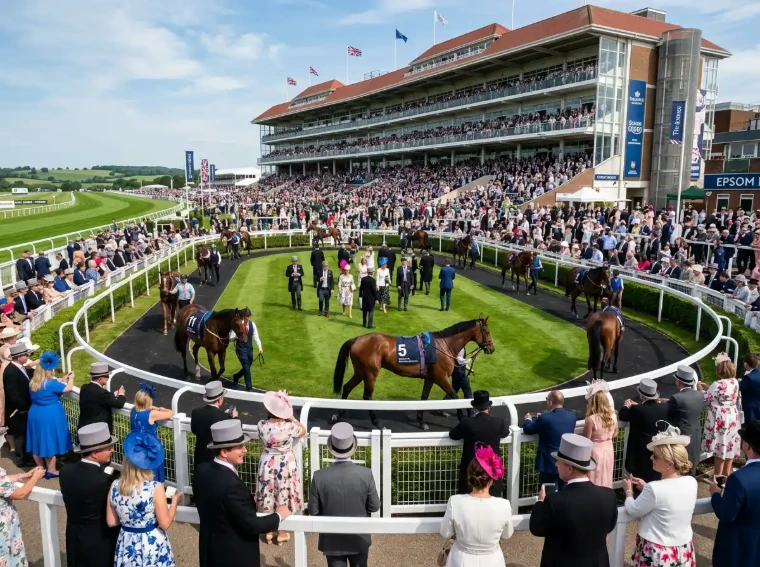
The Oaks is run on the Friday, which is Ladies Day. The Derby is run on the Saturday, in the middle of the afternoon.
Morning dress, black or grey, with a top hat. It is required in the Queen Elizabeth II Stand on Derby Day, where women wear formal day dress with a hat or fascinator. The Grandstand and the Hill have no code.
The Hill, in the middle of the course, is free to anyone who books a ticket, with a funfair, open-top buses, and a view of the horses coming up the straight.
Trains run from London to Epsom, to Epsom Downs, and to Tattenham Corner, which is half a mile from the course and the nearest. London is where to stay.
The mistake is to watch the race on a screen. Bring glasses, and watch the field come down the hill and round Tattenham Corner.
The Court
The Epsom Derby is not the Court’s own. Places in the Queen Elizabeth II Stand, and a box on Derby Day, are sought on a member’s behalf, and the Court arranges the whole of it: getting there, where to stay in London, and the table afterward. Royal Ascot follows later in June, for a member who wants both.
How one becomes a member is set out under Admission.
Set down September MMXXVI · Revised October MMXXVI