THE GOLD CUP
Mid July · Cowdray Park, West Sussex · Four Weeks · Since 1956
2027: dates to follow
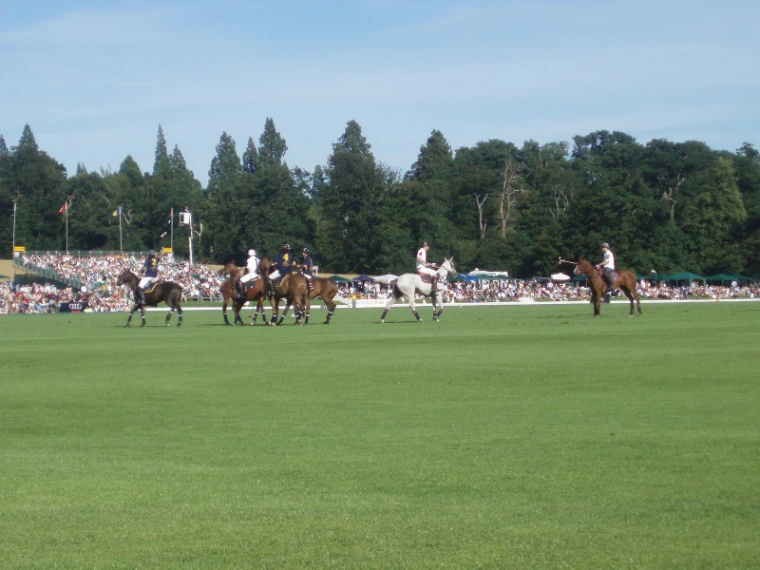
The Gold Cup is the British Open Polo Championship, played for the Cowdray Gold Cup at Cowdray Park, outside Midhurst in West Sussex: the high-goal tournament of the English season, nearly four weeks of matches from late June, decided in a final on a Sunday in July on the Lawns, below the ruins of Cowdray House. With the Argentine Open and the US Open it is counted one of the three great opens of polo.
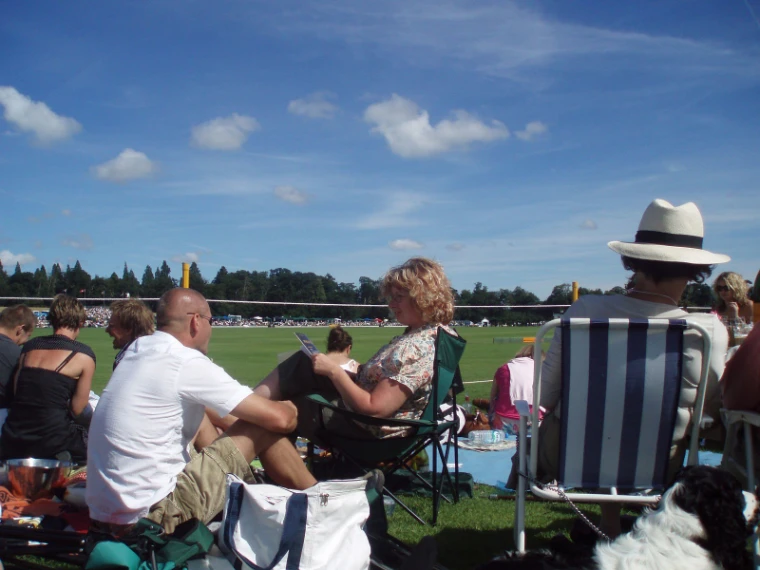
At half time the crowd walks out onto the ground to tread in the divots.
Cowdray
The Pearson family bought the Cowdray estate in 1909 and played polo there from 1910. John Pearson, the third Viscount Cowdray, lost his left arm at Dunkirk in 1940, had an artificial one made so that he could go on playing, and set out to make Cowdray one of the great polo clubs of the world. He ran English polo for twenty years after the war, and in 1956 he put up a trophy of his own, the Cowdray Park Gold Cup.
It was won the first year by Los Indios, an Argentine farmer, Antonio Heguy, and three friends whom Lord Cowdray had invited, by nine goals to four. Twenty-two teams entered in 1990, the most there have been. Adolfo Cambiaso has won it nine times.
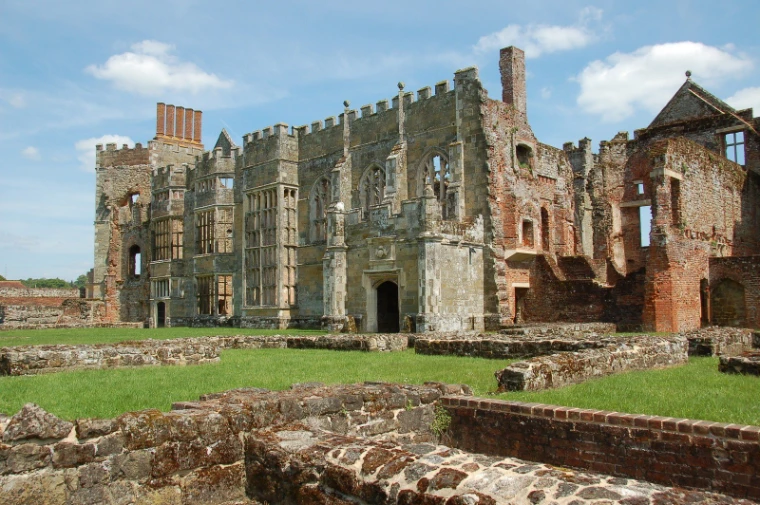
The ruins behind the ground are of Cowdray House, a Tudor house begun about 1520 on a thirteenth-century site, where Henry VIII stayed and Elizabeth I was entertained in 1591. It burned in September 1793, when charcoal fell among wood shavings in a carpenters’ workshop, and has stood roofless since.
The Tournament
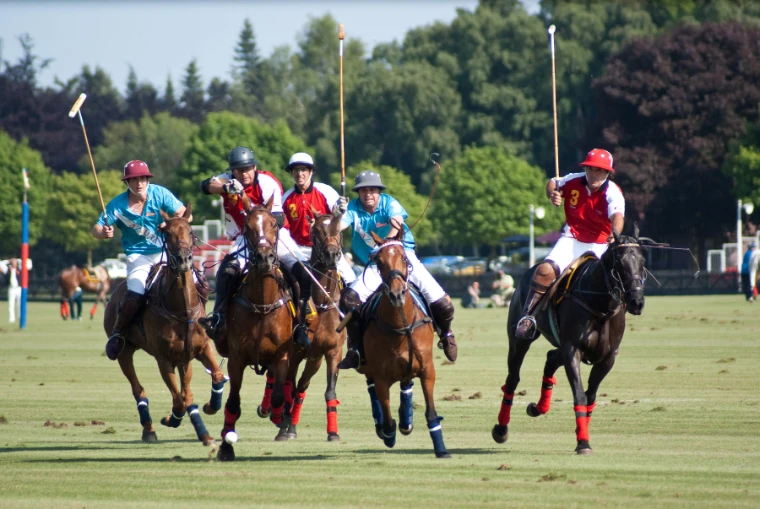
The teams are rated at twenty-two goals between their four players, high-goal polo, the premier tournament of its kind in Europe. They play qualifying matches in leagues through late June and early July on the Lawns and at Ambersham, then quarter-finals, semi-finals and the final. A high-goal match is six chukkas of seven minutes.
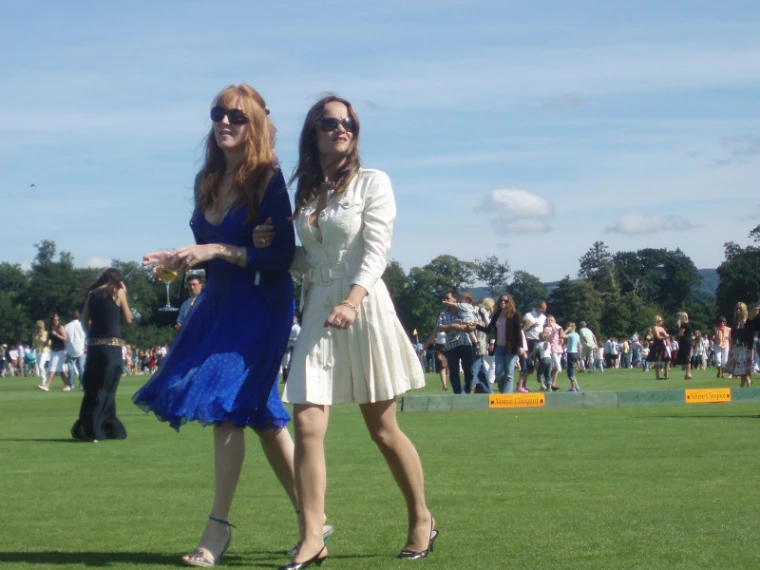
The final day opens in the morning; the match is at three. At half time comes the treading-in, the whole crowd out on the field in summer dresses and panamas stamping down the turf the ponies have torn up.
In 2026, seventy years after the first, nineteen teams entered and the final, on 19 July, went to Gaston, nine goals to eight, against Dubai, in their first final; Cruz Heguy was the best player on the ground.
What to Know
The final is played on a Sunday in mid-July. The 2027 dates have not been announced.
Tickets are bought from the club in advance and are not refundable. General admission has cost from about £36; the Lawns Enclosure, off the centre line, is where to watch the semi-finals and the final, and the grandstand is open to members and to general admission. The private pagodas on the front line sell out.
The club’s own code: linen suits and light blazers, no tie, and a panama against the sun; summer dresses, and hats if one likes. Shorts are not allowed in the Members’ Enclosure. Picnics, chairs and rugs are welcome elsewhere.
The nearest stations are Haslemere and Pulborough, each about ten miles off; Haslemere is under an hour from Waterloo at best. The Spread Eagle in Midhurst is the old inn of the town, and the estate lets cottages.
The mistake is the shoe. Leave the stilettos behind, the club says: the day is spent on grass, and the treading-in is done in wedges, espadrilles, brogues and loafers.
The Court
The Gold Cup is not the Court’s own. A pagoda on the front line, or places in the Lawns Enclosure for the final, are sought on a member’s behalf, and the Court arranges the whole of it: getting there, where to stay in Midhurst or on the estate, and the table afterward.
How one becomes a member is set out under Admission.
Set down October MMXXVI