THE MARYLAND HUNT CUP
Late April · Worthington Valley · An Afternoon · Since 1894
No longer among the Court’s 250, from MMXXVII.
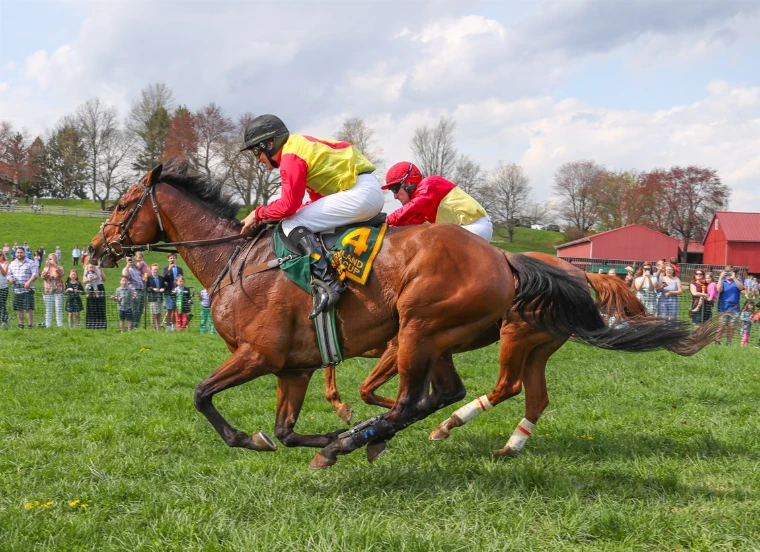
The Maryland Hunt Cup is one race, on the last Saturday of April, over four miles and twenty-two fences of solid timber in the Worthington Valley north of Baltimore. The horses are ridden by amateurs, the crowd picnics on the hillside, and there is nothing else on the card.
It is the hardest timber race in America, and among the hardest races of any kind in the world.
The Challenge
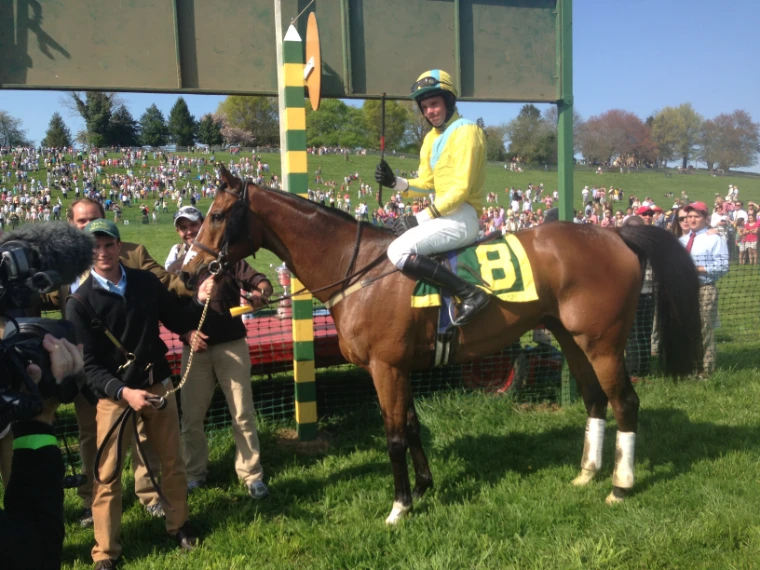
In 1894 the members of the Elkridge Fox Hunting Club challenged their neighbours of the Green Spring Valley Hunt to a race across country, to settle which hunt had the better horses. It was won by a horse called Johnny Miller, owned and ridden by John McHenry.
The founders set three rules, and the race has kept all three: it would be run over natural hunting country, ridden by amateurs, and carry no commercial activity. It was opened to all of Maryland’s hunts the following year and to hunts across North America in 1903. It wandered over several valleys before settling, in 1922, on the course in the Worthington Valley where it has been run ever since.
For most of its first eighty years the only prize was a silver tankard. Prize money came in the 1970s, over bitter objection, and the tankard is still presented from the back of a hay wagon.
It was seventy-seven years before a woman was allowed to ride in it: Kathy Kusner, in 1971. In 1980 Joy Slater won it.
The Timber
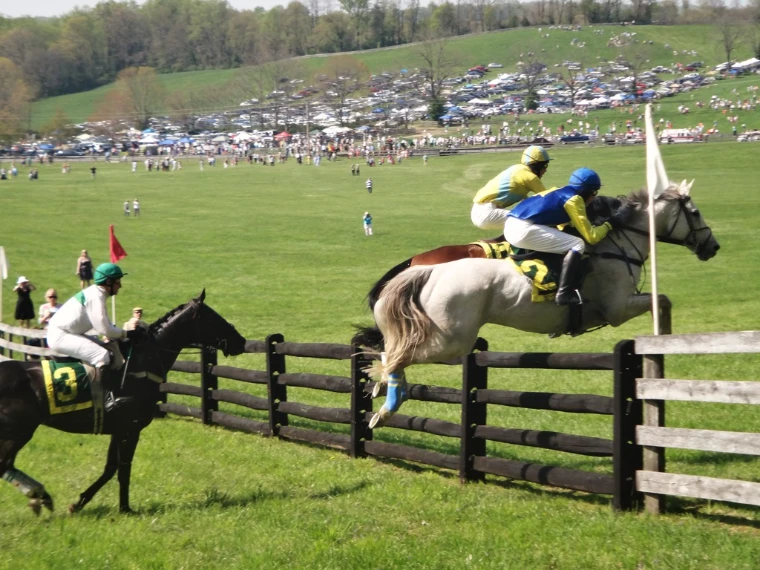
The fences are post and rail, set in the ground, and they do not give. Eighteen are rails and four are boards, and the highest, the sixteenth, stands at four feet ten. A horse that hits a brush fence at Aintree goes through the top of it. A horse that hits timber in Maryland stops.
The race goes round the valley in full view of the hillside, and takes a little over eight minutes.
Leading Hunt Cup horses have gone on to Aintree. Jay Trump won the Hunt Cup three times and the Grand National in 1965. Ben Nevis II won it twice and the Grand National in 1980. When Fred Winter, the English trainer who had sent Jay Trump round Aintree, was asked whether he would bring a horse to Maryland, he said he wouldn’t dare.
What to Know
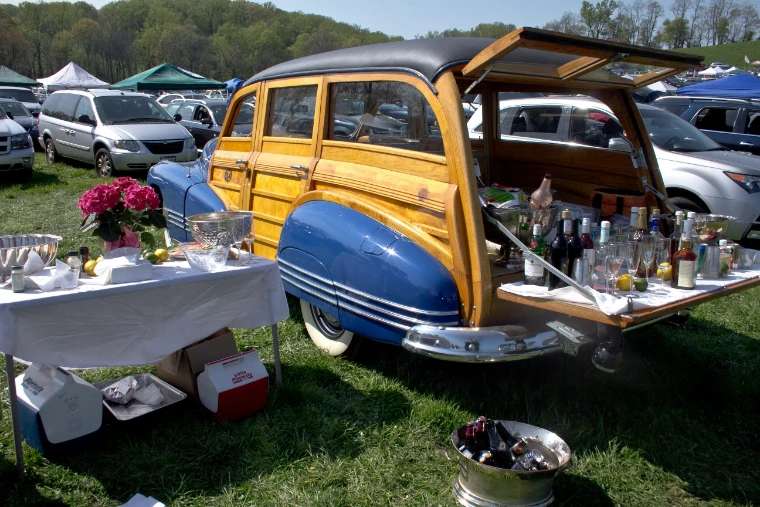
It is a picnic with a race in it. The crowd arrives by midday, parks in the fields and eats off the tailgates on the hillside. The race goes off at four and is over in minutes.
There are no betting windows, no grandstand and no advertising anywhere: not on the course, not on the horses, not on the riders.
The places on the hillside worth having are held by families who have stood in them for generations.
Maryland in April can be wet, and the hillside turns to mud. Country attire, and boots.
With the Grand National in the same month, April is the calendar’s month for the jumping horse.
- II · The Finish, Alexbrown (English Wikipedia) · CC0 1.0
- III · The Tailgate, Jake Slagle · CC BY-NC 2.0
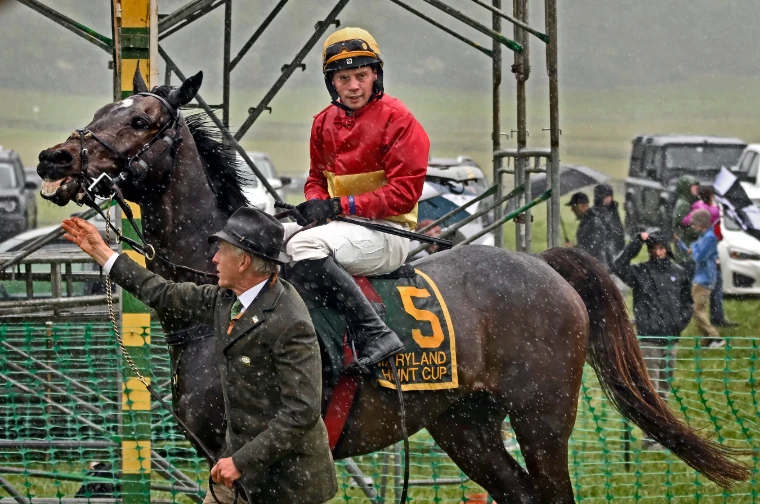
- V · Led In, © Kenneth K. Lam / Baltimore Sun
Set down September MMXXVI · Revised October MMXXVI