THE GRAND NATIONAL
Early April · Aintree · Three Days · Since 1839
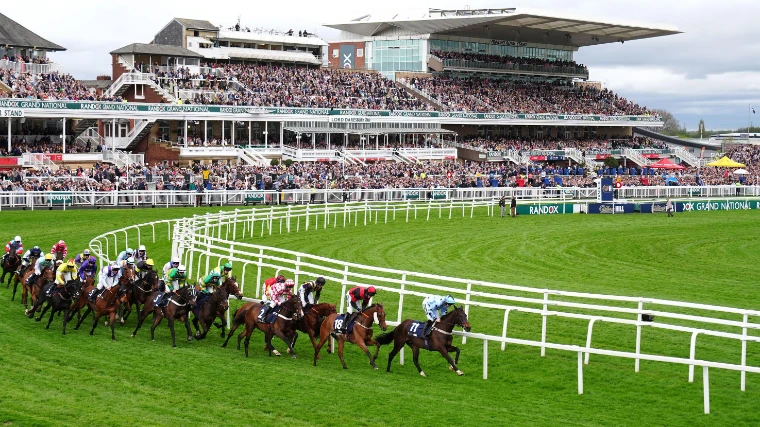
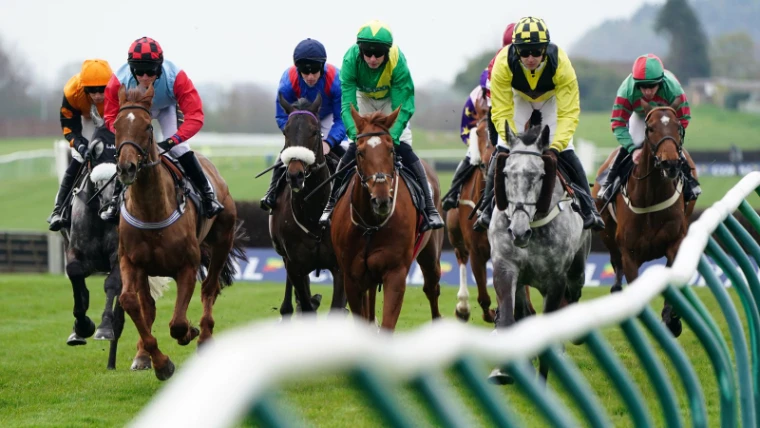
The Grand National is a steeplechase of about four and a quarter miles at Aintree, on the northern edge of Liverpool: thirty fences, over two circuits of the same course.
It is the race that people who never bet, bet on.
The Publican’s Race
The race was a publican’s idea. William Lynn kept the Waterloo Hotel in Liverpool, leased ground at Aintree from the Earl of Sefton, and in 1839 put on a steeplechase there. Seventeen ran. Some fifty thousand came to watch. It was won by a horse called Lottery, which is what the race has been called ever since.
Captain Martin Becher, the best-known cross-country rider of the day, was disputing the lead when his horse stopped at the first brook. He went over its head into the water and sheltered in the ditch while the rest of the field jumped over him. The brook has carried his name since.
It is a handicap. The better the horse, the more weight it carries, so that on paper the whole field arrives at the finish together. In practice it rarely arrives at all. In 1928, of forty-two starters, two got round.
The Grand National has been run every spring since 1839, except in the war years, in 1993, when a false start voided it, and in 2020, when the pandemic stopped it.
The Fences
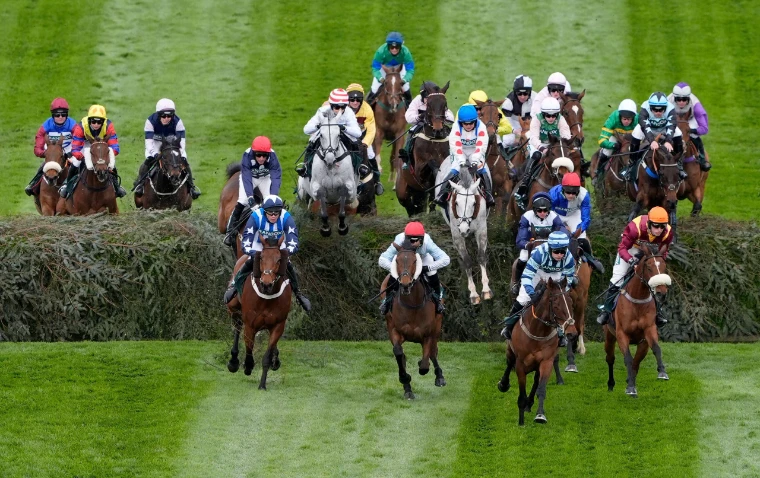
The National course is a course of its own, used for a handful of races a year, and its fences are the reason the world knows the race.
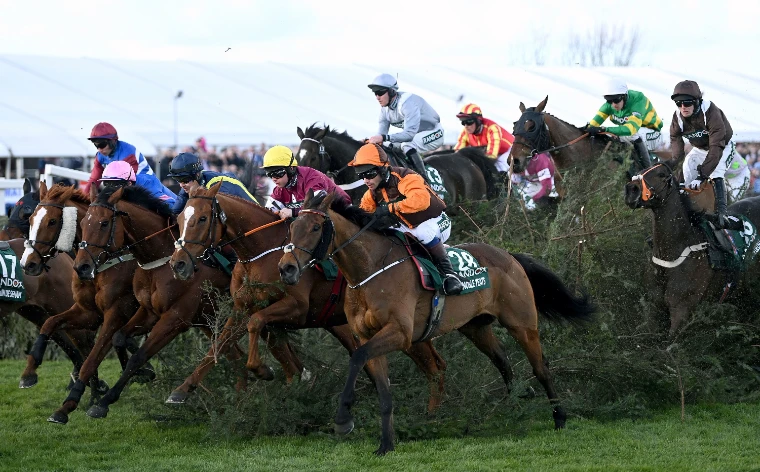
They have names rather than numbers. Becher’s Brook, with its drop on the landing side. Valentine’s, after a horse said to have cleared it hind legs first in 1840. The Canal Turn, where the course bends left at a right angle straight after the fence, and a rider who has not planned the turn before jumping loses lengths he will not recover. The Chair, the tallest, with a six-foot ditch in front of it, jumped only once, in front of the stands.
The smallest is called Foinavon. In 1967 a loose horse ran across it on the second circuit and brought almost the whole field to a halt. Foinavon, at a hundred to one and so far behind that he missed the pile-up entirely, picked his way through and won. The fence took his name in 1984.
Since the 1990s the course has been made kinder: the drop at Becher’s reduced, the fences built on softer cores, the field made smaller. It remains the hardest thing a jumping horse is asked to do.
The Run-In
After the last fence there are still almost five hundred yards to run, round an elbow, and they have decided the race more often than any fence.
In 1956 Devon Loch, owned by the Queen Mother and ridden by Dick Francis, was clear on the run-in and yards from winning when he leapt at nothing and fell flat on his stomach. Nobody has satisfactorily explained it. Francis went on to write thrillers, and “doing a Devon Loch” went into the language.
In 1973 Crisp, carrying top weight, came to the last a long way clear and was caught in the final strides by a horse called Red Rum. Red Rum won again the following year, was second in the two after, and won a third time in 1977. He was trained on the sands at Southport by a man who sold used cars, and he is buried beside the winning post.
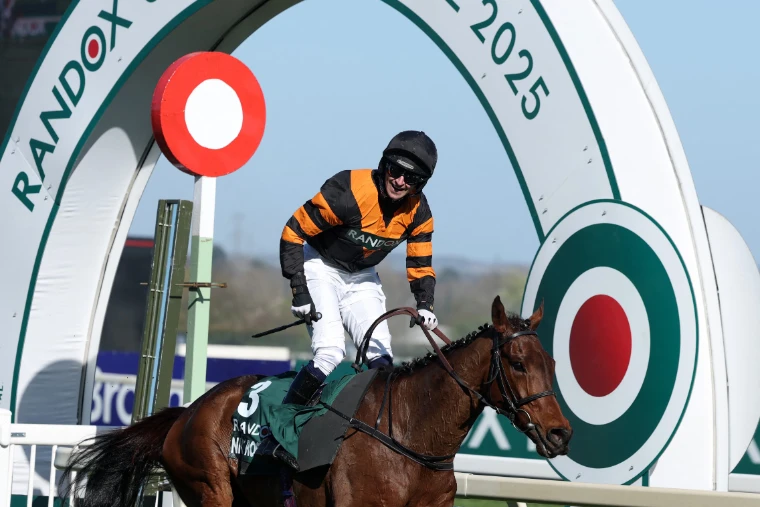
In 2021 Rachael Blackmore became the first woman to ride the winner.
What to Know
The meeting runs for three days, and the National is run on the Saturday. Friday is Ladies’ Day, and Liverpool dresses for it.
The Cheltenham Festival comes a few weeks earlier, and the two are different contests. The Gold Cup is run at level weights to find the best horse. The National is a handicap over a course that finds out other things. In 1934 Golden Miller won both in the same spring.
The fences that made the race are on the far side of the course, a long walk from the stands. Most people see them on the big screens and see the finish for themselves.
Aintree is flat and open to the weather coming in off the Irish Sea, and April there can be cold.
The Court
The Grand National is not the Court’s own. Boxes and tables above the finish are sought on a member’s behalf, and the Court arranges the whole of the meeting: getting there, where to stay, in Liverpool or in the country beyond it, and the table afterward. Saturday is the day that goes first.
How one becomes a member is set out under Admission.
Set down September MMXXVI