

THE VIENNA BALL SEASON
January Into February · Vienna · A Season · Four Hundred and Fifty Balls
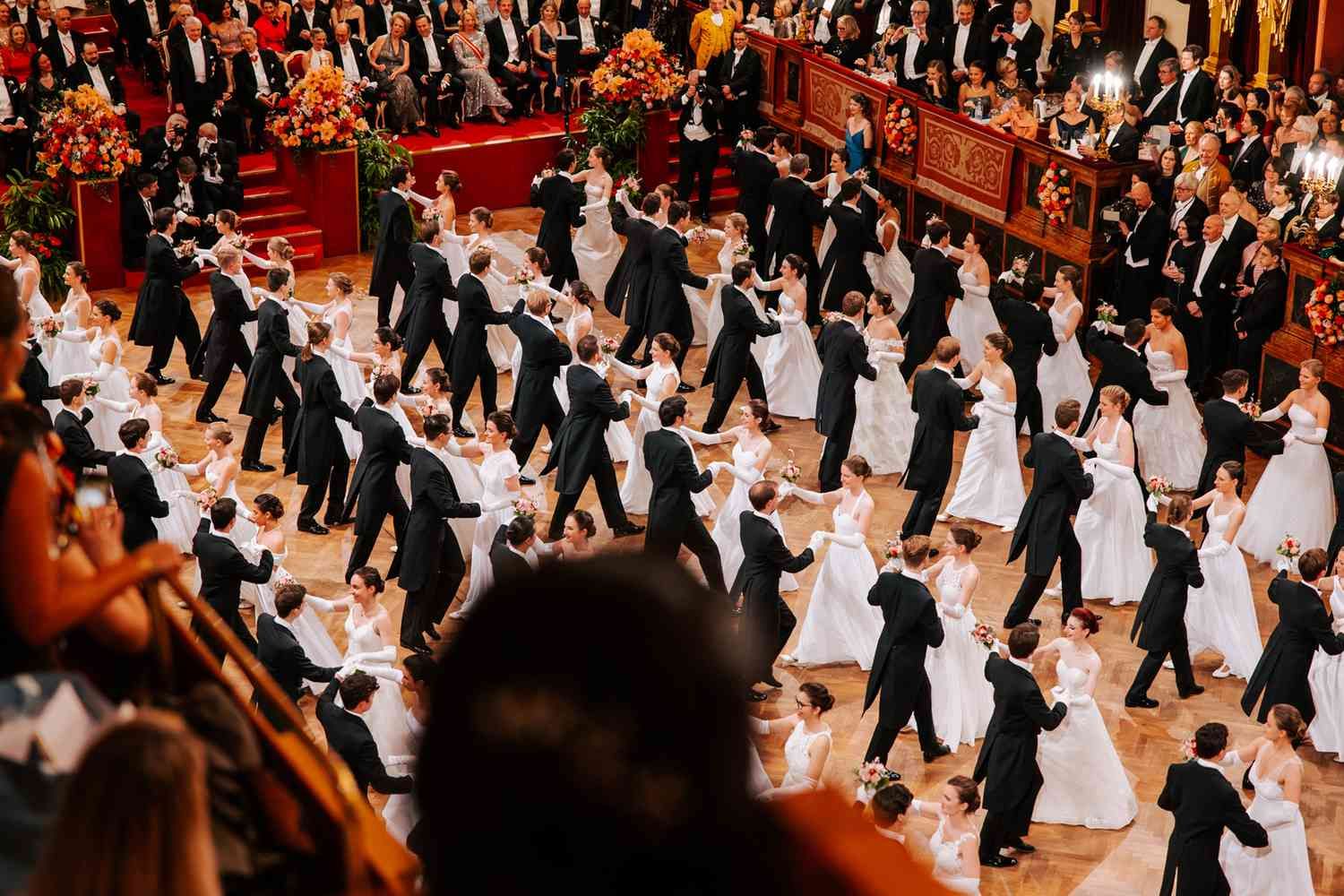
The Vienna ball season runs from the eleventh of November to Shrove Tuesday, and some four hundred and fifty balls are held within it. January and February hold most of them. Between them they account for more than two thousand hours of dancing.
It is not a run of parties. It is a civic institution that happens to involve waltzing.
The Guilds
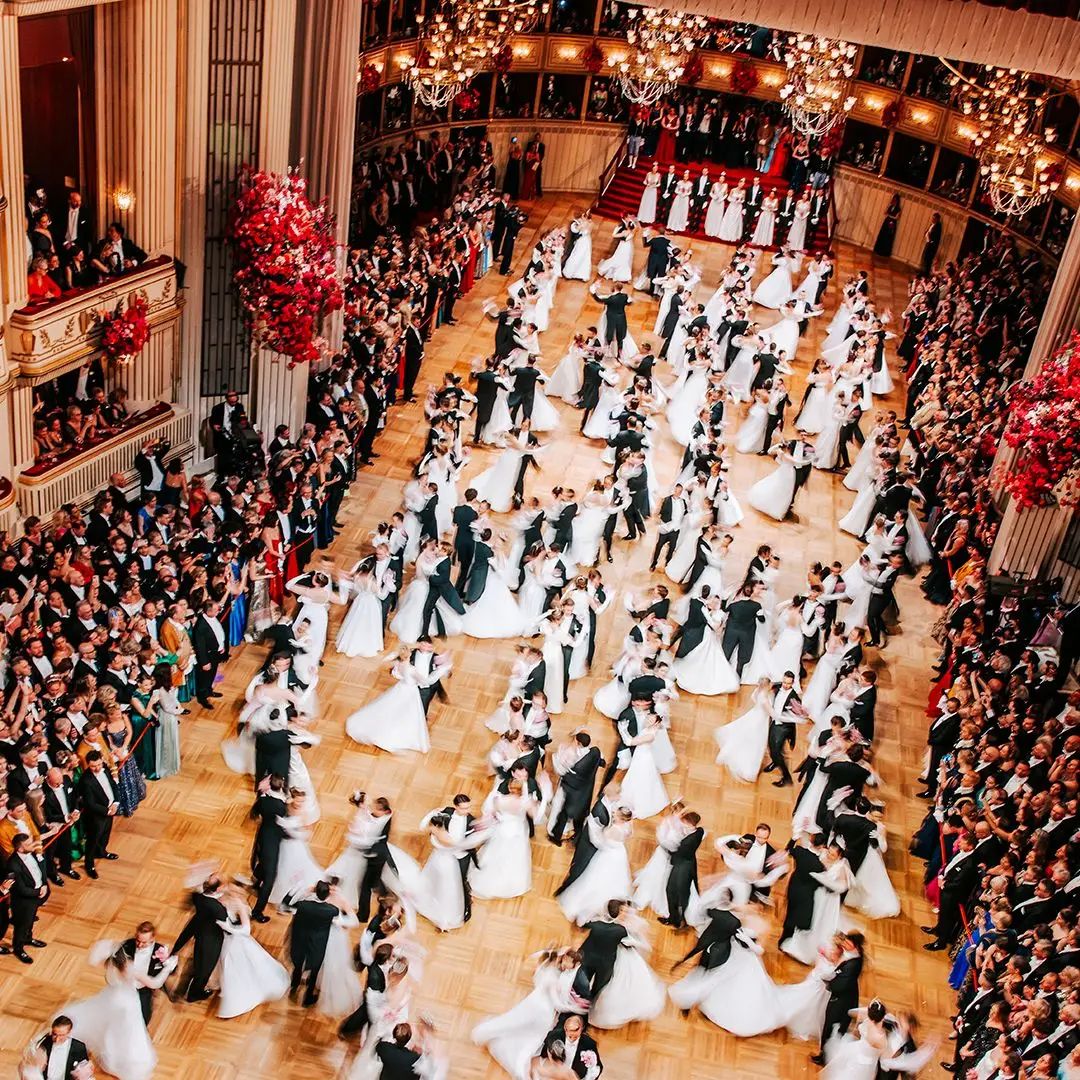
The balls are thrown by trades. The coffee brewers hold one at the Hofburg and the confectioners another. There are balls for doctors, lawyers, engineers, scientists, hunters, gardeners and the press, and each is that profession’s own night rather than a themed evening.
The Hunters’ Ball takes five thousand people and asks for traditional dress rather than tails. The Rudolfina Redoute requires the women to wear masks and does not relax about it. The Philharmonic Ball is held in the Musikverein, and the orchestra’s brass open it from the balcony with a fanfare Richard Strauss wrote for the first one in 1924, played at every one since.
The Opera Ball in February is the one the world knows. It is the last of the great nights rather than the only one.
The Form
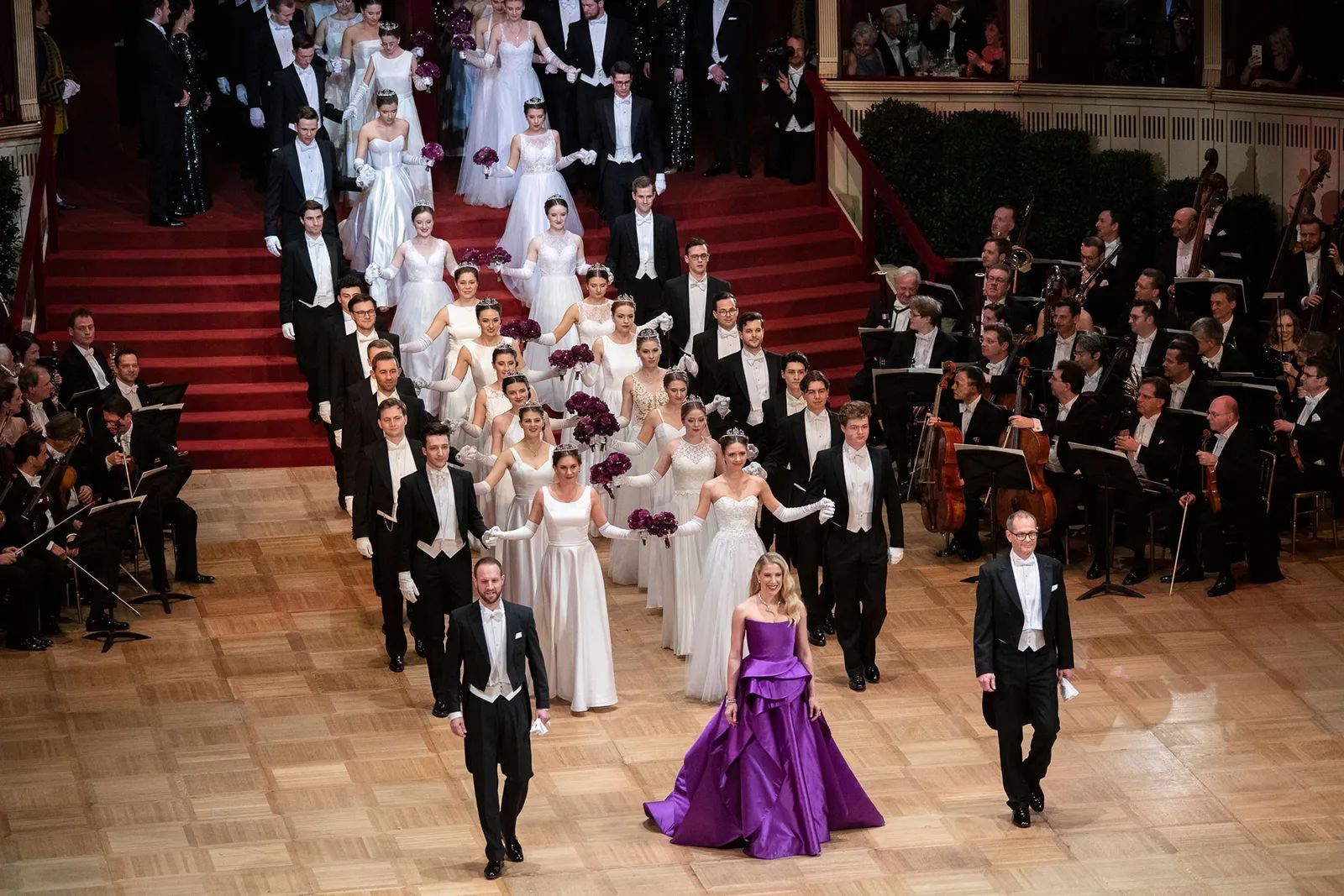
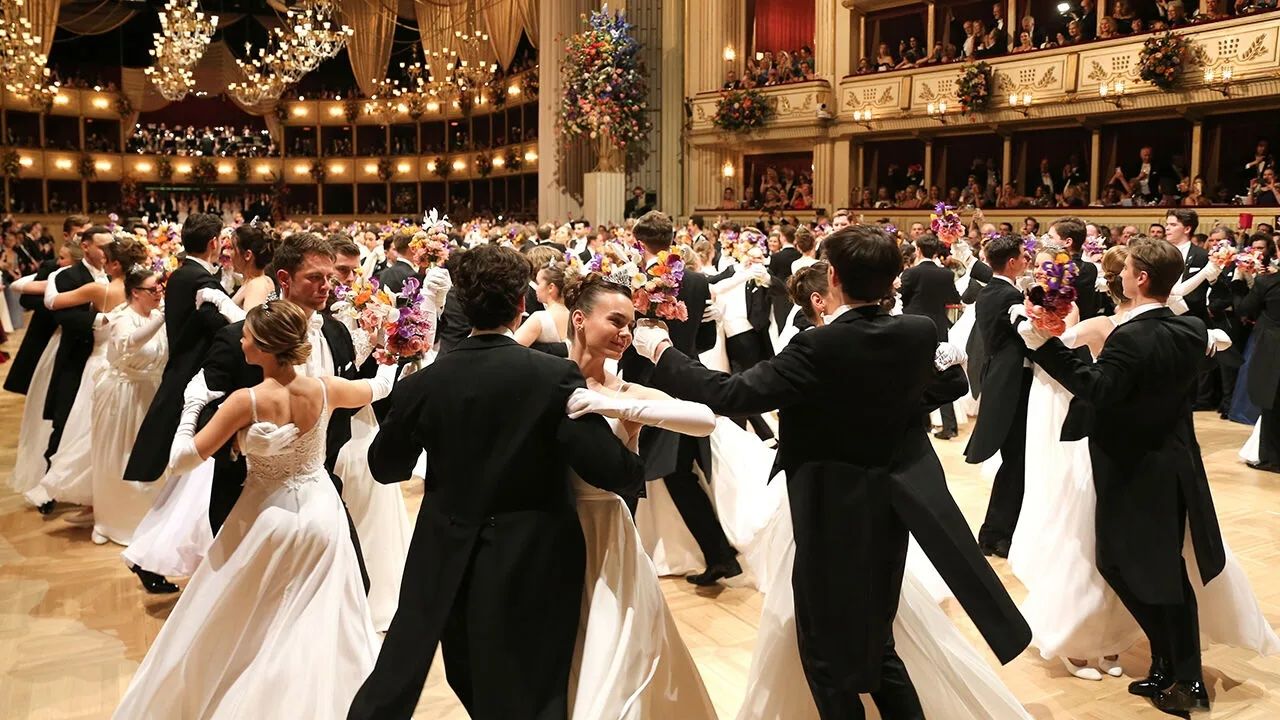
A Viennese ball opens rather than begins. There is a ceremony, and then the debutantes come in.
They are young, unmarried, and they have rehearsed. The Philharmonic asks its debutantes to be at least seventeen and eighteen, to dance a Viennese waltz in both directions, and to attend every rehearsal in the week before. The women wear floor-length white and white gloves, the men black tails and white gloves. Married couples are not admitted to the procession.
The dancing is prepared by the Elmayer school, which has taught Vienna to move properly since the 1920s and is the reason the floor looks the way it does.
After the procession the floor opens, and it stays open into the morning.
What to Know
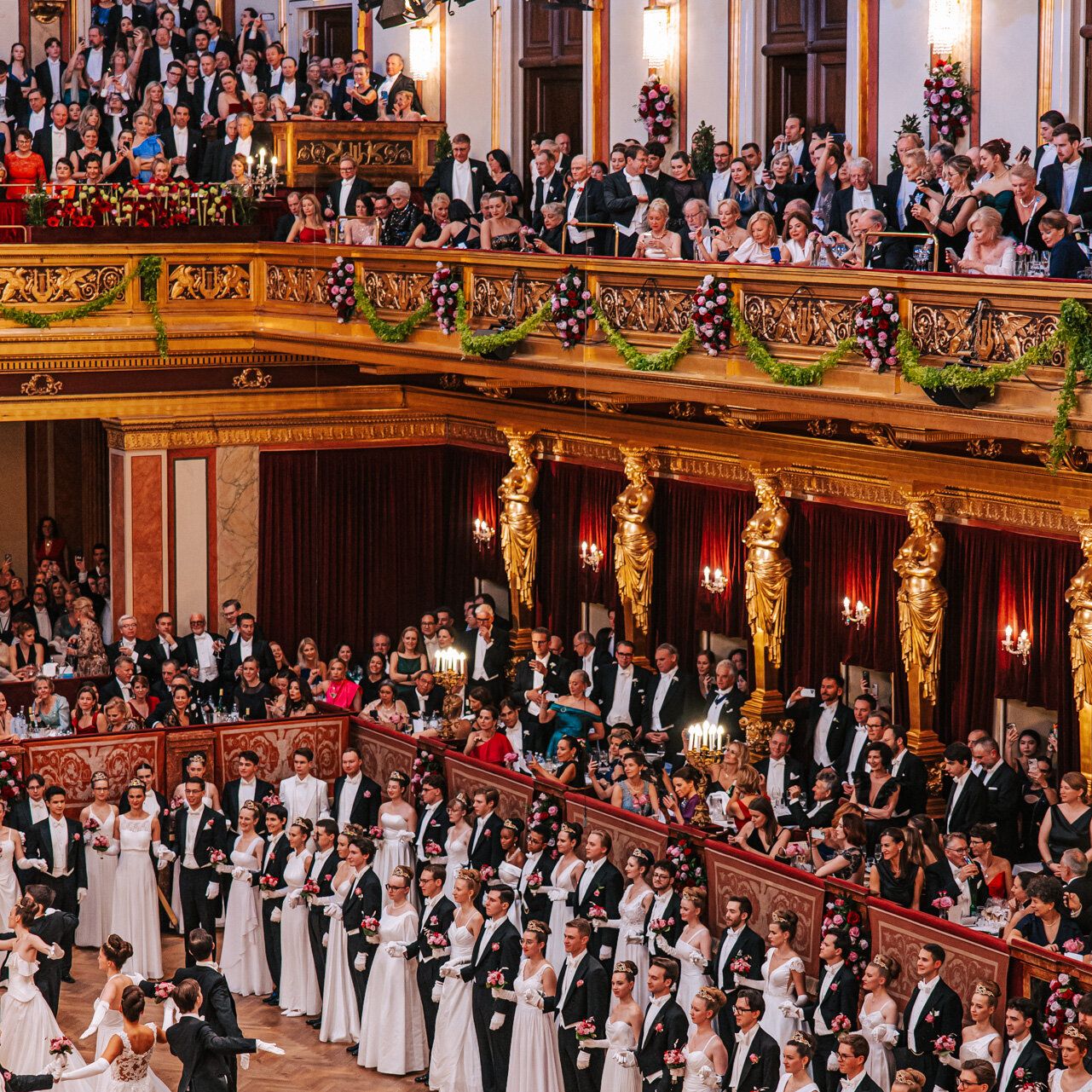
The dress codes are real and they are enforced at the door. A ball’s committee may refuse a guest it considers improperly dressed, and it does.
Floor-length for women, and not a cocktail dress. Tails or a dinner jacket for men, and not a suit. Military uniform is accepted at several. Where a ball asks for traditional dress or a mask, it means it.
Tickets for the Opera Ball are taken a year ahead. Most of the others are far easier, and several of them are better nights.
Bring a second pair of shoes and leave them at the cloakroom. Everyone who has done this once does it thereafter.
The mistake is going to the famous one. The Coffee Brewers’ Ball and the Hunters’ Ball are where Vienna actually is.
The Court
The Vienna Ball Season is not the Court’s own. Tickets, a table and a box are sought on a member’s behalf, and the Court arranges the whole of the evening: getting there, where to stay, and the table afterward. Which ball is the question worth asking, and on that the Court has views.
