
FESTIVAL D’AIX-EN-PROVENCE
July · Théâtre de l’Archevêché, Aix-en-Provence · Three Weeks · Since 1948
2027: dates to follow
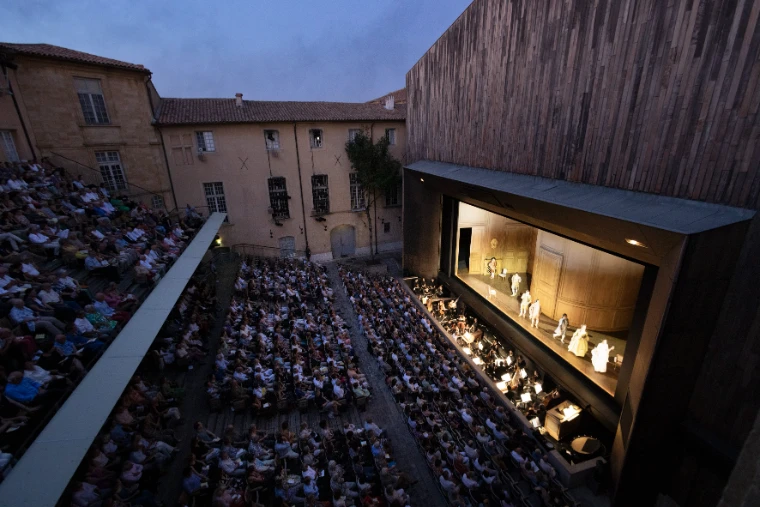
The Festival d’Aix-en-Provence is three weeks of opera in July in the old capital of Provence: Mozart at nightfall in the open-air courtyard of the archbishop’s palace, new productions and premieres in the Grand Théâtre de Provence and the old Jeu de Paume, and concerts across the town. It has been given almost every summer since 1948, and a Mozart opera is staged nearly every year.
François Mauriac called the courtyard on a summer night “Don Juan among the stars”.
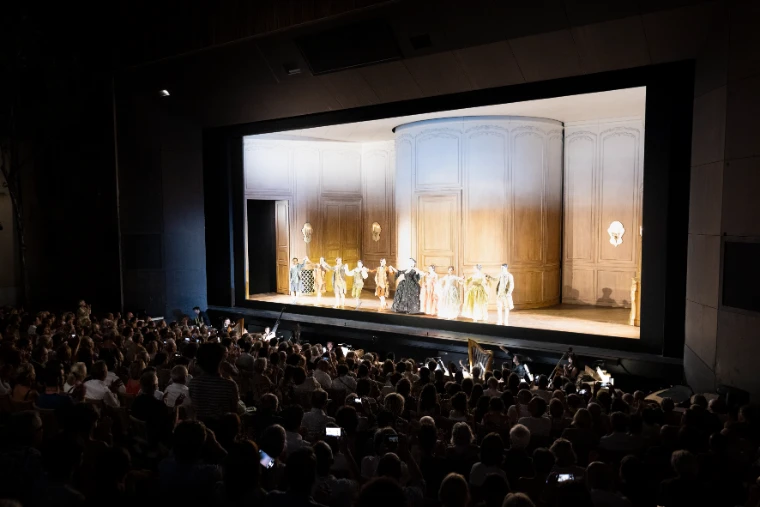
The Archevêché
Gabriel Dussurget, a Parisian impresario, wanted a Mozart festival in France to match Salzburg’s. In 1947 he met the Countess Lily Pastré, a Marseille heiress to the Noilly Prat fortune who had sheltered artists at her house through the war, and through her Roger Bigonnet, who ran the casino at Aix. With the casino behind it, the first festival opened in July 1948 with Così fan tutte, an opera then hardly known in France, in the courtyard of the archbishop’s palace. Clara Haskil played that summer.
The next year’s Don Giovanni, with sets by the poster artist Cassandre, who also built the little theatre in the courtyard, was an international success, and Aix became the French Salzburg. Painters designed the sets for years afterwards: Balthus, Derain, Masson. For a time Aix was the only place in France where Mozart’s operas could be heard complete and in the original language.
The courtyard was rebuilt in 1985, its back wall taken down and put up again stone by stone five metres further back. The festival closed in 1997 and reopened in 1998 under Stéphane Lissner with Peter Brook’s Don Giovanni, conducted by Claudio Abbado, and with an Académie for young singers and players, which has since brought forward Julie Fuchs and Sabine Devieilhe. The Grand Théâtre de Provence opened in 2007 with Die Walküre.
Pierre Audi, director from 2018, died in May 2025, and his last programme was given in 2026 under his successor, Ted Huffman.
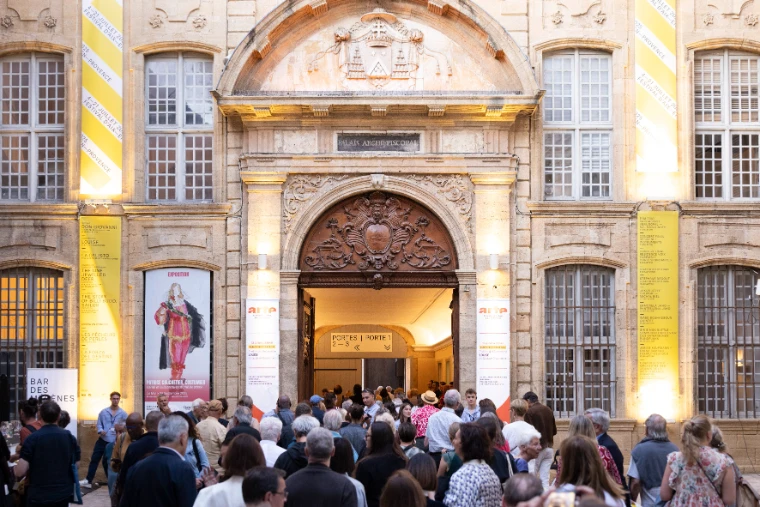
The Three Weeks
The festival runs through the first three weeks of July. Each summer brings a handful of staged operas, some new, some world premieres, a few operas in concert, and recitals and orchestral concerts besides.
The Archevêché is the heart of it: a courtyard of medieval arches and seventeenth-century wings beside the cathedral, played at nightfall with the sky for a roof. The larger productions go to the Grand Théâtre de Provence, which seats 1,350, and the smaller and newer ones to the Théâtre du Jeu de Paume. Every opera is surtitled in French and English, and there are bars at the theatres, open an hour before and in the intervals.
In 2026, from 2 to 21 July, Barrie Kosky’s Die Frau ohne Schatten, conducted by Klaus Mäkelä, was called “a triumph” by the New York Times, and Francesco Filidei’s Accabadora had its world premiere.
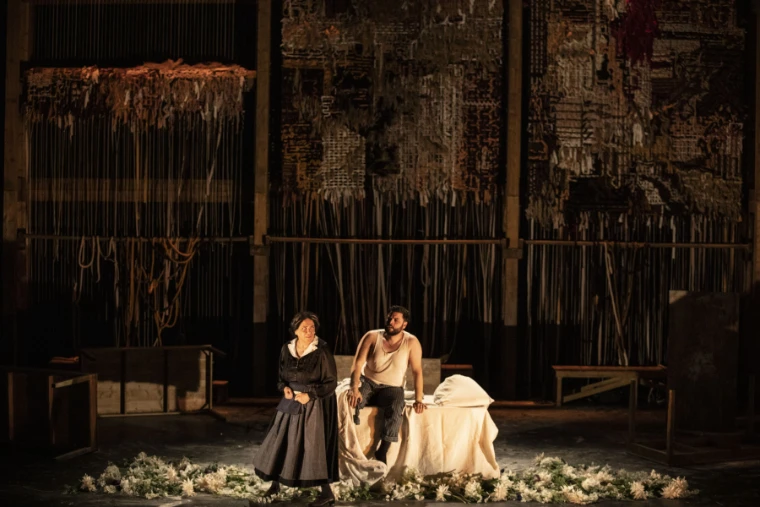
What to Know
It runs through the first three weeks of July. The 2027 dates and programme have not yet been announced.
Seats for the operas cost from €32 to a little over €300, and the best go early. There is a waiting list for sold-out nights.
The festival asks only for smart clothes and invites its audience to wear its finest. A lounge suit, and a layer: the courtyard is open to the sky, and the festival itself warns that the evenings can be chilly.
The TGV from Paris takes about three hours to Aix-en-Provence TGV, some fifteen kilometres out, with a shuttle bus every quarter of an hour; Marseille’s airport is about as far from Aix as from Marseille. Stay in the old town, or out in the country towards Sainte-Victoire.
The mistake is to arrive late. Once the doors close a seat is no longer guaranteed, and the security checks take time: arrive half an hour before the curtain.
The Court
The Festival d’Aix-en-Provence is not the Court’s own. Seats at the Archevêché and the Grand Théâtre are sought on a member’s behalf, and the Court arranges the whole of it: getting there, where to stay in Aix or in the country round it, and the table afterward.
How one becomes a member is set out under Admission.
Set down October MMXXVI