
SALZBURG EASTER FESTIVAL
Late March · Salzburg · Ten Days · Since 1967 · Music
Add to calendar Google Apple Outlook
Arranged by the Court
- Dates20 to 29 March 2027
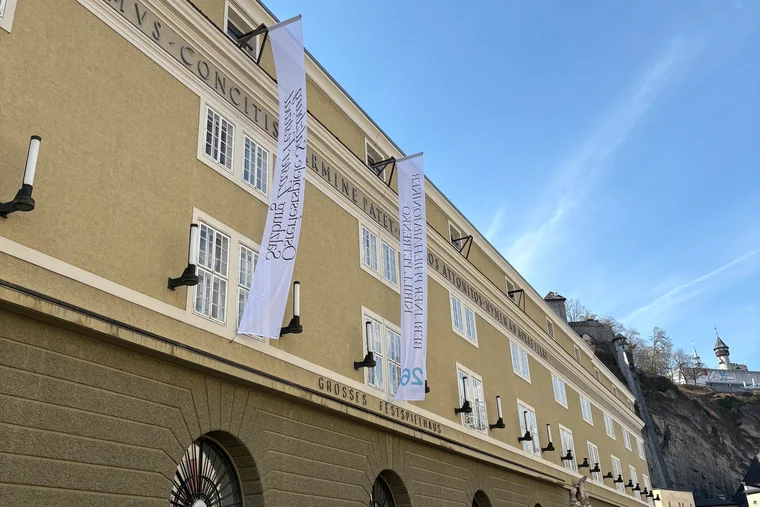
- WhereFelsenreitschule and Großes Festspielhaus, Salzburg
- DressBlack tie
- AdmissionOpen to the public
- The weatherIn March Salzburg reaches about 11°C by day and 1°C at night, and rain or snow falls on about one day in three.
- The tableThe Court dines afterwards at St. Peter Stiftskulinarium, Salzburg (stpeter.at).
- Of noteThe Berliner Philharmoniker is the orchestra of the Salzburg Easter Festival.
- In companyA member who means to go says so to the Secretary, and the Court seats its members together where the engagement allows.RSVP tells the Secretary that a member means to attend. Send passes the engagement’s name, its date and the address of its page to whomever the reader chooses, or, on a computer, copies the address; the Court itself sends and keeps nothing.RSVP
The Salzburg Easter Festival is ten days of opera and concerts in Salzburg, from the Saturday before Palm Sunday to Easter Monday. Herbert von Karajan founded it in 1967 for the Berlin Philharmonic, and the orchestra is its resident again: one opera, staged new, and around it choral and orchestral concerts, chamber music, and since 2023 dance and electronic music.
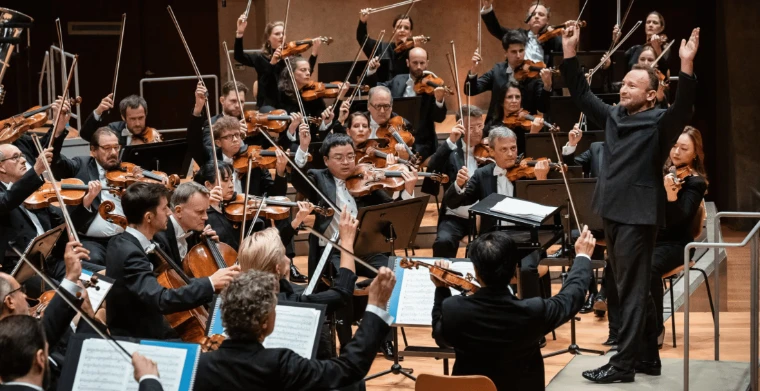
The Berlin Philharmonic is a concert orchestra. At Easter in Salzburg it leaves the platform for the pit and plays a staged opera, which it does only here. In 2027, the festival’s sixtieth year, the opera is Die Walküre, the work Karajan opened with.
The Founder
Karajan ran the summer festival in his native town, but Wagner was not staged there; the summer festival kept clear of Bayreuth, which plays at the same time. At Easter it could be done. In 1967 he opened a festival of his own with Die Walküre, the first part of a Ring given over four years, and was its conductor, its stage director and its impresario. He carried the financial risk himself. When the costs of the first year were paid, he was left with a profit of 300 schillings.
The sets for that Ring were by Günther Schneider-Siemssen. Karajan led every festival until his death in 1989; after two years without a director, Georg Solti took it for 1992 and 1993, then Claudio Abbado, and from 2003 Simon Rattle.
In 2011 the Berlin Philharmonic announced that it would leave after 2012, and it spent the next thirteen Easters in Baden-Baden. Christian Thielemann and the Staatskapelle Dresden took the festival from 2013 to 2022. For the fiftieth year, in 2017, Die Walküre returned in Schneider-Siemssen’s reconstructed sets. In 2020 the festival was cancelled because of the pandemic, and in 2021 it was held in the autumn, over four days and without a staged opera.
Nikolaus Bachler, formerly of the Bavarian State Opera, became intendant in 2020; his own programmes began in 2023, bringing a different orchestra each Easter until 2025. In 2026 the Berlin Philharmonic returned under Kirill Petrenko and began a new Ring with Das Rheingold, staged by Kirill Serebrennikov. It is the festival’s third Ring, after Karajan’s and Stéphane Braunschweig’s, and in 2028 it pauses for Schoenberg’s Moses und Aron.
The Ten Days
The festival is built as two cycles. In 2027 the first opens with the premiere of Die Walküre on Saturday 20 March, followed by Handel’s Messiah under Emmanuelle Haïm, the first time the work has been given at the festival; Martha Argerich in Prokofiev’s Third Concerto under Lahav Shani; dance; and Beethoven’s Missa solemnis under Petrenko, which Karajan also conducted in 1967. The second repeats the concerts, save that Lisa Batiashvili takes the solo part in the second performance of the orchestral concert, on 26 March, and plays Sibelius’s Violin Concerto; it ends with Die Walküre on Easter Monday. Lise Davidsen sings her first Brünnhilde, Christopher Maltman is Wotan, and the production moves to America and the Day of the Dead.
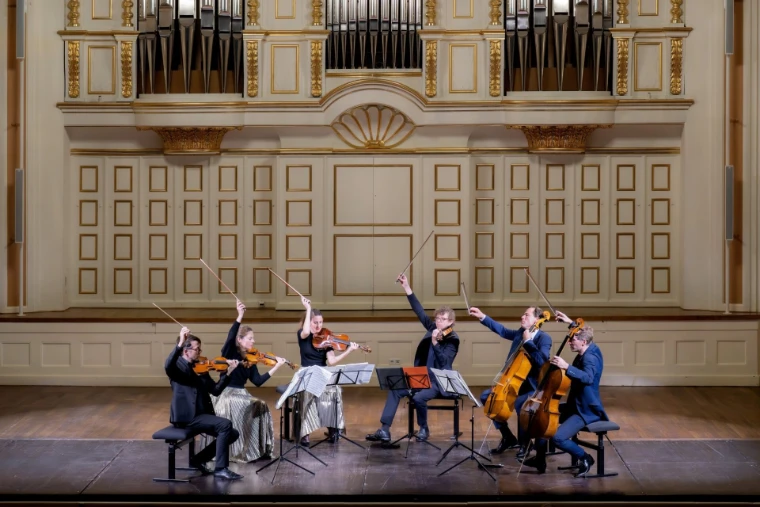
The opera begins at four in the afternoon; the concerts at seven. Members of the orchestra play chamber music in the mornings and afternoons, there are late night concerts at ten, and players give short free concerts in public squares and in care and social institutions. Nikolaus Bachler introduces the opera himself, at eleven on the morning of the first and last performances.
There is no dress code. Hotel Sacher, one of the festival’s patrons, advises elegant evening wear without the formality of a ball.
What to Know
It runs from the Saturday before Palm Sunday to Easter Monday: in 2027, from 20 to 29 March. The next year’s programme is announced during the festival; that for 2027 was published on 19 March 2026.
Tickets are sold by the festival, online and at its ticket office in Wiener-Philharmoniker-Gasse. Patrons come first. Members of the Association of Patrons, with branches in Austria, Germany, Britain and America, and of the Ring Circle book ahead of everyone, by subscription to a whole cycle, and are guaranteed their seats if they order in time; subscriptions for 2027 were allotted from May to the end of September 2026. Single tickets went on general sale on 1 October 2026.
In 2027 the opera is given in the Felsenreitschule, not the Großes Festspielhaus, because of building work in the festival district; the concerts remain in the Großes Festspielhaus.
The festival sets no dress code. The Court wears black tie.
Munich is an hour and a half away by train and Vienna about two and a half; Salzburg’s airport is three kilometres from the town. The Sacher, on the Salzach, and the Goldener Hirsch, by the festival houses, are both among the festival’s patrons; Schloss Mönchstein, on the Mönchsberg above the town, is among the hotels the festival lists.
It is a separate festival from the Mozartwoche, held by the International Mozarteum Foundation in January, and from the Salzburg Festival in summer. Each has its own organiser.
The mistake is to wait for the general sale. By the second week of October 2026 every performance of Die Walküre was sold out.
Questions
When is the Salzburg Easter Festival in 2027?
The 2027 Salzburg Easter Festival runs from 20 to 29 March. Die Walküre, with the Berlin Philharmonic under Kirill Petrenko, opens it on Saturday 20 March and is repeated on 25 and 29 March, each at 4pm, in the Felsenreitschule because of building work in the festival district; the concerts are in the Großes Festspielhaus.
How much are tickets for the Salzburg Easter Festival?
For 2027, seats for Die Walküre cost €25 to €570 at the premiere and €25 to €520 at the later performances, with standing room at €20. The choral concerts cost €30 to €250 and the orchestral concerts €20 to €240. Subscriptions to a whole cycle range from €270 to €1,415.
How do you buy tickets for the Salzburg Easter Festival?
Patrons and members of the Ring Circle book first, by subscription, and are guaranteed the best available seats. For 2027, single tickets went on general sale on 1 October 2026, through the festival’s webshop and its ticket office at Wiener-Philharmoniker-Gasse 3. A discounted allocation for those under 27 follows in the autumn.
Is there a dress code at the Salzburg Easter Festival?
The festival publishes no dress code. The Court wears black tie.
What is on at the 2027 Salzburg Easter Festival?
Beside Die Walküre, the 2027 programme has a Handel choral concert under Emmanuelle Haïm, a Beethoven choral concert, and orchestral concerts under Lahav Shani, with Martha Argerich on 22 March and Lisa Batiashvili in Sibelius’s Violin Concerto on 26 March. Around them are a dance programme, chamber concerts, a late-night concert and Claptone Symphonic.
The Court
The Salzburg Easter Festival is not the Court’s own. Seats are sought on a member’s behalf, for the opera before the general sale and for the concerts around it, and the Court arranges the whole of it: getting there, where to stay, and the table afterwards.
How one becomes a member is set out under Admission.
- I · Kirill Petrenko, © Monika Rittershaus / Osterfestspiele Salzburg
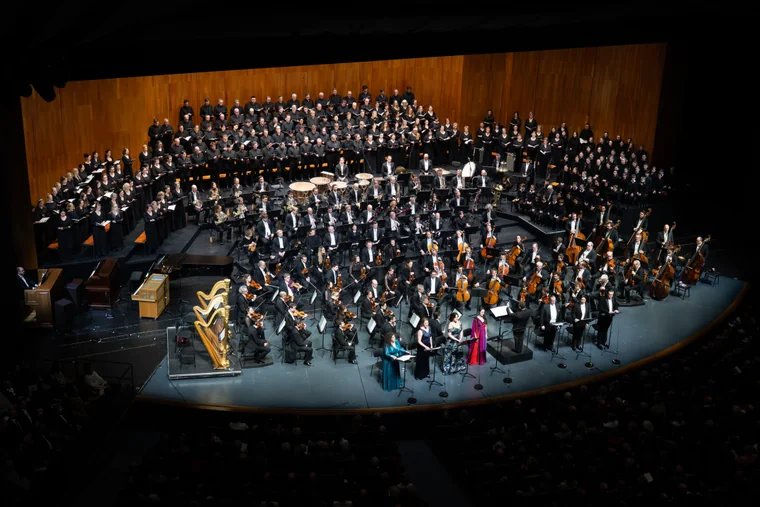
- II · Mahler’s Eighth, © Monika Rittershaus / Osterfestspiele Salzburg
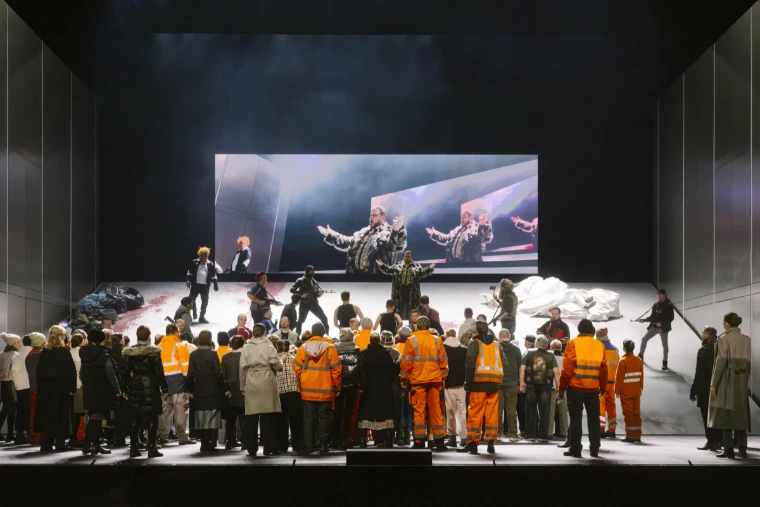
- III · Khovanshchina, © Inés Bacher / Osterfestspiele Salzburg
- IV · Chamber Music, © Osterfestspiele Salzburg
- V · The Festspielhaus Façade, Courtesy of Osterfestspiele Salzburg
Set down October MMXXVI
The Gazette: the engagements of the coming weeks, by email, once a week.