

SIX NATIONS CHAMPIONSHIP
February into March · Five Countries · Five Weekends · Since 1883

The Six Nations is five weekends of rugby across February and March, and the oldest international tournament in any sport still running.
Fifteen matches between six countries. Each plays every other, and the fixture order rotates so that no nation has the same season twice.

The Hundred and Ten Years
It began in December 1882 as the Home Nations Championship, contested by England, Scotland, Ireland and Wales. England won it and took the first Triple Crown, although nobody called it that at the time.
England were then thrown out for two years, in 1888 and 1889, for refusing to join the international board.
France came in properly in 1910 and it became the Five Nations. France were expelled in 1931 over payments to players and readmitted in 1947, and did not win it outright until 1959. Italy joined in 2000 and have not won it yet.
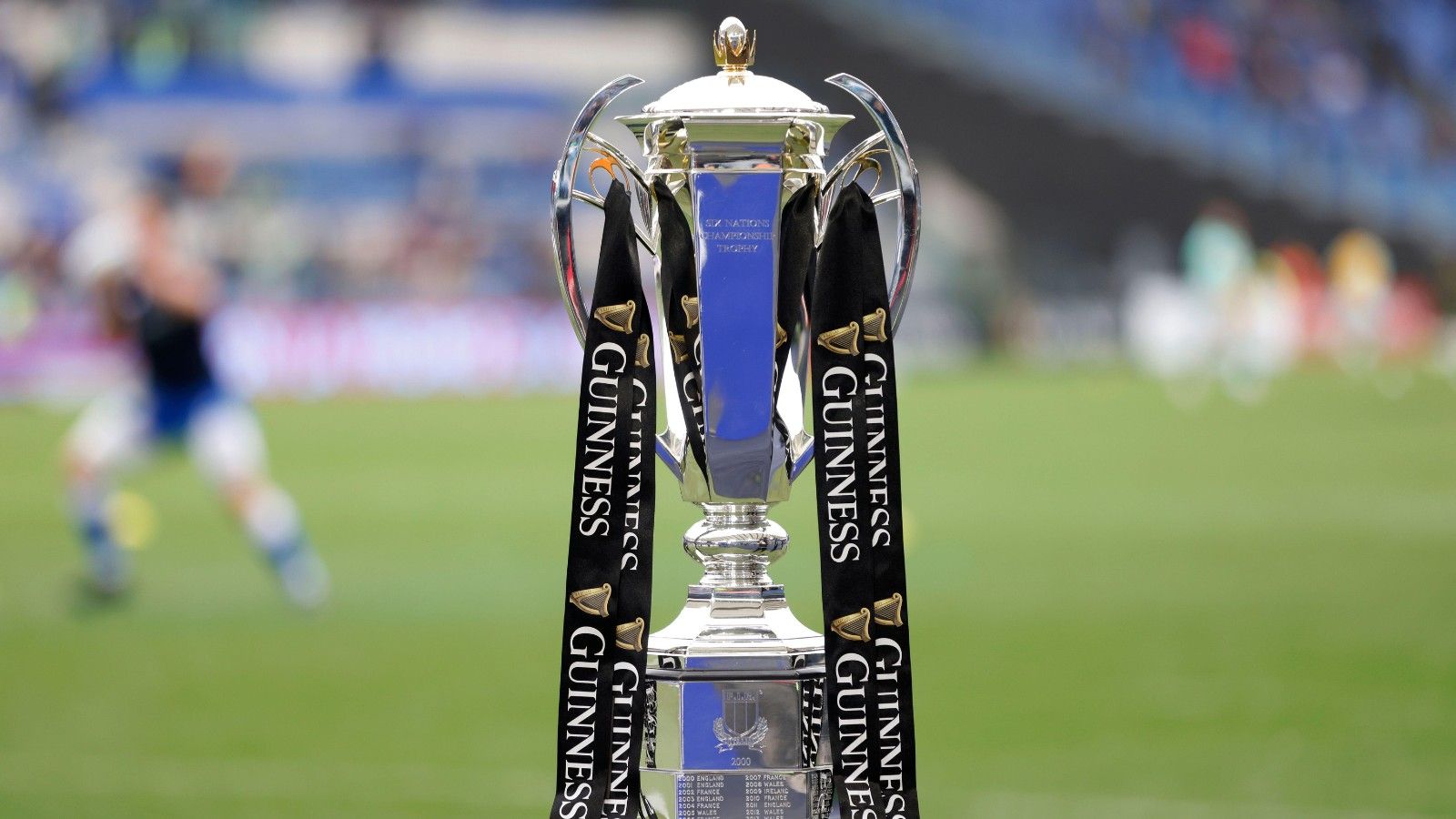
And for a hundred and ten years there was no trophy. The first was presented in 1993. The tournament had been played since the reign of Victoria, through two world wars, and nobody until then had thought to make an object for the winners to hold up. The present cup has six sides, one for each country.
The Triple Crown went the same way. It was an informal honour with no physical form at all until 2006.
The Cups Within the Cup
Six of the fifteen fixtures carry trophies of their own, which means a country out of contention by the third weekend still has something to play for on the fifth.
The Calcutta Cup, England against Scotland, is the oldest. When the Calcutta Football Club dissolved in 1878 it withdrew what remained in its account, in silver rupees, melted them down and had a cup made from the metal. It has been played for since 1879, which makes it older than the tournament it now sits inside.
The others: the Millennium Trophy between England and Ireland, begun for Dublin’s thousandth year. The Centenary Quaich between Ireland and Scotland. The Giuseppe Garibaldi Trophy between France and Italy. The Auld Alliance Trophy between France and Scotland. The Doddie Weir Cup between Scotland and Wales.
Last place takes the wooden spoon, which does not exist.
What to Know
The away weekend is the reason this is on the calendar. Dublin, Paris, Rome, Edinburgh and Cardiff each take a Saturday, and the match is the smaller part of it.
Rome is the easiest ticket and the best weekend. Italy rarely win and the city does not mind.
Dublin and Edinburgh are the hardest atmospheres to get into and the best to be inside.
Tickets go mainly through the unions and their member clubs rather than through general sale, which is why the resale market is what it is.
The car park at Twickenham before an England match is an institution in itself, and the tailgating is done from the backs of estate cars with proper glasses.
The mistake is going to one match. The tournament is a season and it is followed as one.
The Court
The Six Nations is not the Court’s own. Tickets, hospitality and rooms in five cities are sought on a member’s behalf, and the Court arranges the whole of the weekend: getting there, where to stay, and the table afterward. The fixture list is published a year ahead and the good weekends are taken early.
