THE IRISH DERBY
Late June · The Curragh, County Kildare · A Day · Since 1866
2027: dates to follow
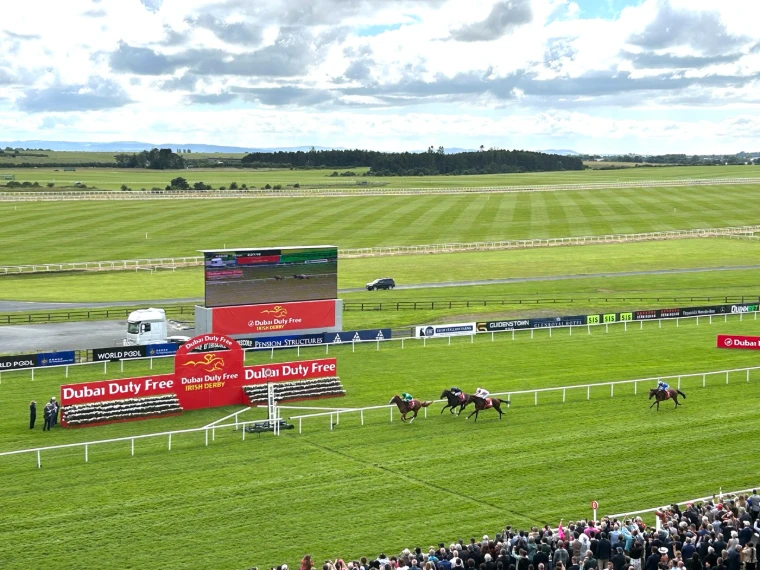
The Irish Derby is Ireland’s Derby: a race for three-year-olds over a mile and a half at the Curragh, in County Kildare, on a Sunday at the end of June or the start of July, four weeks after Epsom and at the end of a three-day meeting. The Curragh is the plain on which Irish racing was made, and its name means the place of the running horse.
In 1981 Shergar won it by four lengths. Two years later he was taken at gunpoint from his stud beside the course, and never seen again.
The Plain
The Curragh is a flat plain on sandy soil left by an esker, which is why it drains, and the first recorded race on it was run in 1727. Legend gives it to St Brigid, who asked the King of Leinster for as much land as her cloak would cover for her monastery at Kildare, and laid the cloak over the whole of it.
It is a common, and the sheep still graze it by an act of 1870. The army has camped on it since 1855, and in 1868 an act of Parliament set it aside for racing and the training of racehorses, with a Ranger to keep it.
The training grounds cover fifteen hundred acres, with seventy miles of turf gallops, and the horses are out on them every morning. The Irish National Stud and its Japanese Gardens stand on the edge of Kildare town.
The course is right-handed, a horseshoe of two miles with a straight chute of a mile, and it finishes uphill. All five Irish Classics are run on it. The grandstand was rebuilt between 2017 and 2019.
The Double
A Derby was run on the plain from 1817, and again from 1848, and neither lasted. The present race was founded in 1866 by the Earl of Howth, the Marquess of Drogheda and the Earl of Charlemont, and has been run over a mile and a half since 1872.
In 1907 Orby, bred and owned by Richard Croker, the boss of Tammany Hall, who had gone home to Ireland, became the first Irish-trained horse to win at Epsom, sent over with a guard of seventeen stout Irishmen. He came home and won at the Curragh, the first to take both.
In 1962 Joe McGrath put the money of the Irish Hospitals’ Sweepstake behind the race, and it became the Irish Sweeps Derby. The Epsom winners began to come: Santa Claus in 1964, Nijinsky in 1970.
Shergar came on 27 June 1981, twenty-four days after winning at Epsom by ten lengths, the widest margin in that race’s history, and won by four with Lester Piggott up. He was retired to the Ballymany Stud, beside the course, and on 8 February 1983 an armed gang took him from it. A ransom of two million pounds was asked and not paid, and no trace of him has been found.
Twenty horses have won both Derbies. Aidan O’Brien has trained eighteen winners of the Irish one.
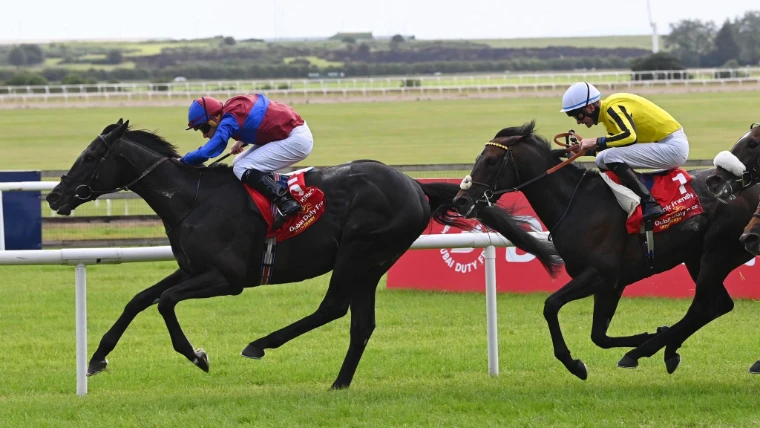
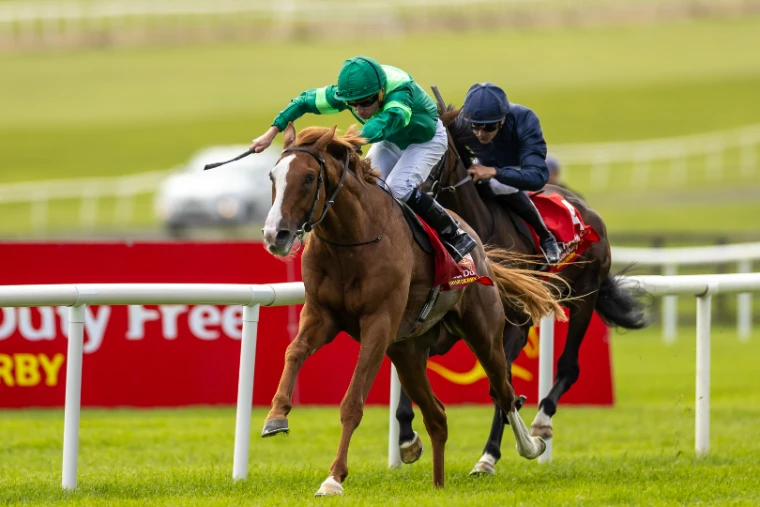
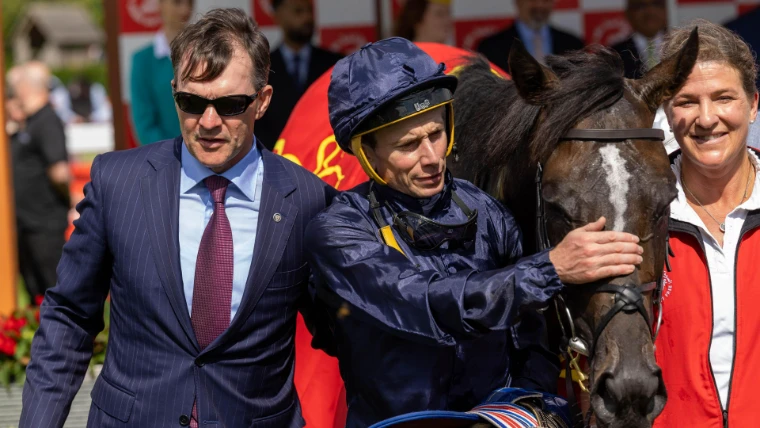
In 2026 Benvenuto Cellini, ruled a non-runner at Epsom after a bad start, won it on 28 June by nearly two lengths for O’Brien and Ryan Moore, with two stablemates behind him.
What to Know
It is run on the Sunday of a three-day meeting that begins on the Friday evening. The gates open at eleven, the first race is at ten past one, and the Derby at about half past four.
A lounge suit and a hat. The course asks nothing, and it is open to the wind, so a coat.
The Curragh sells a ticket for all three days, and has restaurants, boxes and suites over the course.
The course is some thirty miles south-west of Dublin, off the M7, with free parking, and there are trains from Heuston to Kildare, with a free bus from the station on race days. Stay in Dublin, or in Kildare.
The mistake is to see only the race. Go out on the plain in the morning, when the strings are on the gallops and the sheep are on the grass, and the Curragh explains itself.
The Court
The Irish Derby is not the Court’s own. A box or a table over the finish is sought on a member’s behalf, and the Court arranges the whole of it: getting there, where to stay in Dublin or Kildare, and the table afterward. The Epsom Derby is four weeks earlier.
How one becomes a member is set out under Admission.
Set down September MMXXVI · Revised October MMXXVI