THE PRIX DE DIANE
Mid June · Chantilly Racecourse, Oise · A Day · Since 1843
2027: dates to follow
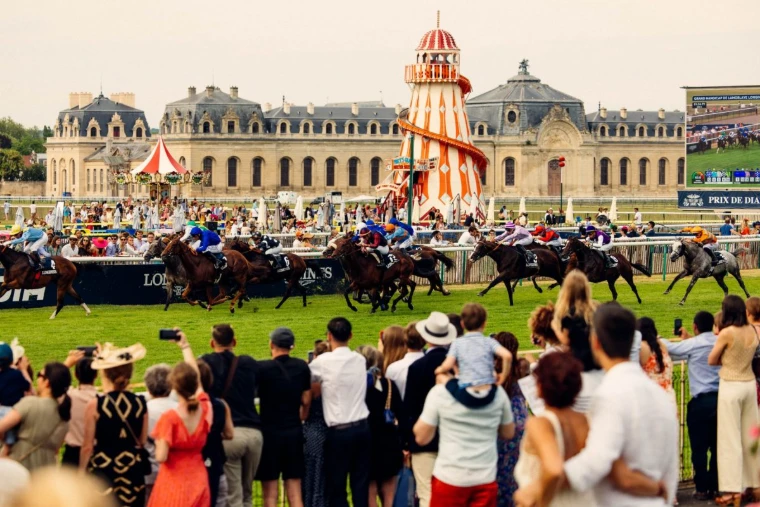
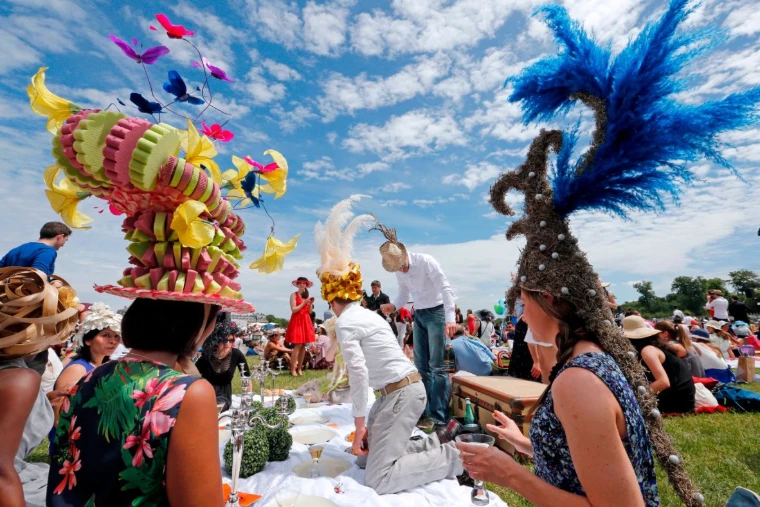
The Prix de Diane is the French Oaks: a race for three-year-old fillies over two thousand one hundred metres, run on a Sunday in mid-June at Chantilly, north of Paris, before the Great Stables of the Princes of Condé. The day around it is a garden party: a picnic on the lawn at noon, a competition for hats, and a full card of racing.
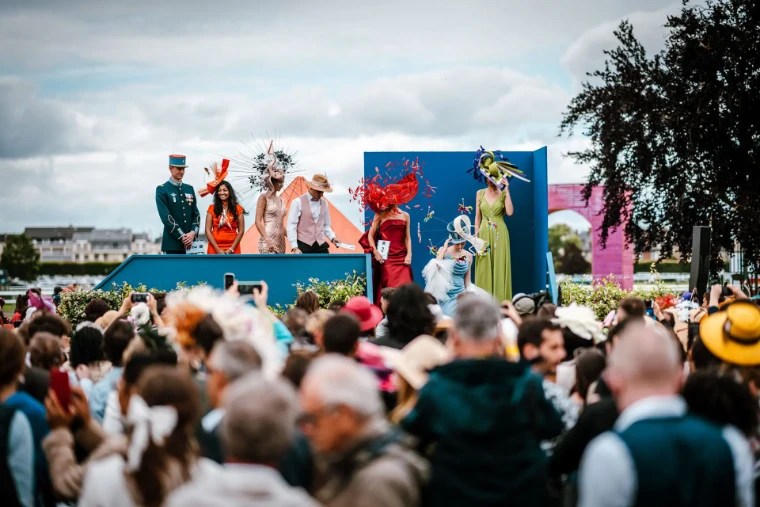
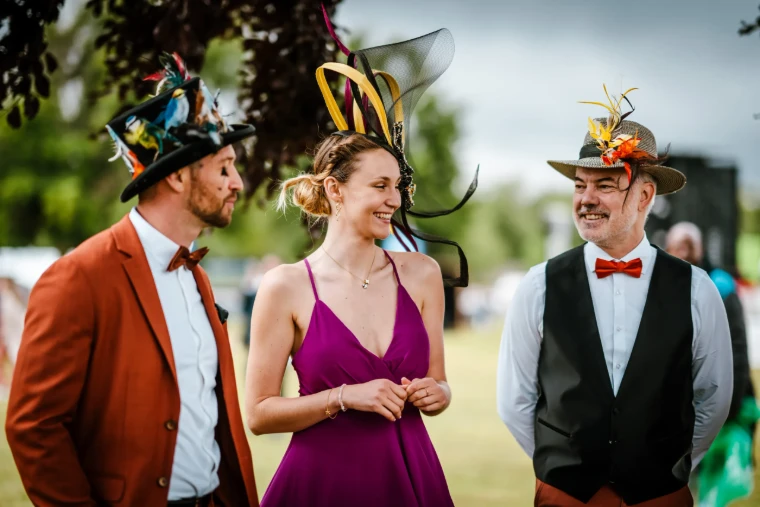
The hats are judged as well as the fillies. Some four hundred women enter each year.
The Plain
In 1833 a party of horsemen taken with English racing, on their way to a hunt, crossed the plain before the stables at Chantilly, liked the spring of the turf, and raced one another across it. With the backing of the Duke of Orléans, a son of King Louis-Philippe, the first meeting was held there the next spring, on 15 May 1834.
The stables they raced past had been built in 1719 for Louis Henri, Duke of Bourbon, Prince of Condé, to a design by Jean Aubert, and are a hundred and eighty-six metres long. Since 1982 they have held a museum of the horse.
The Prix du Jockey Club, the French Derby, followed in 1836, and the Diane, for fillies, in 1843. It was named for the goddess of the hunt, run over some three hundred metres less than the English Oaks, and open at first only to fillies born and bred in France.
The grandstand was built in 1879 by Honoré Daumet, who was also renovating the château for its owner, the Duke of Aumale, another son of Louis-Philippe. In 1886 the duke gave the domain, racecourse and all, to the Institut de France, which owns it still.
The forest behind it is the largest training centre for racehorses in France, and the horses are out on its gallops every morning.
The Fillies
The race moved to Versailles in the revolution of 1848, and was lost in 1871 and through the First World War. It was opened to fillies from abroad after the Second, and the first trained outside France to win it was Sweet Mimosa, in 1970.
In 1974 the Queen crossed to Chantilly to watch her filly Highclere run in it, and saw her win by two lengths.
Two fillies have won it and the English Oaks as well, Fille de l’Air in 1864 and Pawneese in 1976. Six winners of the Diane have gone on to win the Arc, the last of them Treve, in 2013. Aga Khan IV won it seven times, more than any other owner.
Hermès gave its name to the race from 1983 to 2007, and Longines has done so since 2011.
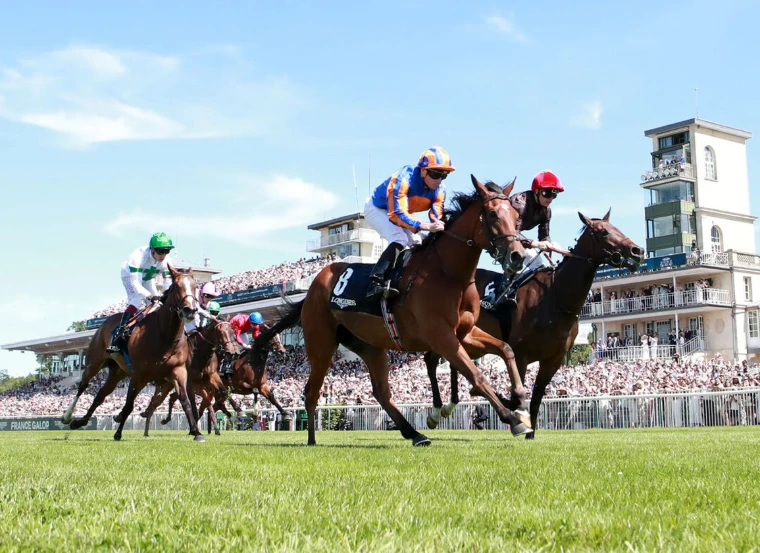
In 2026 Diamond Necklace, unbeaten, won it by a short neck for Aidan O’Brien, and made Ryan Moore the first jockey to have won every Classic in England, Ireland and France.
What to Know
It is run on a Sunday in mid-June, a fortnight after the Prix du Jockey Club, on the same course. The gates open at eleven, the picnic begins at noon, the first race is run at half past one, and the Diane at about four.
A lounge suit, light in colour and cloth, with a tie or a bow tie, and a panama. For women the hat is the point of the day, and entries for the competition, for the most elegant woman in a hat and the most elegant pair, close at two.
Places run from the lawn and the Village de Diane to the stand facing the finish and the Table de Diane, a private lunch with a view of the line.
Trains from the Gare du Nord reach Chantilly-Gouvieux in twenty-five minutes, a short walk from the course. Stay in Chantilly, or in Paris.
The mistake is to see only the racecourse. The Musée Condé, in the château across the park, keeps three Raphaels and the Très Riches Heures, and under the duke’s will lends nothing, so they can be seen nowhere else.
The Court
The Prix de Diane is not the Court’s own. A place at the Table de Diane, overlooking the finish, is sought on a member’s behalf, and the Court arranges the whole of it: getting there, where to stay in Chantilly or Paris, and the table afterward. Royal Ascot begins two days later, across the Channel.
How one becomes a member is set out under Admission.
Set down September MMXXVI · Revised October MMXXVI