THE TOUR DE FRANCE
Through July · Across France · Three Weeks · Since 1903
2027: 2 to 25 July
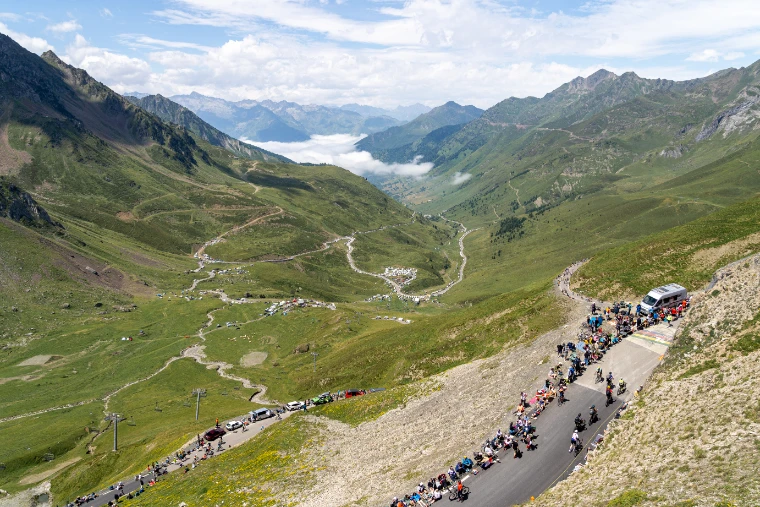
The Tour de France is three weeks of bicycle racing in July: twenty-one stages and some thirty-three hundred kilometres, over the Pyrenees and the Alps, ending on the Champs-Élysées. Each stage is a day’s race, and the rider with the lowest time over all of them wears the yellow jersey. It starts abroad more often than not, and in 2027 it starts in Edinburgh.
It was invented to sell a newspaper, and the jersey is yellow because the newspaper was.
L'Auto
In 1900 a party of advertisers who had fallen out with the editor of Le Vélo, the sporting daily of Paris, among them the Comte de Dion, Adolphe Clément and Édouard Michelin, started a rival and printed it on yellow paper, because Le Vélo was green. Its editor was Henri Desgrange, who had set the first recognised hour record on a bicycle. The courts soon made it drop “Vélo” from its name, and it became L’Auto.
Its sales were falling when Desgrange called a meeting in November 1902. By one account, the last to speak was the paper’s twenty-six-year-old cycling reporter, Géo Lefèvre, who proposed a race all round France; he said afterwards that he had proposed it because he could think of nothing else to say.
The first Tour left Montgeron, outside Paris, on the afternoon of 1 July 1903: six stages, by Lyon, Marseille, Toulouse, Bordeaux and Nantes, 2,428 kilometres in all, much of it ridden through the night. Maurice Garin, a chimney sweep as a boy, won by nearly three hours, still the widest margin in the race’s history. L’Auto’s sales rose, and by 1904 Le Vélo had closed.
The second Tour was so spoiled, with riders beaten by rivals’ supporters, trees felled across the road and Garin said to have taken a train, that the first four were disqualified and Desgrange headed his report “The End”.
The mountains came in 1910. Desgrange sent a man to see whether the Tourmalet could be ridden, and he crossed it on foot in the snow, at night, and wired back that the road was passable. On the Aubisque that July, Octave Lapize, who went on to win the Tour, shouted “Assassins!” at the organisers.
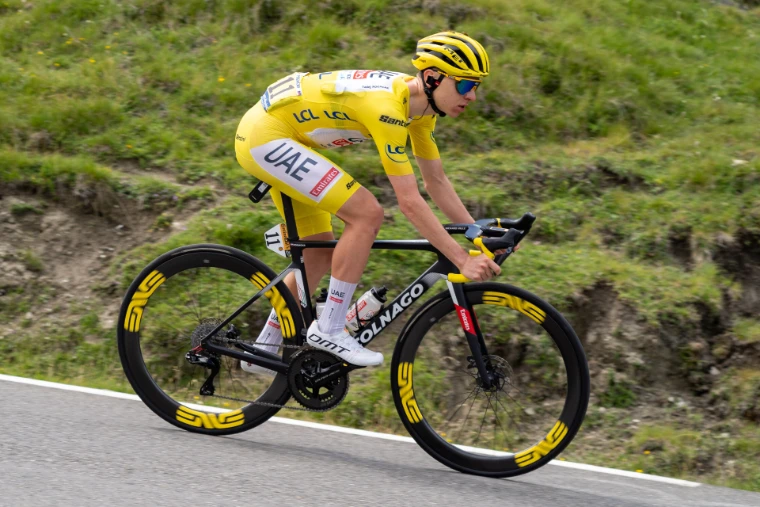
The yellow jersey was first worn in 1919, by Eugène Christophe, who was handed it in Grenoble at two in the morning so that the leader could be picked out. The crowd called him the canary. The race has finished on the Champs-Élysées since 1975, except in 2024, when the Olympics sent it to Nice.
The Three Weeks
Twenty-one stages over twenty-three days, with two days’ rest: flat stages for the sprinters, hills, the high mountains, and the time trials, in which each rider goes off alone against the clock. It goes round France one way one year and the other way the next, and always crosses both the Pyrenees and the Alps.
Ahead of the riders, by some two hours, comes the publicity caravan, begun in 1930: a long parade of sponsors’ floats throwing gifts to the roadside.
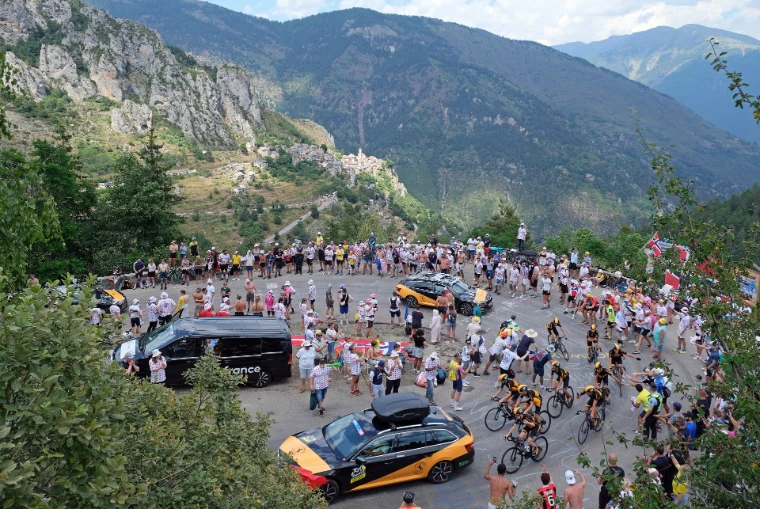
On a flat stage the race goes past in seconds. On a mountain the riders climb at fifteen or twenty kilometres an hour, strung out over as much as forty minutes, and the crowds camp beside the road for days beforehand to keep their places. On the Alpe d’Huez, whose twenty-one hairpins are each named for a winner there, they come in hundreds of thousands.
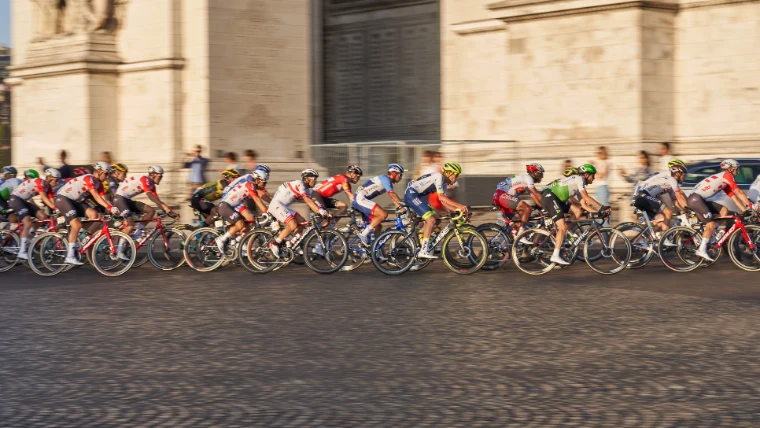
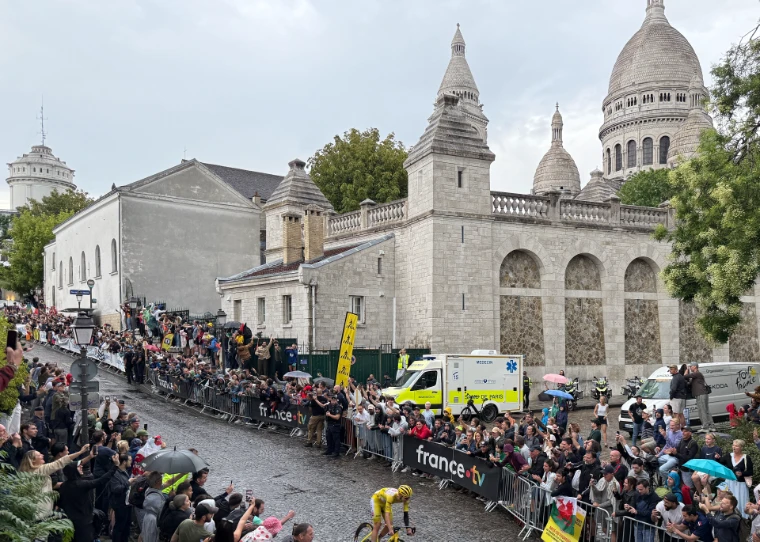
The last stage, into Paris, is a procession until the sprint. By custom the overall result is not contested on it, the Air Force flies over trailing the tricolour, and the winner rides in with a glass of champagne. Since 2025 it has climbed through Montmartre, up the Rue Lepic to the Sacré-Cœur, as well as lapping the Champs-Élysées.
In 2026, from Barcelona on 4 July to Paris on the 26th, Tadej Pogačar won his fifth Tour, equalling the record, and Mathieu van der Poel took the last stage over Montmartre.
What to Know
It runs for three weeks in July. In 2027 it runs from 2 to 25 July, starting in Edinburgh and crossing to England and Wales before France. The full route is announced on 22 October 2026.
The roadside is free. The road closes to traffic in the morning, on the great passes at dawn, and to bicycles about three hours before the race. The place to watch is a mountain, in the last mile or so below a summit, where the riders are slow and spread out; or a stage start, with the team buses and the riders signing on. At a finish one sees mostly the back of someone’s head.
The organisers and their official tour operator sell hospitality at the starts and finishes and on the Champs-Élysées, and seats in official cars on the route.
Country clothes, and shoes for the walk up from wherever the car is left.
Rooms along the route are taken the day it is announced.
The mistake is the flat stage: five hours’ waiting for a race that is past in seconds. On a mountain it takes forty minutes to go by.
The Court
The Tour de France is not the Court’s own. Places at a stage start or finish, a seat in an official car, or hospitality on the Champs-Élysées on the last day are sought on a member’s behalf, and the Court arranges the whole of it: getting there, where to stay along the route, and the table afterward.
How one becomes a member is set out under Admission.
Set down October MMXXVI