THE EDINBURGH INTERNATIONAL FESTIVAL
August · Edinburgh · Three Weeks · Since 1947
2027: dates to follow
The Edinburgh International Festival is three weeks of music, opera, theatre and dance each August in the concert halls and theatres of Edinburgh, from the Usher Hall on Lothian Road to its own home at The Hub, below the Castle at the top of the Royal Mile. Its programme is hand-picked: every performer is invited. It calls itself the original festival, the one that made Edinburgh the Festival City, and the Fringe grew up beside it in its first summer.
In 1947, with rationing still in force, the Minister for Fuel and Power forbade the floodlighting of the Castle. Citizens wrote in their hundreds offering their own coal rations, the minister relented, and the Castle was lit for four nights.
The Igniting Spark
Rudolf Bing was born in Vienna to a Jewish family, came to Britain in 1934 and helped found Glyndebourne, where he was General Manager. The Festival’s own folklore has the idea born on a starry night in 1942, as Bing and the soprano Audrey Mildmay walked down Princes Street after a performance of The Beggar’s Opera, the Castle “bathed in moonlight”, and Mildmay said the city would make a wonderful setting for a festival. The truth, the Festival says, was more prosaic. Glyndebourne needed an answer to a wartime squeeze on its money; Salzburg and Munich had been taken over by the Nazis and then bombed, and the Old Vic had been blitzed. Bing had seen Edinburgh in 1939, and its castle had put him in mind of Salzburg.
Harvey Wood, of the British Council in Scotland, wanted a town with “considerable scenic and picturesque appeal” that could take in visitors for three weeks to a month. “Greatly daring but not without confidence I recommended Edinburgh.” He brought Bing to the Lord Provost, Sir John Falconer. Lord Rosebery gave the ten thousand pounds his horse Ocean Swell had won, the town council matched it, and the Arts Council under John Maynard Keynes added more. The plan was announced in The Scotsman and the Evening Dispatch on 24 November 1945, and brought “an avalanche of letters”.
The first festival ran from 22 August to 11 September 1947, to reunite people through great art after the war. The Vienna Philharmonic played again under Bruno Walter, who had left Europe after the Anschluss. “Here,” he said of Edinburgh, “human relations have been renewed.” Volunteers at the Festival Club cooked 2,500 meals a day, and, the Festival records, “the sun shone gloriously for three continuous weeks.”
Eight theatre groups, the Festival records, turned up uninvited that summer. Seven played in smaller halls the Festival was not using; the eighth gave Everyman in Dunfermline Abbey, across the Forth, so far out, a critic regretted, that it was “on the fringe of the Festival”. Bing directed it until 1949 and ran the Metropolitan Opera from 1950; the Festival has been held every year since 1947 but 2020. Nicola Benedetti has directed it since October 2022.
The Three Weeks
It fills the last three weeks of August. Until 2015 it ran on into September; it now begins and ends in August, in step with the Fringe. The Hub, a church built for the General Assembly of the Church of Scotland to the designs of Gillespie Graham and Pugin, holds the box office and the late sessions called Up Late, and its spire is the highest point in central Edinburgh.
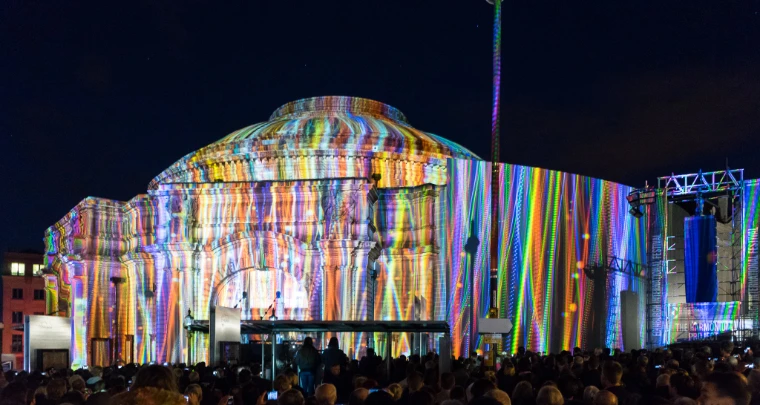
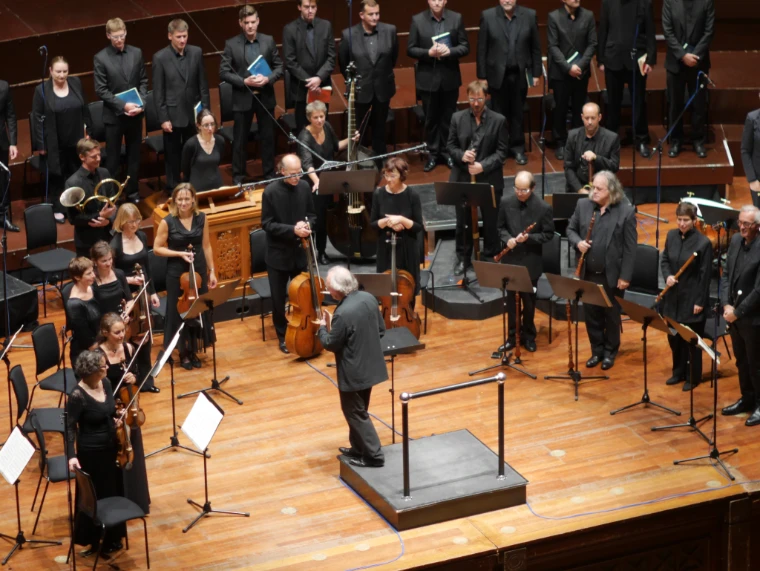
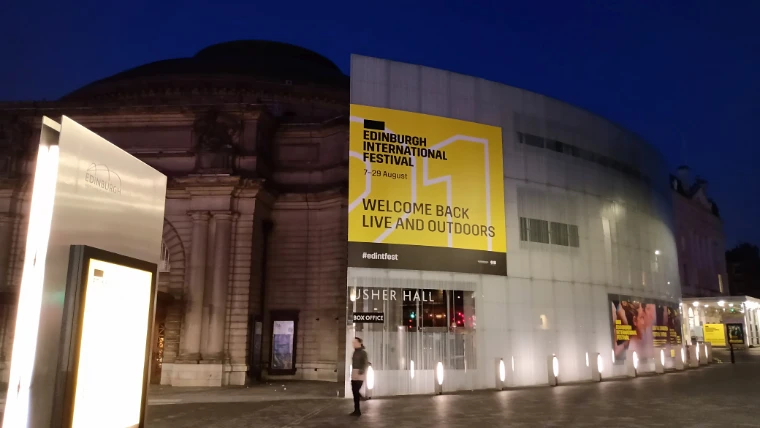
The Usher Hall, of some two thousand two hundred seats, has been the Festival’s leading venue since 1947. Andrew Usher, a whisky distiller and blender, gave £100,000 to build it and died before the building began; it opened in 1914. The orchestras play there, and recitals are given at The Queen’s Hall. Opera and ballet are at the Festival Theatre, designed by Frank Matcham as the Empire Palace, which opened in 1892, and rebuilt in 1994, on a site that has held a theatre since 1830. The King’s, of 1906, has given the Festival its theatre and opera since the first year.
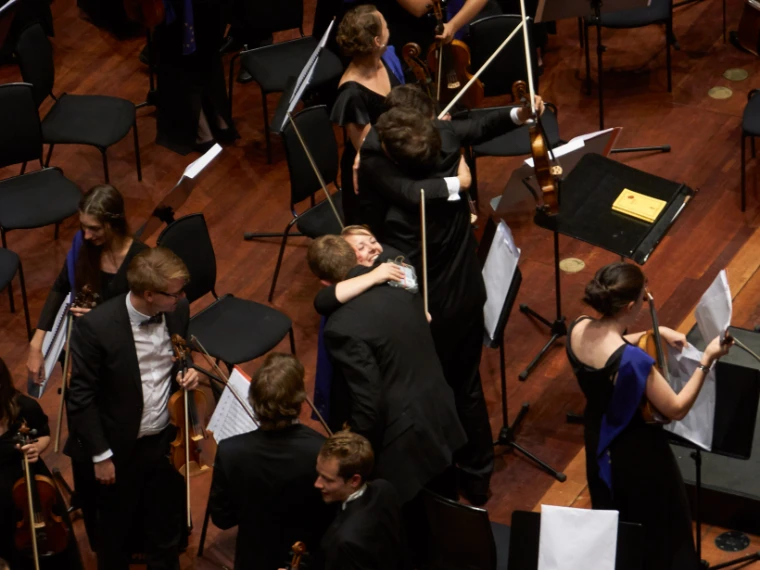
In 2026, from 7 to 30 August, there were 147 performances over 24 days under the title All Rise, for the two hundred and fiftieth anniversary of American independence, with more than two thousand artists from 46 countries. It opened at the Usher Hall with Wynton Marsalis’s symphony, two hundred on the stage under James Gaffigan, and a free afternoon in Princes Street Gardens with more than three hundred performers; the King’s reopened after four years with a five-hour Angels in America, the LA Phil came on its last tour with Gustavo Dudamel, and the Berliner Philharmoniker closed it.
What to Know
It runs over the last three weeks of August. The 2027 dates have not been announced; the Fringe has fixed its own, from 6 to 30 August.
Members of the Festival book first, each tier ahead of the one below, from a Friend at £60 to a Gold Ambassador at £1,200; an Ambassador, at £420, has passes to the Opening Toast and the International Lounge. In 2026 more than fifty thousand tickets cost £30 or less.
A lounge suit. Nothing is published, and the Court dresses for the concert hall rather than the street.
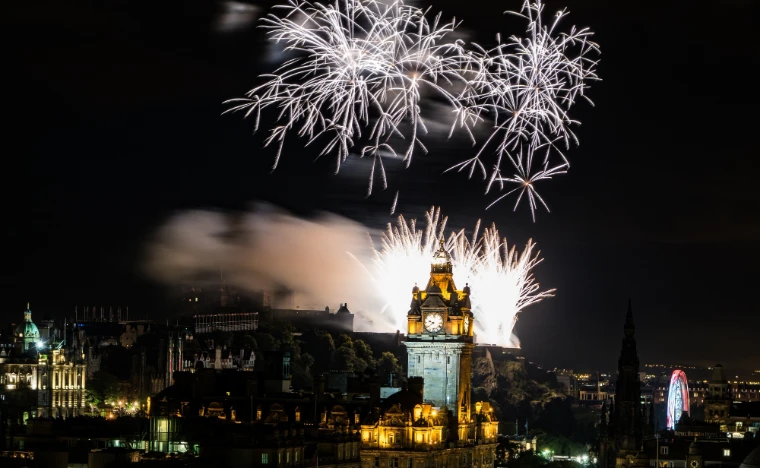
Edinburgh Waverley is the end of the East Coast Main Line, 393 miles from King’s Cross, with a fast train to London every hour and the Caledonian Sleeper by night; the airport, at Ingliston, is joined to the city by tram. The city is small enough to walk, though The Hub is up a steep hill from Waverley. The Balmoral stands above the station, its clock kept three minutes fast for the trains; the Caledonian is at the west end of Princes Street, near the Usher Hall.
The mistake is to arrive late, or with a large bag. Latecomers may not be admitted, and the Usher Hall has no cloakroom and takes no bag larger than 30 by 30 by 15 centimetres.
The Court
The Edinburgh International Festival is not the Court’s own. Seats for the orchestras at the Usher Hall and the opera at the Festival Theatre are sought on a member’s behalf, and the Court arranges the whole of it: getting there, where to stay at the Balmoral or the Caledonian, and the table afterward. The Glorious Twelfth falls in the same weeks, on the moors of Scotland and northern England.
How one becomes a member is set out under Admission.
Set down October MMXXVI